TLDR;
This video discusses the concepts of water balance and electrolytes in human physiology. Key points include:
- The significance of water as a major component of the body, accounting for 60-70% of total body weight in adults.
- The distribution of water in the body, which comprises intracellular fluid and extracellular fluid.
- Water balance is essential for maintaining health, with emphasis on intake and output, and the hormonal regulation via antidiuretic hormone (ADH).
- The video also covers conditions such as dehydration and overhydration, including their classifications, causes, and clinical assessments.
Water Balance and Electrolytes Overview [0:00]
The session begins with an introduction to the topic of water balance and electrolytes. Students will learn about the importance of water, its functions, and its regulation in the context of human physiology and clinical nutrition.
Water and Body Composition [0:15]
Water constitutes about 60% of total body weight in adults, and its distribution varies according to several factors like age, gender, and body composition. Infants have a higher water percentage, while elderly individuals have lower percentages. The intracellular fluid (ICF) and extracellular fluid (ECF) make up the body's water compartments, with ICF accounting for 40% and ECF for 20%.
Water Balance Mechanism [3:01]
Water balance is maintained by ensuring intake equals output, classified into positive and negative balance. Daily water intake includes drinking water, metabolic water, and food, amounting to approximately 2,200 to 2,800 ml. Output includes urine, sweat, and insensible loss, totalling around 1,800 ml per day, with obligatory water losses outlined as well.
Functions of Water [5:41]
Water plays essential roles, such as being a universal solvent, regulating body temperature, transporting nutrients, and aiding digestion. It participates in various chemical reactions and is crucial for cellular structure and cushioning organs.
Regulation of Water Balance [8:50]
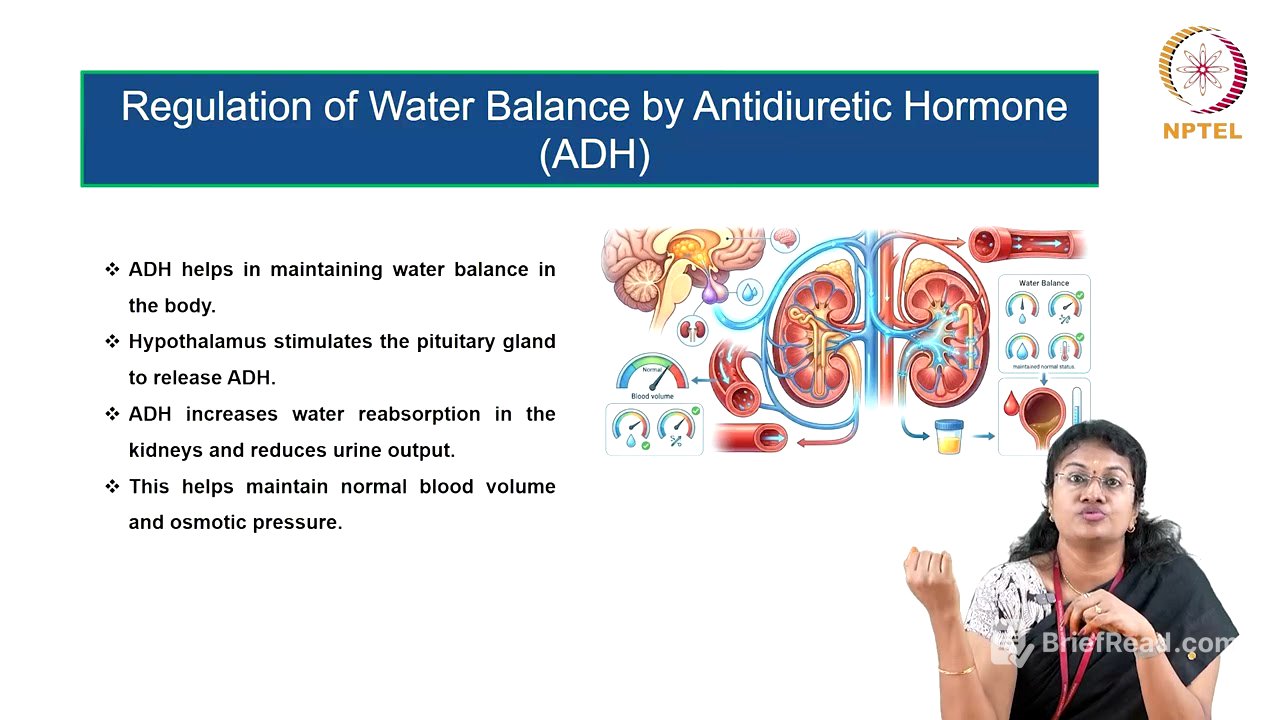
The regulation of water balance is primarily controlled by antidiuretic hormone (ADH), which is released from the pituitary gland upon stimulation from the hypothalamus. This hormone enhances water reabsorption in the kidneys, affecting physiological parameters like blood volume and osmotic pressure.
Dehydration [15:09]
Dehydration occurs when water loss exceeds intake, classified into mild, moderate, and severe levels based on symptoms. It is a common fluid disorder with clinical assessment methods that include skin turgor tests and urine specific gravity measurements.
Overhydration [18:25]
Overhydration, or hypervolaemia, results from excessive water intake or impaired excretion, leading to fluid accumulation. Types include isotonic, hypotonic, and hypertonic overhydration, each with specific causes, symptoms, and impacts on cardiovascular, respiratory, renal, and neurological systems.