TLDR;
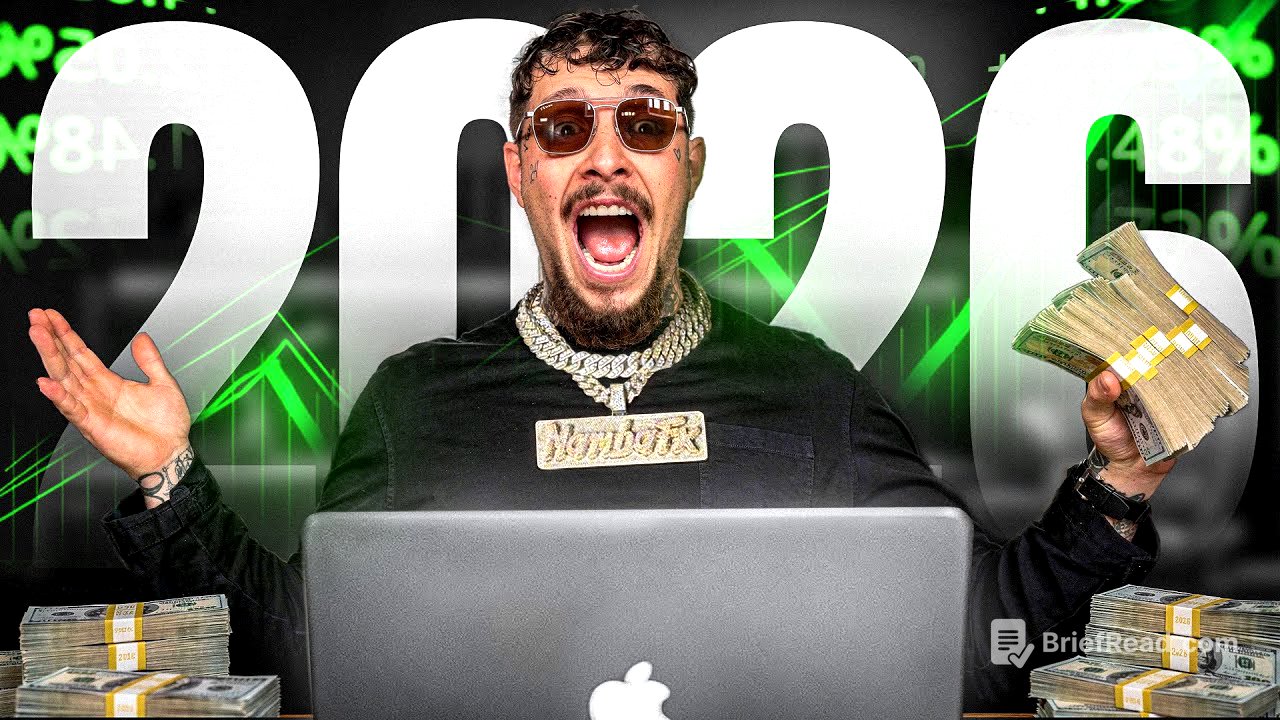
This video provides a guide to becoming a successful trader in 2026, focusing on patience, scalping, specific timeframes, and a simple trading strategy. The key takeaways include:
- Patience is crucial; don't force trades.
- Scalping is the preferred method for efficient profit.
- Focus on the 5-minute and 15-minute timeframes during the New York session (6:25 a.m. Pacific Standard Time).
- The core strategy involves identifying support, resistance, and trend lines for quick, profitable trades.
Introduction [0:00]
The speaker introduces himself as an experienced trader with over eight years in the industry, claiming to have made hundreds of millions of dollars, largely from trading. He emphasises his active involvement in live trading, where thousands of people copy his trades, yielding "unbelievable" results. He promotes his trading room, which costs $39 a month, as the best in the business for learning, earning, and copying his trades.
The Importance of Patience [0:51]
Patience is highlighted as a key attribute for successful trading in 2026. Beginner traders often rush into trades, but it's essential to let the trades come to you. There may be days or even two days a week when no trading opportunities arise, and it's important to accept this. Being unwilling to take a day off and forcing trades will lead to failure.
Free Car Giveaway [1:42]
The speaker announces a giveaway for a brand new Range Rover. To enter, viewers need to follow his main Instagram account, Mamba FX, via the link in the description.
Scalping as the Primary Strategy [2:12]
The speaker advocates for scalping as the most efficient, fastest, and smartest way to make money trading in 2026. Given the bipolar nature of markets, where prices fluctuate direction frequently, holding trades for extended periods is not recommended. Scalping allows traders to capitalise on short-term trends and breakouts within 10-15 minutes, potentially earning more than swing traders. The speaker claims to have created the best strategy for scalping, which maximises profits while allowing for more free time.
Timeframe and Trading Session [3:50]
The recommended timeframes for trading are the 5-minute and 15-minute charts exclusively. The focus should be solely on the current market action, disregarding the day's overall price movement. Trading should only occur during the New York session, starting at 6:25 a.m. Pacific Standard Time (9:25 a.m. Eastern Time). Traders should use the initial five minutes to mark up charts with support, resistance, and trend lines, and then act upon breakouts. If no significant movement occurs within 45 minutes to an hour, the trading session should be called off for the day.
Discipline and Instruments [5:06]
Strict adherence to the trading plan is crucial for success. Traders must avoid deviating from the plan due to external pressures or perceived opportunities outside the specified timeframe. Discipline is key to achieving results. The recommended instruments for trading are US30 and NASDAQ for indices, and NQ and YM for futures. NASDAQ is equivalent to NQ, and US30 is equivalent to YM, representing the same instruments on different platforms.
Trading Strategy Breakdown [6:45]
The speaker emphasises that the trading strategy will only work if the trader is disciplined and follows the previously mentioned rules. The strategy involves marking up charts to identify support, resistance, and trend lines. At 6:25 a.m. Pacific Time, traders should look for breakouts from these levels. A trend line is drawn, and resistance and support levels are identified on the chart. The speaker illustrates potential buy positions if the price breaks past resistance with a tight stop loss, aiming for a 1:4 risk-reward ratio.
Examples of the Strategy in Action [9:37]
The speaker revisits a previous trading day to illustrate the strategy's effectiveness. He shows how a breakout occurred at the market open, leading to a successful trade. He also provides another example where the price respected resistance before breaking a trend line and support zone, resulting in a profitable sell position. The process involves marking support, resistance, and trend lines at 6:25, waiting for volume to increase, and then executing trades based on breakouts, aiming for a 1:4 risk-reward ratio. Consolidation indicates unfavourable market conditions, advising against trading.
Conclusion and Call to Action [13:07]
The speaker reiterates the simplicity of the trading strategy and the importance of dedication. He encourages viewers to follow his Instagram, Mamba FX, for a chance to win a Range Rover. He also promotes his live trading room for $39 a month and provides links to recommended prop firms and brokers in the description.