
TLDR;
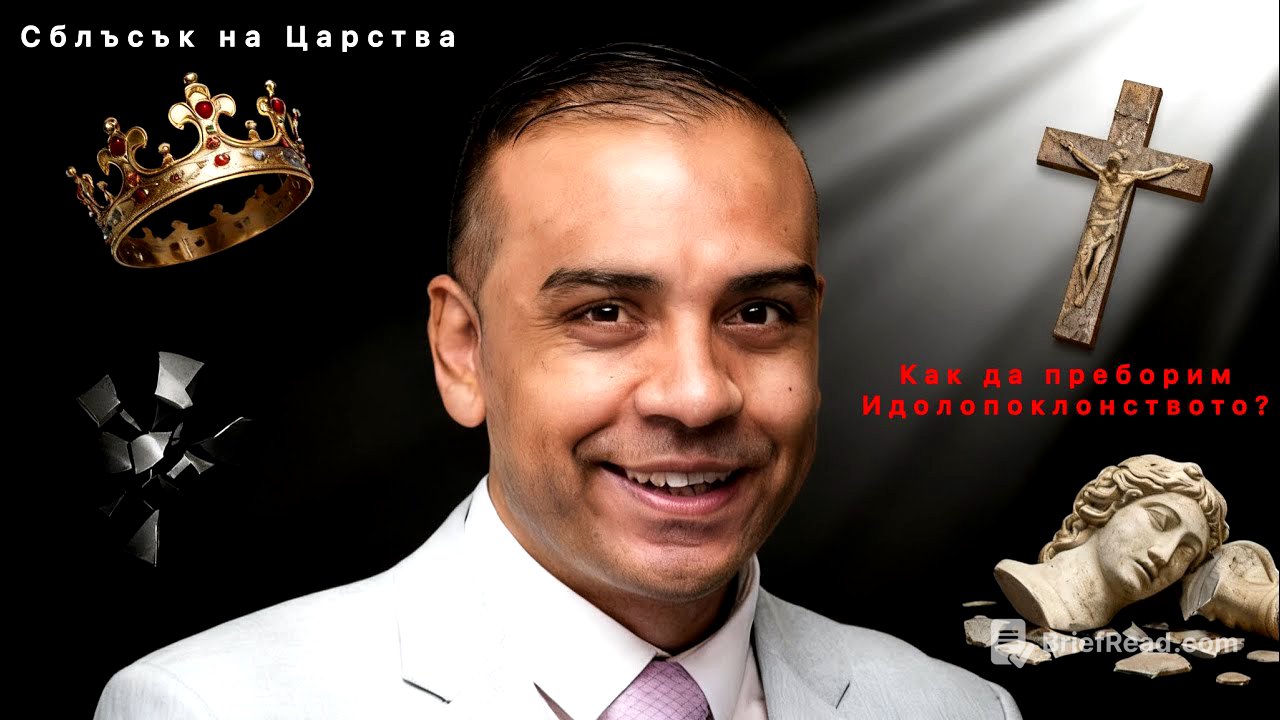
This YouTube video by lechebna manna, features Pastor Ilia, and it's the first in a three-part series about overcoming idolatry. The sermon explores the historical roots of idolatry, encompassing witchcraft, occultism, and folk medicine, from ancient times to the present day, and examines how these practices are condemned in both the Old and New Testaments. It defines idolatry as placing anything before God, including objects, people, or practices, and warns against its dangers, including its potential to exclude individuals from the Kingdom of God.
- Idolatry includes witchcraft, occultism and folk medicine.
- Idolatry is condemned in both the Old and New Testaments.
- Idolatry is placing anything before God.
Introduction [0:00]
The video begins with an opening prayer, followed by an introduction to a new series on the clash of kingdoms, specifically the kingdom of light versus the kingdom of darkness. The series aims to educate viewers on how to recognise and dismantle the idols behind occult practices and idolatry. Over the next three weeks, the series will provide a spiritual detox, teaching how to deal with the dangers of idolatry, including witchcraft, occultism, and folk medicine.
The Historical Line of Idolatry [4:39]
According to the Bible, idolatry began shortly after the Fall, with practices observed from creation to the Flood. Although the Bible doesn't explicitly describe idolatry before the Flood, it mentions the depravity and violence of the time, hinting at unclean spiritual practices influencing people's lives. The text references Genesis 6, which speaks of the "sons of God" and the "Nephilim," traditionally linked to fallen angels interbreeding with humans, resulting in a race of powerful giants. Some theologians suggest this was an attempt to corrupt the human bloodline and prevent the birth of the promised Messiah.
Idolatry After the Flood: Babylon and Nimrod [10:24]
After the Flood, the focus shifts to the time of Babylon and the figure of Nimrod. Nimrod is described in Genesis 10 as a mighty hunter before the Lord, but Jewish tradition associates him with the founding of pagan cults. He became a symbol of defiance against God, linked to the Tower of Babel and the idolatry that turned people away from God. The Tower of Babel symbolises human rebellion united around a false cult, marking the first organised idolatrous movement against God. During this time in Mesopotamia (4000-3500 BC), astrology, cults of deities like Ishtar (goddess of fertility, love, and war) and Marduk (god of the autumn sun), divination using animal entrails, and magical amulets were prevalent.
Idolatry in the Patriarchal Period and Ancient Egypt [12:46]
During the patriarchal period (2000-1500 BC), Abraham is called to serve God from a background steeped in idolatry. Joshua 24:2 indicates that Abraham's father, Terah, served other gods. Abraham is called from Ur and Haran, centres of lunar deity worship. This period saw idol statues, magic, rituals, astrology, and necromancy (divination through the dead). Ancient Egypt (3000-500 BC) was a hub of idolatry, with necromancy, amulets, talismans, magical formulas, gods, diviners, and priestly occult rituals. The Bible describes Egypt as a place where magic was institutionalised, as seen in the story of Pharaoh's magicians in Exodus 7-9.
Idolatry During the Time of the Prophets and in Canaan [15:52]
During the time of the prophets (1000-400 BC), Israel frequently fell into idolatry and witchcraft. 2 Chronicles 33 describes King Manasseh, who reigned from the age of 12 and was one of the most evil kings in the eyes of God. Manasseh built altars to the entire heavenly host, passed his sons through fire, practised divination, and consulted with mediums and sorcerers, provoking God in His own house. In Canaan and Israel, pagan practices included worship of Baal (god of storm and fertility), Ashtaroth (goddess of love and war), and Moloch (god to whom children were sacrificed). The Bible repeatedly forbids occultism, divination, witchcraft, and sacrifices to demons.
Biblical Condemnations of Idolatry [21:06]
Deuteronomy 32:17-19 describes the Israelites sacrificing to demons and forsaking God. Israel often turned to Baal, believing he ensured fertile land and childbirth, and to Ashtaroth, the consort of Moloch, with ritual prostitution considered a form of worship. King Saul consulted spirits, paying the price for seeking counsel from someone other than God. Prophets like Isaiah condemned witchcraft, linking it to divine punishment. Isaiah 47:9-12 speaks of sudden destruction coming upon a sorceress despite her many sorceries. Deuteronomy 18:9-12 forbids practices of other nations as abominations, including passing children through fire, divination, occultism, sorcery, and consulting with spirits of the dead.
Idolatry in the New Testament and Beyond
Occult practices persisted into the New Testament era within the Greco-Roman world. Simon Magus, a magician, amazed people with his magic in Acts 8, but was rebuked by the apostles for trying to buy the power of the Holy Spirit. In Ephesus, people who had believed confessed their deeds and burned their magic books, worth 50,000 silver coins (Acts 19). Paul and Silas encountered a slave girl with a spirit of divination in Acts 16, who earned her masters much money through fortune-telling. Paul cast out the spirit, angering her masters. Paul associates idols with demons in 1 Corinthians 10:20, warning against fellowship with demons.
Historical and Contemporary Manifestations of Idolatry [38:59]
In ancient Greece, idolatry manifested through mysteries, oracles, Hermeticism, theurgy, and demonology. Similar practices were found worldwide, including in India, China, Africa, America, Australia, and Europe, with shamanism being a notable example. Slavic pagan culture also had its idols. In the Middle Ages, magic spread through folk medicine, astrology, folk magic, superstitions, and rituals. Modern forms include spiritualism, occult societies, and movements like New Age, which encourages people to believe they are gods. Other contemporary practices include tarot card reading, Wicca, syncretic religions, and energy healing.
Defining Witchcraft, Occultism, and Folk Medicine [43:00]
Witchcraft involves attempts to control the spiritual world through words, gestures, objects, rituals, spells, and secret practices. Examples include love spells, breaking spells with rituals, coffee reading, tarot cards, and necromantic rites. The Bible links terms like "witch" and "magician" with attempts to access spiritual forces outside of God's will. Exodus 22:18 commands that a sorceress should not be allowed to live, highlighting the deadly danger of these practices. Occultism involves secret spiritual teachings and contact with higher powers, including astrology, mystical practices, divination, and spiritism. Examples include horoscopes, seances, Reiki, and teachings like those of Peter Deunov's Dunuism. God is against occultism, as stated in Isaiah 8:19, which questions why people consult mediums and spiritists instead of God. Folk medicine involves traditional healing through herbs, prayers, incantations, and blowing, often mixed with magical words and rites. Examples include healers and fortune-tellers who use words, water, and crosses to ward off illness.
Idolatry: A Comprehensive Definition and Biblical Condemnation [57:49]
Idolatry is defined as any worship, service, or trust placed in something other than God. It includes relying on objects, rituals, amulets, herbs, or serving spiritual forces that are not God. An idol is anything that replaces God, including money, possessions, career, or even oneself. Idolatry can involve worship of physical images, statues, icons, or spiritual forces like demons, ancestors, or angels. God forbids idols and idolatry, as stated in Exodus 20:3-5, which commands having no other gods and making no idols. Idols are human creations, as described in Psalm 115:4-8, which notes that idols have mouths but cannot speak, eyes but cannot see, and so on. Idolatry is spiritual adultery against God, as mentioned in Hosea 4:12, where the spirit of harlotry leads people to forsake their God. The New Testament also condemns idolatry.
The Consequences of Idolatry and Call to Action [1:09:31]
1 Corinthians 10 warns against partaking in the table of demons, and 1 John 5:21 urges believers to keep themselves from idols. Colossians 3:5 equates covetousness with idolatry, which brings God's wrath. Revelation 21:8 states that idolaters will have their part in the lake of fire. The sermon concludes by emphasising that idolatry is replacing God with something else, be it an object, person, passion, idea, magic, wealth, or tradition. God commands having no other gods and warns that He is a jealous God. The next session will discuss Bulgarian folk customs with pagan roots, dangers to children through media, and how Christians can protect themselves and their families from idolatry.





![Unang Balita sa Unang Hirit: (Part 2) MARCH 9, 2026 [HD]](https://wm-img.halpindev.com/p-briefread_c-10_b-10/urlb/aHR0cDovL2ltZy55b3V0dWJlLmNvbS92aS9XSllWMVhyeU03TS9ocWRlZmF1bHQuanBn.jpg)