TLDR;
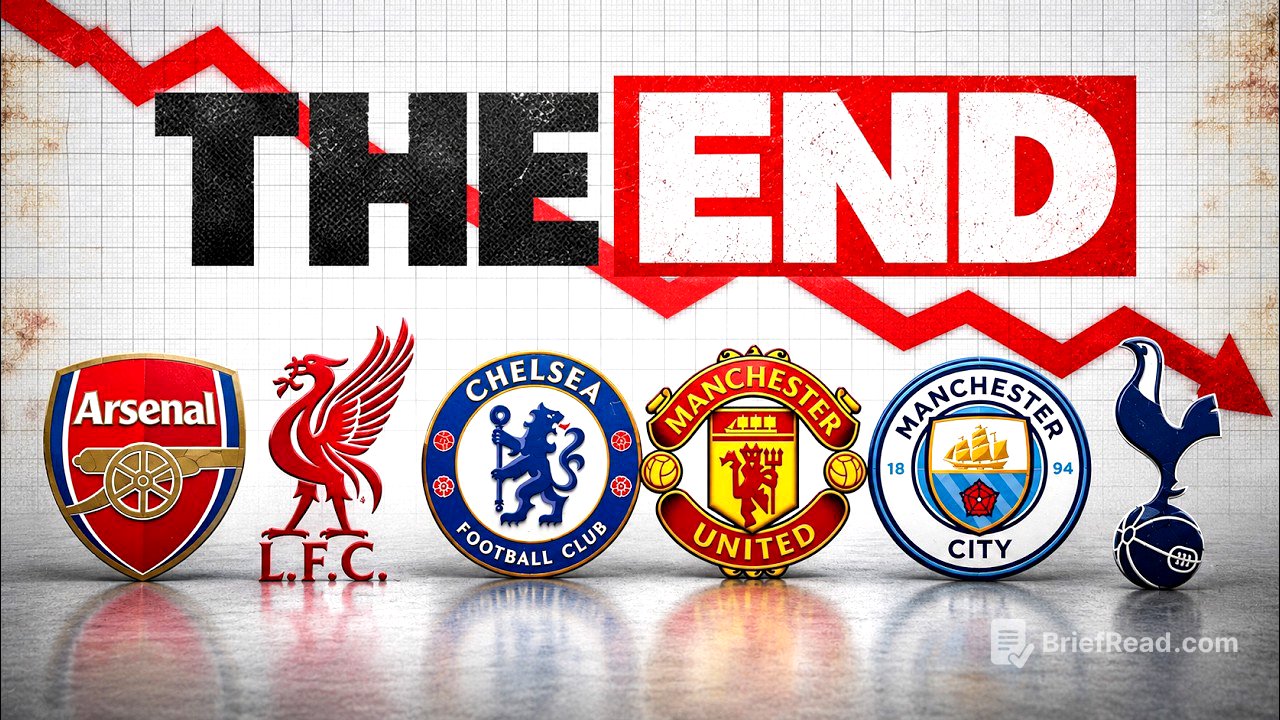
The video discusses the relevance of the Premier League's "big six" clubs (Arsenal, Chelsea, Liverpool, Manchester City, Manchester United, and Tottenham) in contemporary football. The analysis highlights how these clubs, regardless of inconsistent performance, maintain financial superiority and global recognition, contributing to their persistent status as the "big six."
- The definition and relevance of the big six have changed over time.
- Financial structures and broadcasting deals reinforce their prominence, regardless of on-pitch results.
The Current State of the Premier League's Big Six [0:00]
The video opens with a debate about whether the Premier League's big six still exists, especially in terms of performances on the pitch. It cites examples like Manchester United, Tottenham, and Chelsea, who have seen fluctuating league positions yet retain their "big six" status due to their substantial financial backing and fan base. Tottenham's recent 17th place finish and Chelsea's struggles post-expensive signings are highlighted as contradictions to their prestigious labels.
The Historical Context of the Big Six [1:31]
To understand the label of the big six, the video traces the historical landscape of English football, noting that traditional unpredictability included clubs like Huddersfield Town and Nottingham Forest as champions. The financial revolution initiated by television money changed the game by allowing clubs to distinguish themselves financially, leading to the establishment of the Premier League and a consistent group of elite clubs.
Formation and Evolution of the Big Four to Big Six [2:49]
Initially, during the late 90s and early 2000s, the big four of Manchester United, Arsenal, Liverpool, and Chelsea dominated the Premier League, consistently qualifying for the Champions League. However, the landscape changed as Manchester City emerged with new financial backing in 2008, and Tottenham improved their squad, ultimately leading to the formation of the big six.
Financial Consistency Over Performance [5:29]
The video emphasises that the big six clubs maintain their status irrespective of on-field success due to their financial capabilities. Examples are provided showing that Manchester United and Tottenham can have poor seasons yet still generate significant revenue, far surpassing clubs like Aston Villa, which struggle financially despite strong performances.
The Impact of Financial Fair Play Rules [9:09]
Explaining the Premier League's financial regulations, the video reveals how these rules inadvertently favour established clubs like Manchester United and Liverpool, as newer moneyed clubs, such as Aston Villa and Newcastle, cannot freely spend their owners' wealth. This structural challenge hampers the ability of these clubs to break into the elite circle.
Attempts to Restructure Power in Football [12:03]
The video discusses significant attempts to consolidate power within football, notably Project Big Picture, which aimed to reduce the league size and grant more influence to long-serving clubs, enhancing the status of big clubs. The proposal was rejected, leading to the controversial European Super League, from which the big six later withdrew amid public outcry.
Regulatory Changes and Their Potential Effects [13:32]
The establishment of an independent football regulator in the UK is discussed, which aims to ensure sustainable financial practices and mitigate financial disparities across the leagues. Despite these efforts, the existing advantages enjoyed by the big six, particularly their massive revenues and historical fan bases, make it challenging for other clubs to compete on equal footing.
Conclusion: The Big Six's Significance Today [14:46]
In conclusion, the video claims that while the big six may not always represent the best-performing teams in England, they clearly dominate financially. This transformation of the term into one focusing solely on financial strength reflects the current reality of English football.