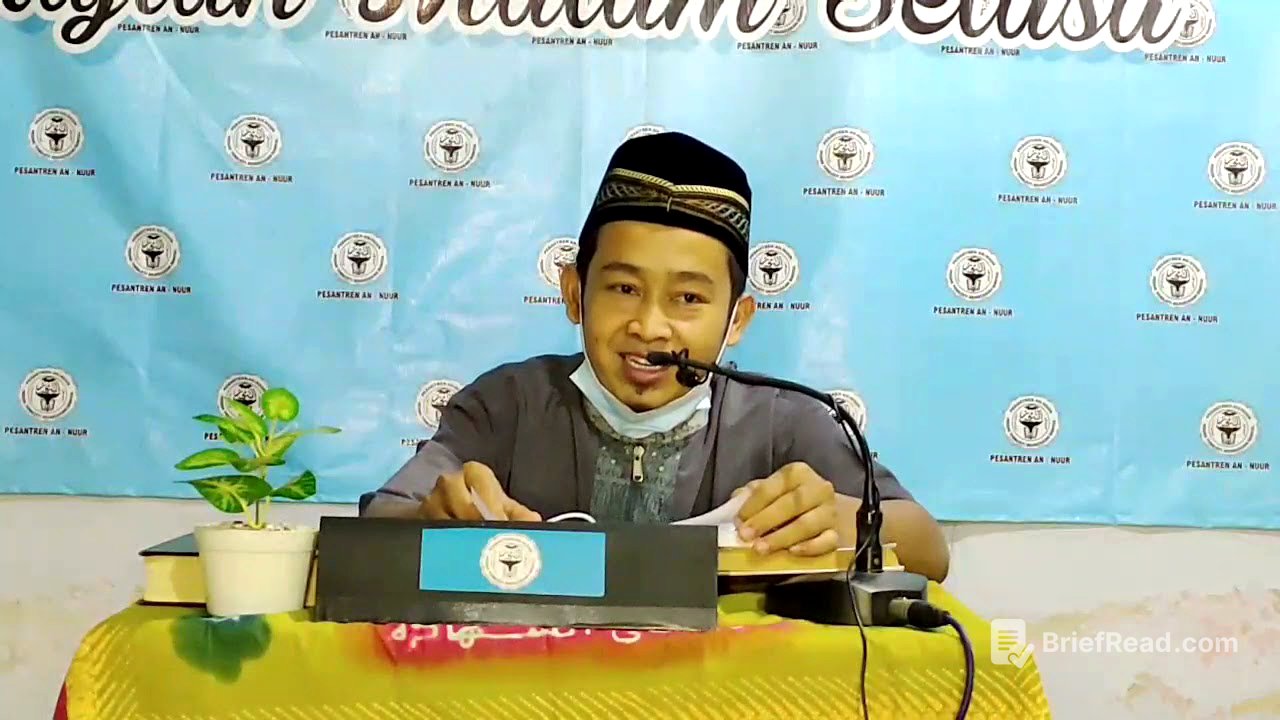
TLDR;
This video addresses the issue of excessive praise in some forms of "Sholawat" (prayers/blessings upon the Prophet Muhammad), cautioning against attributing divine qualities to the Prophet. It highlights specific examples of Sholawat that contain problematic meanings, potentially conflicting with core Islamic beliefs about God's unique powers and attributes. The video stresses the importance of adhering to the teachings of the Prophet and using established, authentic forms of Sholawat.
- Avoid exaggeration in Sholawat.
- Stick to Sholawat taught by the Prophet Muhammad.
- Understand the meaning of the words in Sholawat.
Introduction to Excessive Praise in Sholawat [0:00]
The video begins by addressing examples of Sholawat that may contain excessive praise of Prophet Muhammad (peace be upon him). The speaker clarifies that the views presented are based on their understanding and encourages differing opinions. The core issue is the impermissibility of attributing divine characteristics or qualities of God to the Prophet. The speaker references a hadith (saying of the Prophet) where the Prophet Muhammad forbade excessive praise, similar to that given to Jesus by Christians, and emphasised his status as a servant of Allah.
Analysis of Problematic Sholawat Examples [1:13]
The speaker analyses a common Sholawat, "Allahumma sholli ala sayyidina Muhammadin tibbil qulubi wadawaiha," and critiques its meaning. According to Sheikh Muhammad Jamil Zainu, such recitations often deviate from the teachings of the Prophet, his companions, and early Islamic scholars. The issue lies in attributing qualities like "the healer of hearts" and "the curer of bodies" to the Prophet, which are attributes belonging solely to Allah. The speaker quotes a verse from the Quran (Surah Al-A'raf, 188) where Prophet Muhammad states that he has no power to benefit or harm himself, except as willed by Allah.
Guidance on Authentic Sholawat and Avoiding Innovation [4:51]
The speaker advises using Sholawat that have been authentically transmitted and taught, such as those recited during prayers. There are six or seven variations of these established Sholawat. It's important not to rely solely on poetic compositions without understanding their meanings or assigning blessings and benefits to them without proper religious basis. Many people practice Sholawat based on what they've learned from their teachers, assigning specific counts and benefits without any scriptural evidence. This is considered an innovation that contradicts core Islamic beliefs, as determining reward, blessings, and merit requires religious proof.
Critique of Sholawat Nariyah and Similar Recitations [8:03]
The speaker, referencing Sheikh Muhammad Jamil Zainu, critiques the Sholawat Nariyah, which is often recited 4,444 times with the hope of relieving difficulties and fulfilling needs. The speaker quotes the Sholawat Nariyah and explains that this Sholawat attributes the ability to resolve problems and fulfil needs to the Prophet, which contradicts the Islamic belief that only Allah can do these things. The speaker emphasises that the Quran teaches that only Allah can ease difficulties and fulfil needs.
Distinguishing Sholawat from Poetry and Avoiding Misconceptions [10:48]
The speaker clarifies the difference between authentic Sholawat taught by the Prophet and general poetry. Many modern songs with Islamic themes are mistakenly called Sholawat. The speaker analyses the meaning of Sholawat Nariyah, pointing out that it attributes the resolution of life's problems and fulfilment of needs to the Prophet, which contradicts the Islamic belief that only Allah can provide these things. This can weaken or damage one's belief in Tawhid (the oneness of God).
Addressing Further Examples of Problematic Sholawat [15:49]
The speaker provides further examples of problematic Sholawat, including one that suggests the dead return home on Friday nights. Such beliefs are considered damaging to one's faith, as they contradict the Islamic understanding of death and the afterlife. The speaker clarifies that the deceased cannot return to the world because they are in the realm of Barzakh, a separated and screened-off dimension.
Final Advice on Proper Conduct in Sholawat [17:46]
The speaker advises against reciting Sholawat Fatih based on specific counts, such as 6,000 times, as promoted by Ahmad Tijani, the leader of the Tijaniyyah order. Sheikh Muhammad Jamil Zainu considers such practices as not having religious basis. The speaker reiterates the importance of avoiding excessiveness in religion, as it led to the destruction of previous communities. Muslims should place the Prophet in his proper position as a servant and messenger of Allah, and perform Sholawat in accordance with established teachings. Performing Sholawat at any time brings many blessings, including receiving ten blessings from Allah, forgiveness of sins, elevation in status, and nearness to the Prophet on the Day of Judgment. The speaker concludes by emphasising that prayers are hindered until blessings are sent upon the Prophet.