TLDR;
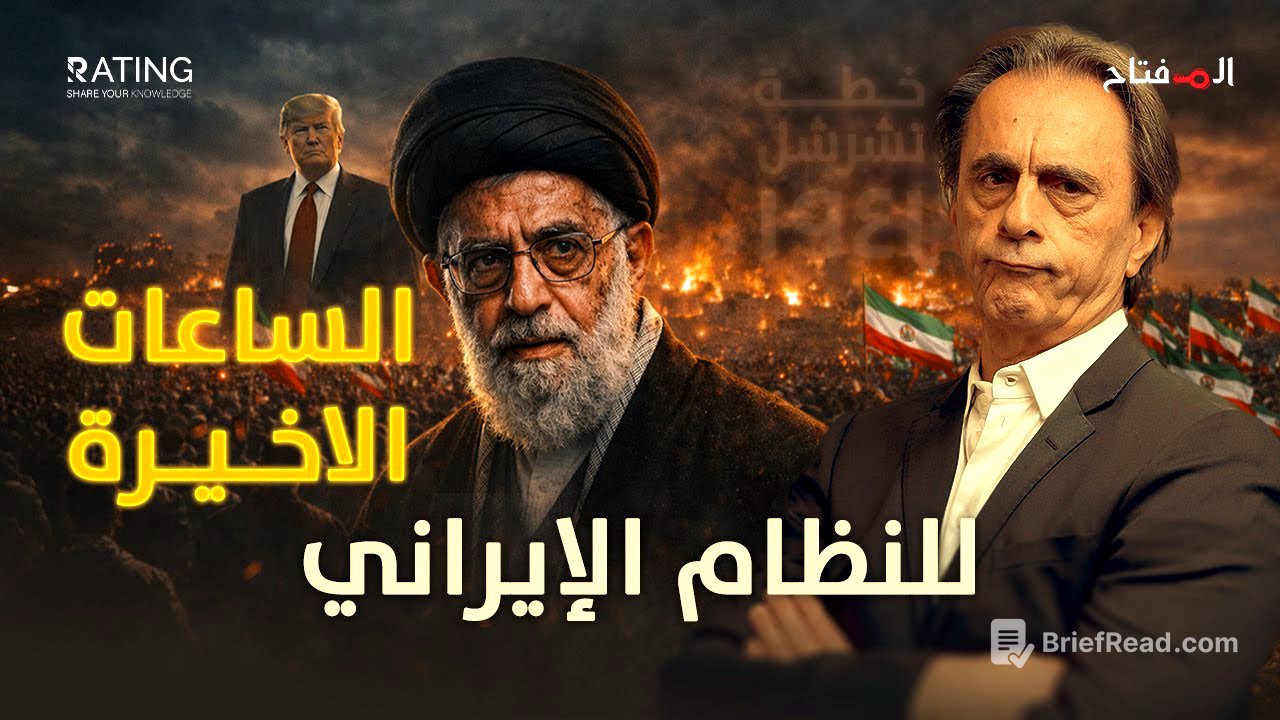
This video discusses the escalating tensions surrounding Iran, suggesting the country is on the brink of internal upheaval and potential conflict. It examines the internal unrest, international reactions, and potential geopolitical shifts. The video also touches on historical parallels and the broader implications for the region, including the potential for a US-backed regime in Iran and the impact on surrounding countries.
- Iran is facing internal revolt and external pressures.
- The US and Israel are closely monitoring the situation, with potential for intervention.
- Historical parallels are drawn to understand current events and future possibilities.
The Impending Iranian Eruption [0:01]
The video starts by suggesting that Iran is on the verge of collapse, with America monitoring the situation and Israel awaiting developments. Diplomats and foreign nationals are reportedly leaving Tehran, with Russia evacuating its citizens. Images purportedly show Israeli and Iranian forces clashing in the skies, while tensions rise within Tehran.
Internal Unrest and External Pressures [0:24]
The Iranian government is cracking down on dissent, with the Public Prosecutor threatening protesters with execution, labelling them as enemies of God. Border crossings are experiencing heavy congestion, and flights into Iran have been suspended, causing paralysis at Iranian airports. Donald Trump has warned against harming protesters, as casualties and arrests mount.
Revolution and International Reactions [0:46]
The video describes a widespread revolt across 180 Iranian cities and villages against the Ayatollahs. Western media outlets are reporting that Iran is on the verge of collapse. Iran's Foreign Minister is hinting at potential retaliation, with threats directed towards Israeli and American targets. Post-prayer chants include slogans against America and Jews, reminiscent of those used by Ansar Allah in Yemen.
Historical Context and Geopolitical Implications [1:58]
The speaker argues that the end of the Islamic Revolution in Tehran would lead to the US and Israel dominating the entire region, ending the Sunni-Shia conflict. He suggests that the US has realised that populations are becoming more aware, potentially exposing the recruitment of factions and organisations. He warns that if Tehran falls, a US-aligned regime will be established, posing a threat to neighbouring countries.
Potential Scenarios and Regional Impact [3:59]
The video warns that the danger extends beyond the immediate region, potentially reaching Istanbul and the Dardanelles. Before its potential collapse, Tehran will reveal all secrets. The speaker expresses concern for a prominent figure, fearing an attack. He urges viewers not to believe foreign propaganda and asserts that Iran will resist until the last Revolutionary Guard soldier.
Strategic Considerations and Internal Conflicts [4:41]
The speaker suggests that Iran might launch a significant attack on Israel to alter the balance of power. He reveals that Hezbollah has been alerted to the possibility of a final battle. He expresses fear of being part of a deal between the US, Russia, and China, seeking political asylum elsewhere.
US Strategy and Historical Parallels [5:34]
The US aims to combat China and Russia by exploiting their internal vulnerabilities, using its experience with global populations. Trump is implementing a long-term project to protect American national security by targeting non-democratic states. This strategy echoes historical discussions between Churchill and Eisenhower, framing Western conflicts as battles against enemies of democracy.
Iran-Contra Affair and Power Consolidation [6:53]
The video references the Iran-Contra affair, where Israel facilitated the delivery of American missiles to Iran during its war with Iraq. Western powers supported Khomeini's victory over the Shah, initiating an era of national conflict. Saddam Hussein's war with Iran was also crucial for solidifying his rule. National battles against external enemies are a common tactic for non-democratic governments to gain legitimacy.
Regional Perspectives and Internal Unity [8:36]
The speaker emphasises the importance of understanding events from the perspective of the people in affected countries. He advises unity and the creation of strong, unified states before interfering in other nations' affairs. He stresses that internal divisions make countries vulnerable to external interference and exploitation.
Global Changes and Future Instability [10:45]
The speaker warns that the winds of change are far-reaching, affecting countries from Greenland to Venezuela. He suggests that a long-term storm is coming, breaking down established governments from the Arctic to Taipei. The US has a list of targeted countries, including Istanbul and Abuja, but changes are not solely driven by American actions.
Turkey's Strategic Importance and Potential Conflicts [11:51]
The video questions why Istanbul is on the list, suggesting it relates to control over the Dardanelles. It references the 1915 battle where Ottoman forces, led by Mustafa Kemal, defeated Allied forces attempting to capture the straits. Turkey is mentioned as a target if it supports Palestinian rights and the new government in Damascus. Turkey's ability to unite the Islamic world also makes it a target, similar to Moscow and Beijing.
NATO and the Future of Iran [13:32]
Direct confrontation with Turkey is deemed illogical due to its military strength and NATO alliances. The US seeks a solution to benefit Israel, potentially through a project that undermines NATO agreements. Iran is entering a dark period that will only end with a new dawn. If the revolution fails, the population will not support the government in future conflicts. The loss of public support would be a significant blow to Tehran.
Paths Forward and Concluding Thoughts [14:08]
Iran faces two paths: collapse and comprehensive change, which could harm Arab interests, or retreat and decline, potentially leading to the loss of disputed territories to the Gulf states. This forces Tehran to consider drastic measures, similar to Saddam Hussein's actions. The era of religious states is ending, and the world is rapidly changing. The speaker concludes by urging people to awaken and free their minds.