TLDR;
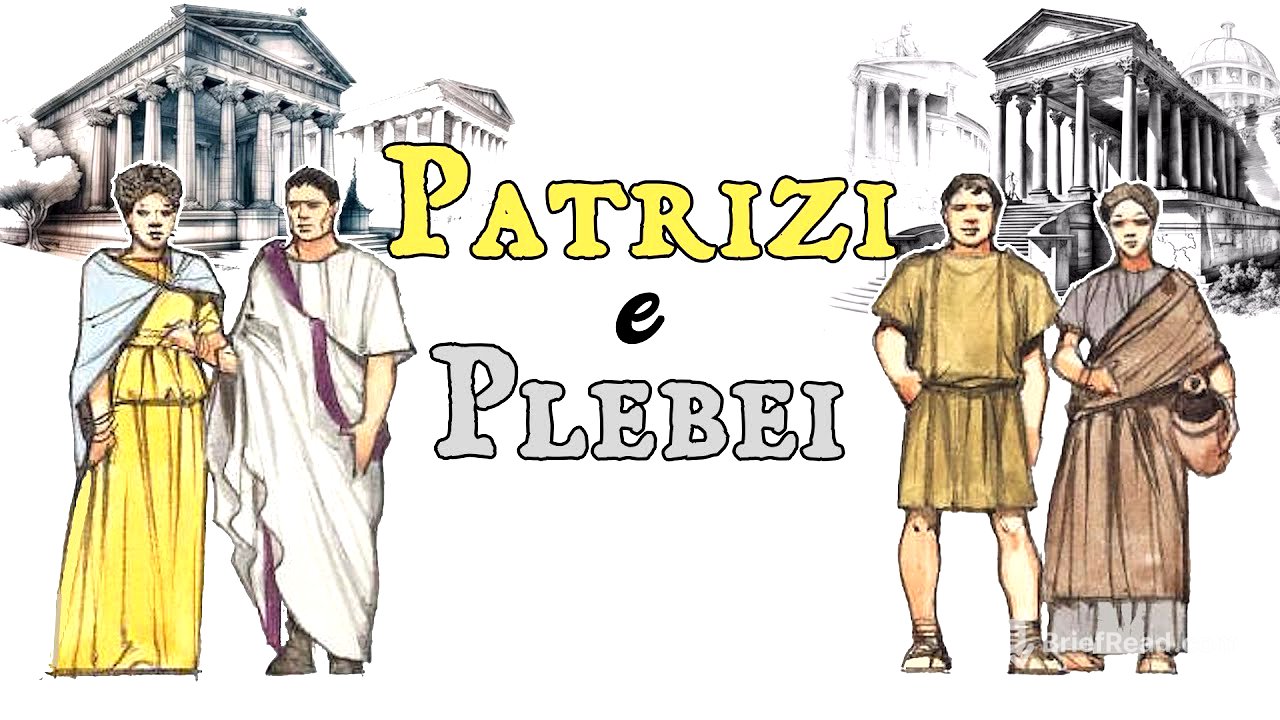
This video explains the historical conflict between the Patricians and Plebeians in ancient Rome. It covers the social and political inequalities, the Plebeian Secession, the establishment of tribunes, and the Gracchi brothers' reforms aimed at land redistribution and aiding the poor.
- Patricians held power and wealth, while Plebeians were excluded from political life.
- Plebeian Secession led to the creation of tribunes to represent Plebeian interests.
- The Gracchi brothers attempted land reforms to address economic disparities but faced violent opposition.
Patricians and Plebeians in Ancient Rome [0:00]
Despite Rome becoming a republic, access to political offices was restricted to the Patricians, who were wealthy aristocrats and landowners descended from Rome's founding fathers. In contrast, the Plebeians, comprising the majority of the population, were mostly farmers, artisans, and small merchants excluded from public life and lacking political rights. Laws were unwritten and favoured the Patrician class, leading Plebeians to become clients of Patrician families for protection, supporting them in political battles, war, and working their lands, maintaining a subordinate position.
The Rise of Patrician Power and Plebeian Rebellion [1:37]
During the Republic's expansion, the power and wealth of the Patricians increased, while the Plebeians, forced to serve as soldiers, became poorer due to the cost of arms and the abandonment of their livelihoods. In 494 BC, the Plebeians rebelled, staging a strike known as the Secession of the Plebs, gathering on the Sacred Mount and leaving the city, refusing to fight. Faced with approaching enemy armies, the Patricians sent Menenius Agrippa as an ambassador.
Menenius Agrippa's Fable and Plebeian Rights [2:32]
Menenius Agrippa convinced the Plebeians to end their protest with a fable about the body's parts rebelling against the stomach, only to realise their dependence on it. This led to the understanding that the Senate and the Roman people were one body, and harmony was essential. As a result, the Plebeians gained rights and concessions, including the establishment of tribunes of the Plebs, magistrates who represented the people and could veto laws against their interests.
The Laws of the Twelve Tables and Economic Disparity [4:25]
It took many years for the Plebeians to achieve fairer laws. Around 450 BC, the Senate codified the Laws of the Twelve Tables, making them accessible to both Patricians and Plebeians. Despite this, the government remained in Patrician hands, and expansionist wars widened the economic gap. Patricians acquired vast estates called latifundia, worked by war prisoners turned slaves, while Plebeians returning from war found their lands neglected and were forced to sell them cheaply to the Patricians.
Debt Slavery and the Gracchi Brothers' Reforms [5:35]
Debt slavery further plagued the Plebeians, as the poorest were forced to borrow from Patricians and, unable to repay, became slaves to their creditors. To address this, in 133 BC, the tribune Tiberius Gracchus proposed land reform, setting a maximum size for latifundia and redistributing the remaining land to Plebeian farmers. Although the law passed, it provoked wealthy landowners who had Tiberius assassinated and suspended the reform.
Gaius Gracchus and the Failure of Reform [6:37]
Ten years later, his brother Gaius Gracchus, as tribune of the Plebs, revived the reform and introduced a law granting poorer citizens the right to receive grain at reduced prices. However, he also faced opposition from landowners who incited their clients against him. Gaius's remaining supporters were massacred, and he had himself killed by a slave to avoid capture.