TLDR;
The video discusses essential macro minerals, providing detailed insights into magnesium, sodium, and potassium. Key takeaways include the importance of these minerals in various physiological functions, their dietary sources, absorption mechanisms, effects of deficiency and toxicity, and recommendations for daily intake.
- Magnesium plays a crucial role in over 300 enzymatic reactions, energy production, and muscle and nerve function.
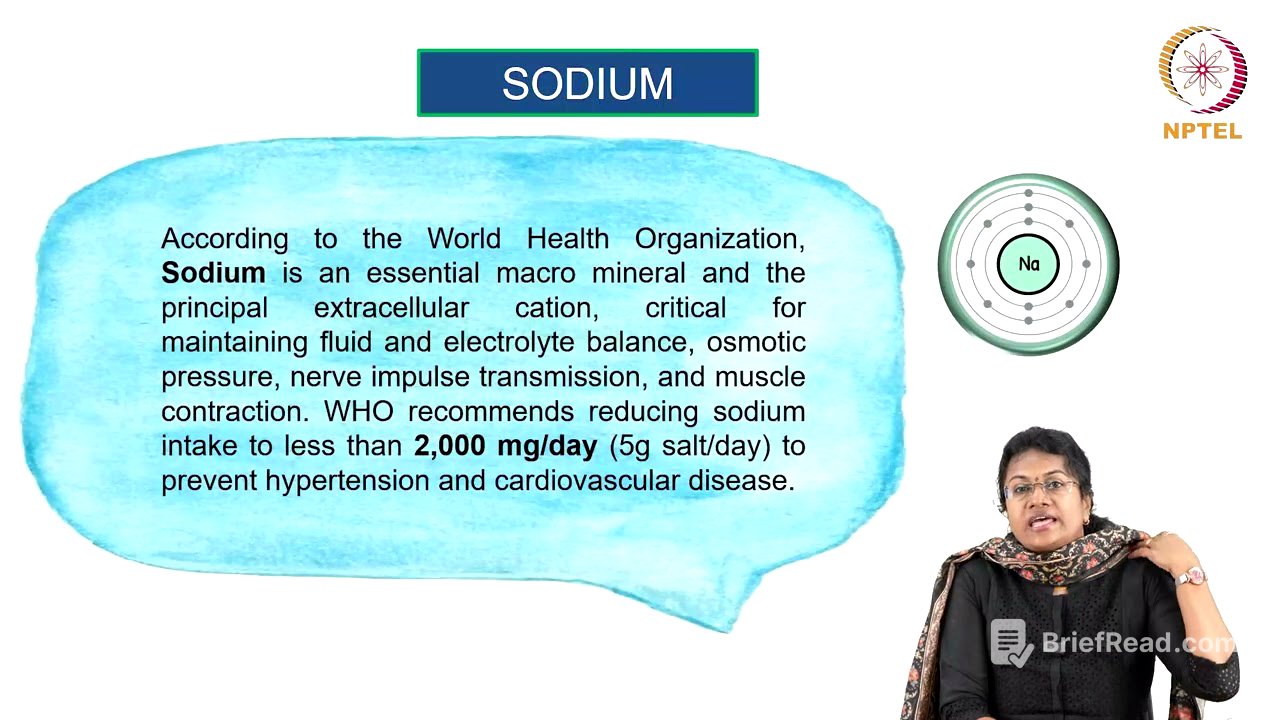
- Sodium is vital for fluid balance, nerve impulse transmission, and muscle contraction, with recommended intake levels to prevent hypertension.
- Potassium helps regulate blood pressure, fluid balance, and muscle function, with a focus on its requirement for healthy cardiovascular health.
Magnesium [0:16]
Magnesium is an essential macro mineral identified by the World Health Organization (WHO) as vital for many bodily functions, including energy production and nerve function. The adult body contains approximately 25 grams of magnesium, primarily in bones (60%) and muscles (38%). The normal serum magnesium level is 1.7 to 2.2 mg per dl, but this does not reflect total body magnesium content. Magnesium acts as a co-factor in over 300 enzymatic reactions, particularly those related to ATP-dependent processes. Deficiencies can result in muscle cramps and cardiac issues, notably affecting individuals with diabetes. Magnesium contributes significantly to DNA/RNA synthesis and protein synthesis, alongside regulating calcium's role in muscle contraction and relaxation. Its dietary sources include green leafy vegetables, nuts, and whole grains, with toxicity being rare and usually due to supplement misuse or renal failure.
Sodium [6:45]
Sodium is critical for maintaining fluid balance, nerve impulse transmission, and muscle contraction, according to WHO guidelines that recommend limiting intake to below 2,000 mg per day to reduce hypertension risks. Adult sodium levels average around 92 grams, with blood levels tightly regulated between 135-145 mEq/L. The renin-angiotensin-aldosterone system primarily governs sodium regulation, and typical Indian dietary intake often exceeds recommendations. sodium supports osmotic pressure and facilitates action potentials essential for nerve signaling and muscle movement. While sodium can be absorbed almost entirely from dietary sources, excess intake may lead to hypertension and related cardiovascular complications. Sodium-rich food sources include table salt, processed foods, and cheese, while toxicity may present as edema and kidney damage.
Potassium [13:27]
Potassium functions as a principal intracellular cation, vital for fluid and electrolyte balance, nerve transmission, muscle contraction, and blood pressure regulation. The WHO recommends a daily intake of 3,510 mg to mitigate cardiovascular risks. In adults, potassium accounts for approximately 140 grams, predominantly found inside cells. Blood serum levels are tightly controlled, with a normal range between 3.5-5 mEq/L. Maintaining potassium is crucial because it influences heart rhythm and muscle activity. Dietary sources include dried apricots, bananas, and potatoes, with absorption rates being high. Hyperkalemia, or elevated potassium levels, can cause serious cardiovascular problems and is more likely in individuals with kidney issues or those on certain medications.