TLDR;
This video focuses on the role of proteins in nutrition, covering their structure, functions, classifications, and nutritional aspects. Key points include:
- Proteins are vital building blocks of the body, comprising 75% of overall body weight and participating in various biological processes.
- The classification includes simple proteins, conjugated proteins, and derived proteins, alongside the importance of amino acids.
- The process of protein digestion and absorption is critical, involving several enzymes and occurring mainly in the stomach and small intestine.
- Nutritional aspects include the classification of proteins based on quality and assessing protein intake needs, alongside addressing protein energy malnutrition (PEM).
Introduction to Proteins [0:16]
The session begins by explaining that proteins are the fundamental building blocks of life and nutrition. Students will learn about the structure, composition, properties, and functions of proteins, including classifications of amino acids, digestion, absorption, and clinical applications related to protein nutrition.
History and Importance of Proteins [1:00]
The term "protein" was first suggested in 1838 by Dutch chemist Moulder, derived from the Greek word "proteio," meaning "first importance." Proteins are critical as they make up around 75% of body weight and are involved in essential biochemical, physiological, and structural functions, including forming enzymes, haemoglobin, and supporting muscle contraction.
Chemical Composition of Proteins [3:15]
Proteins consist of carbon, hydrogen, oxygen, and nitrogen, with some containing sulfur and phosphorus. The "nitrogen factor" concept is introduced, explaining how protein content in food can be estimated by measuring nitrogen content, using a conversion factor of 6.25.
Physical and Chemical Properties of Proteins [4:41]
Proteins exhibit amphoteric nature, acting as acids and bases to help maintain body pH. They differ in solubility; some dissolve in water while others require salt or are insoluble. Proteins’ colloidal nature aids in osmotic balance and can lead to gel formation, as seen when eggs are cooked.
Classification of Proteins [6:24]
Proteins are classified into three types: simple proteins (yielding only amino acids), conjugated proteins (combination of proteins with non-protein groups), and derived proteins (obtained from simple or conjugated proteins through denaturation or hydrolysis).
Classification of Amino Acids [7:55]
Amino acids are classified based on the properties of their R groups, the position of the amino group, stereochemistry, net charge, nutritional value (essential, non-essential, conditionally essential), and metabolic fate (glucogenic, ketogenic).
Protein Digestion and Absorption [10:53]
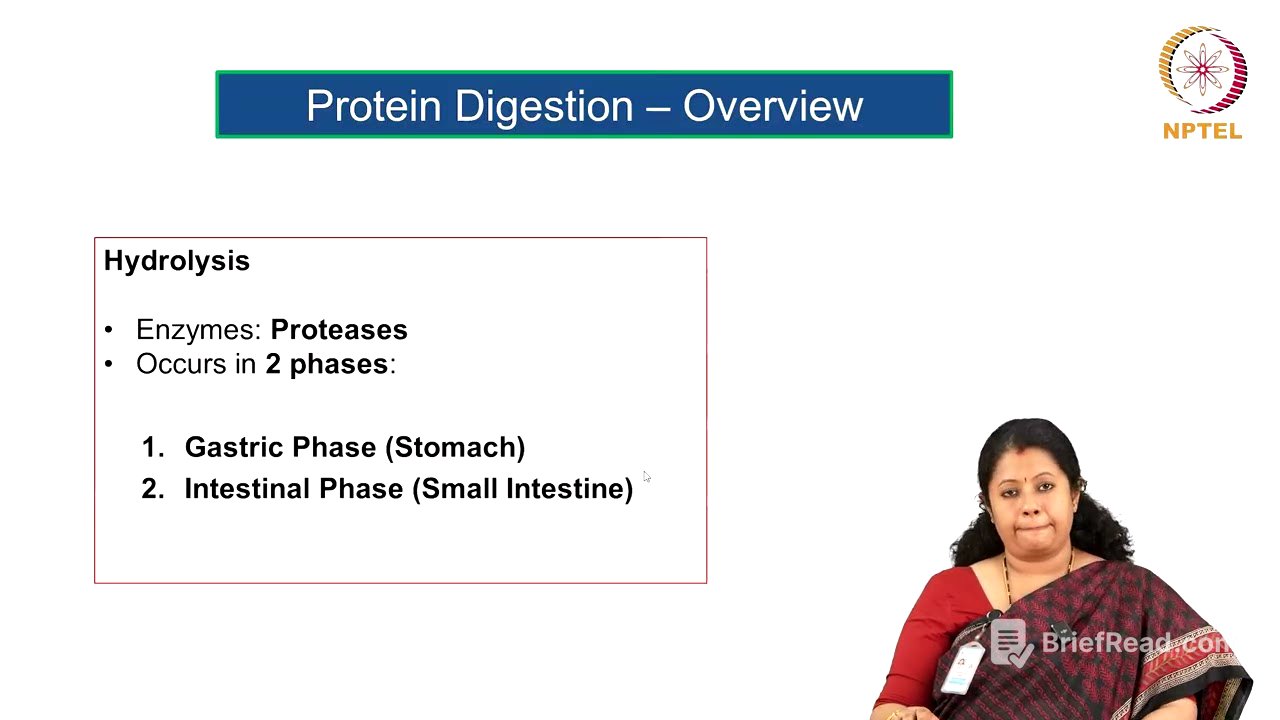
Protein digestion is termed hydrolysis and occurs in two phases: gastric and intestinal. Proteins are denatured in the stomach by hydrochloric acid and further digested by proteases in the small intestine, breaking down into amino acids for absorption via active transport mechanisms.
Nutritional Aspects of Proteins [15:18]
Nutritional quality of proteins includes classifications into complete proteins (containing all essential amino acids), partially incomplete proteins, and incomplete proteins. Methods to evaluate protein quality include protein efficiency ratio, biological value, and net protein utilization.
Nitrogen Balance and Protein Requirement [18:15]
Nitrogen balance informs protein metabolism, with equilibrium when intake equals output. Positive nitrogen balance occurs during growth, while negative indicates increased protein needs, prevalent in states of malnutrition. Protein requirements for Indian adults are approximately 0.66 g per kg per day.
Protein Deficiency Indicators [23:35]
Inadequate protein intake leads to protein energy malnutrition (PEM), manifesting as conditions like kwashiorkor (protein deficiency) and marasmus (deficiency of both protein and calories). Clinical features might include edema, fatty liver, and severe wasting.
Improving Protein Quality [25:26]
To enhance protein quality, methods like mutual supplementation (combining incomplete proteins) and fortification (adding specific amino acids to foods) are suggested. These methods help address nutritional deficiencies and improve overall dietary protein quality.
Smart Protein Choices [27:42]
Recommendations for smart protein consumption include focusing on whole foods, maintaining optimal ratios of cereals to pulses, moderating animal protein intake, and including diverse protein sources while avoiding protein powders and excessive red meat.
Conclusion [29:18]
Proteins are crucial for numerous life processes. They consist of various elements and play significant roles in various bodily functions. The necessity of balanced protein intake for health and wellbeing is highlighted, stressing the importance of quality in dietary sources.