TLDR;
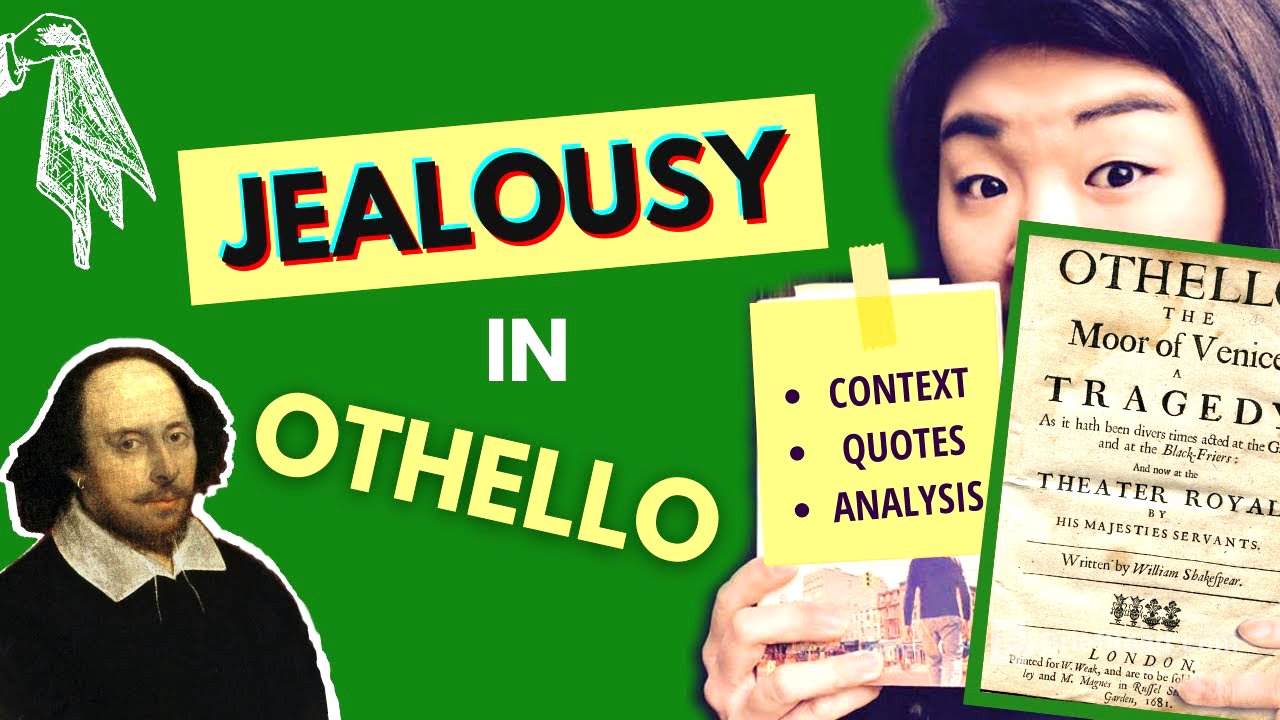
This video explores the theme of jealousy in Shakespeare's "Othello", questioning whether it is the primary cause of Othello's downfall or merely a symptom of deeper insecurities. It examines the historical context of Anglo-Moroccan relations in Elizabethan England, the character of Othello as an ethnic outsider, and the destructive nature of jealousy within the play. The video concludes by analysing Othello's final speech, suggesting that his tragedy lies in his inability to navigate Venetian society and his overwhelming emotions.
- Jealousy is often a symptom of deeper insecurities, both in Iago and Othello.
- Jealousy defies logic and reason, as seen in the characters of Brabantio and the manipulation of Iago.
- Jealousy is a destructive force, leading to the downfall and death of many characters in the play.
Introduction: The Theme of Jealousy in Othello [0:00]
The video introduces the theme of jealousy in Shakespeare's "Othello", questioning whether it is the primary cause of Othello's downfall or merely a symptom of a deeper underlying cause. It references Emma Smith's view of Othello as a tragedy of a black man in a white world, driven by jealousy to murder his innocent wife. The video also introduces the concept of hamartia, a character fault or mistake that causes someone to fail, and questions whether jealousy is Othello's hamartia or a symptom of a more troubling character trait.
Historical Context: Anglo-Moroccan Relations [2:11]
The video explores the historical context of Anglo-Moroccan relations in late Elizabethan England, noting that the English-Spanish war led Elizabeth I to seek alliances with Morocco, strengthening diplomatic and trading ties. The presence of Moorish emissaries at the English court during this period may have inspired Shakespeare in his construction of Othello. Similar to "The Merchant of Venice", "Othello" features an ethnic outsider navigating a white Venetian world, drawing from an Italian source text about a Moorish captain.
Othello's Character: Man and Beast [3:52]
Othello is presented as a manichean character, embodying contradictory traits such as man and beast, hero and villain, and lover and murderer. The speed with which Othello switches between these identities reflects his control over a given situation. His actions are tied to his self-perception as an alien, catalysed by a flawed sense of self, which breeds the jealous sentiments that drive him to destruction. Self-perception is the cause, and jealousy is the symptom, egging him on in his quest for acceptance.
Jealousy as a Symptom of Deeper Insecurities: Iago [5:19]
The video examines Iago's professional jealousy as the genesis of the play's conflict. Iago's hatred for Othello stems from being passed over for a promotion to lieutenant, a position given to Michael Cassio instead. Iago's mercenary view of professional relationships foreshadows his ruthless plot to poison Othello's mind. He also suspects an affair between Othello and his wife Emilia, using professional diction to describe his domestic identity, seeing his marriage as a competition he can't bear to lose. The thought of Emilia cheating on him with a "black beast" drives Iago to externalise his rage and shame onto Othello.
Jealousy as a Symptom of Deeper Insecurities: Othello [11:15]
Othello, despite his confidence, is painfully aware of his inadequacies in manner, society, and speech. In Act 1, Scene 3, he prefaces his defence against accusations of stealing Desdemona by stating he is "rude" in speech and lacks the "soft phrase of peace". This self-awareness belies his self-consciousness as a Moorish outsider in a white society, revealing the wobbly foundations of his confidence. Iago's meddling in Act 3, Scene 3, causes Othello's composure to crack, exposing his insecurities about being black and older than Desdemona. He equates the alleged dishonour of her name with the black complexion of his face, internalising stereotypical associations of blackness with evil.
Jealousy Defies Logic and Reason: Brabantio [17:30]
The video explores how jealousy defies logic and reason, even in minor characters like Brabantio, Desdemona's father. Brabantio's revulsion towards Othello is attributed to paternal jealousy, where a possessive father can't let go of his daughter. Despite having a cordial relationship with Othello, Brabantio assumes Othello must have stolen his daughter, insisting she must have been charmed by sorcery. His rage betrays logical gaps in his thought, such as assuming Desdemona's rejection of Venetian suitors means she is opposed to marriage per se, a non-sequitur he attempts to bridge by claiming Othello used "foul charms".
Jealousy Defies Logic and Reason: Iago's Manipulation [23:28]
Iago understands the reason-shaped hole in jealousy and manipulates it for his self-interest. He plants Desdemona's handkerchief in Cassio's house, knowing that "trifles light as air are to the jealous confirmations strong as proofs of holy writ". This juxtaposition exposes the illogicality of the comparison, as even trivial things seem to carry the weight of scriptural words to the jealous. Emilia offers practical wisdom on the baseless nature of jealousy, stating that "jealous souls will not be answered so; they are not ever jealous for the cause, but jealous for they are jealous".
Jealousy Can Be Destructive [26:34]
Jealousy is the gravitational source of all destruction in the play. Othello's jealousy leads him to kill Desdemona and commit suicide. Brabantio dies of grief due to his jealousy of Othello. Rodrigo is killed by Iago due to his jealousy of Othello. Iago kills Emilia and is punished due to his jealousy of Cassio and Othello. Bianca is not taken seriously by Cassio due to her jealousy. Cassio, the only character not jealous, survives and rules over Cyprus. Jealousy sets in motion destructive and self-destructive events for all the men except Cassio.
Conclusion: Othello's Final Speech [29:50]
The video concludes by analysing Othello's final speech, questioning whether "Othello" is truly a tragedy of jealousy. Othello states he is "not easily jealous" and wants to be remembered as one who "loved not wisely but too well". Instead of focusing on Othello being "wrought perplexed in the extreme", the video directs attention to his "subdued eyes", suggesting that it was the psychological and cognitive impacts of jealousy that led him astray. Othello's tragedy lies in being a foreigner forced to assimilate in a foreign land, failing to master social, marital, and sexual relations. His suicide is seen as a redeeming liberation from a tragic world.