TLDR;
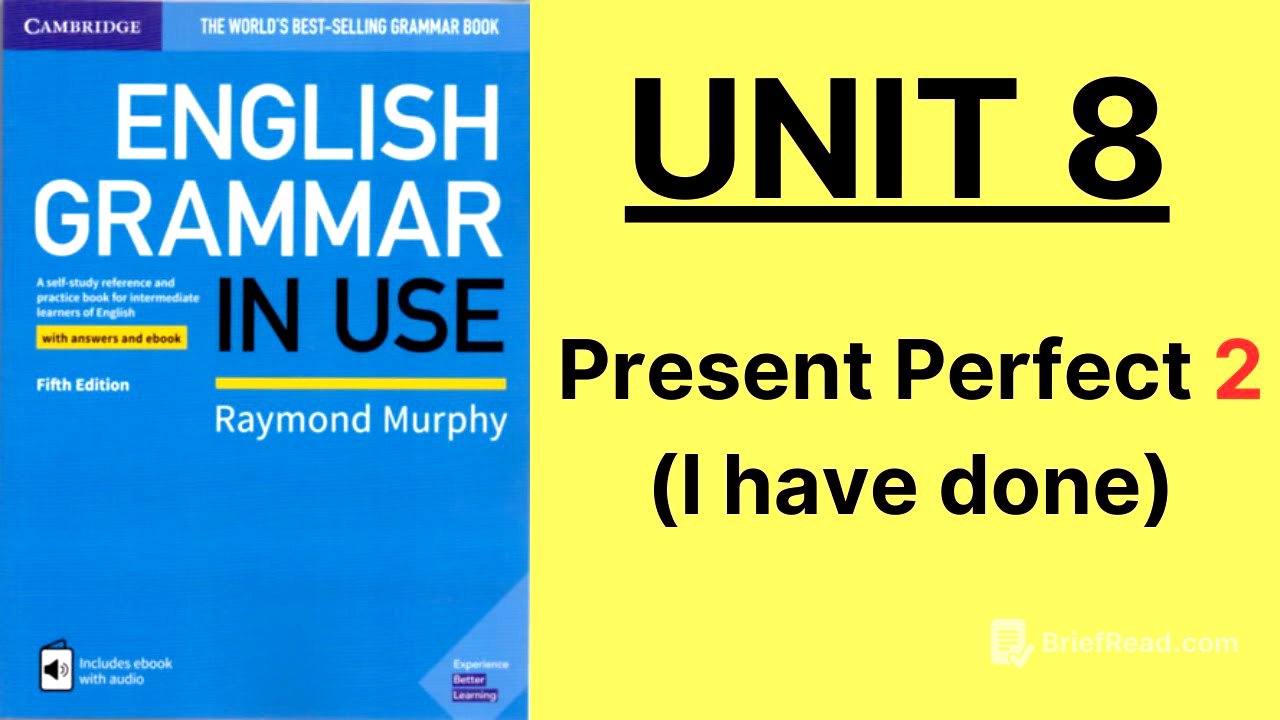
This video explains the use of the present perfect tense in English grammar, focusing on experiences from birth to the present, actions that have never happened, repeated actions, and superlatives. It also covers the use of present perfect with words like "recently", "lately", "so far", "since", "for", and "today", as well as its application in describing first-time events.
- Present perfect uses "have/has + past participle" to describe actions from the past that continue to the present or have a connection to the present.
- It's used for experiences, actions that haven't happened, repeated actions, and superlatives related to one's life.
- Time expressions like "recently", "lately", "so far", "since", "for", and "today" can be used with the present perfect under specific conditions.
Introduction to Present Perfect [0:00]
The video introduces the present perfect tense, building on the previous video. It reminds viewers that the present perfect uses "have" or "has" plus the past participle (verb three). The tense describes actions that started in the past and continue to the present or have a connection to the present. An example is given: "Have you ever eaten sushi?" which refers to the period from birth until today.
Experiences and Present Perfect [2:49]
The video explains that present perfect is used to describe experiences from birth to the present, such as "Have you ever eaten caviar?". It's also used for actions that have never happened, like "I have never smoked". Repeated actions, such as "She's read that book three times," and superlatives, like "It's the most boring movie I've ever seen," also use the present perfect to describe events within one's lifetime.
Time Expressions with Present Perfect [3:45]
The video discusses time expressions commonly used with the present perfect. "Recently" and "lately" refer to the short past, while "so far" means up to now. "Since" indicates a starting point, as in "It's rained every day since I arrived here," and "for" is used with a duration, such as "We haven't seen each other for a long time." Present perfect can also be used with "today" or "this week" if the period is not finished, like saying "I've drunk four cups of coffee today" in the morning.
First Time Events and Present Perfect [6:20]
The video explains that present perfect can be used to talk about first-time events, often in a negative form. For example, "It is the first time he has driven a car." The negative form uses "before," as in "He hasn't driven a car before," or "never," as in "He has never driven a car before," to emphasise the lack of prior experience.