TLDR;
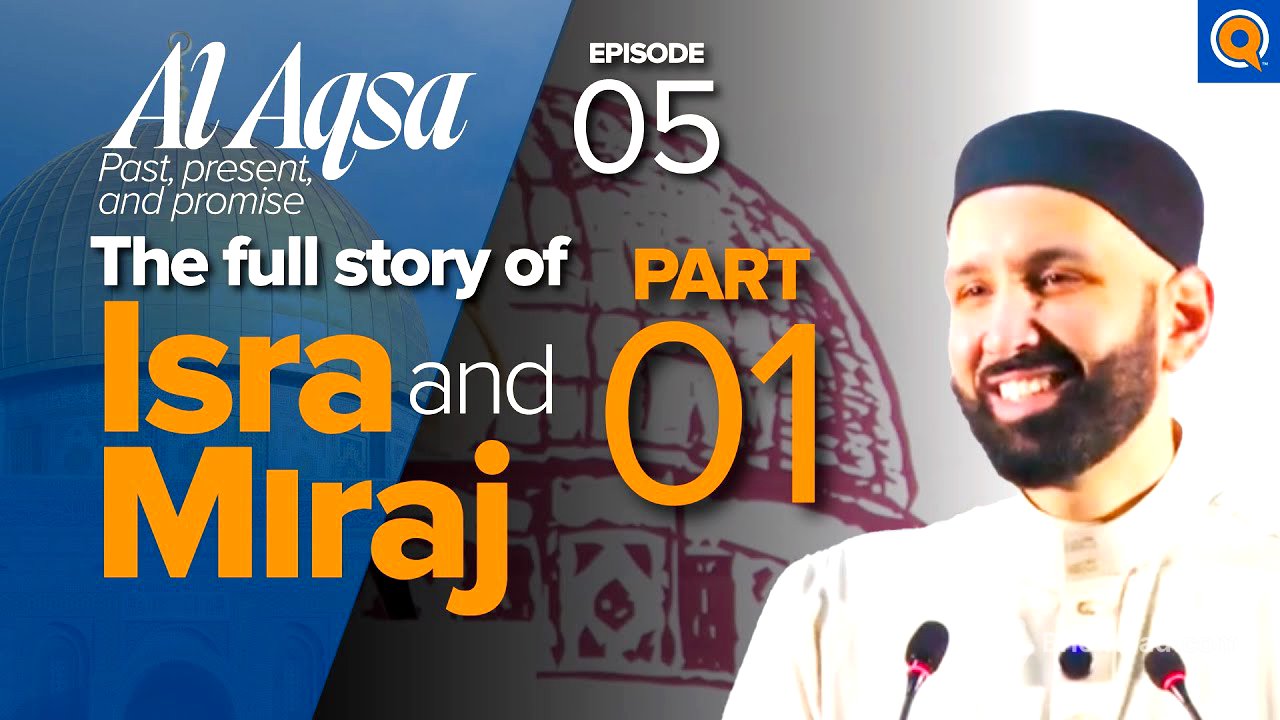
This video explores the historical and spiritual context surrounding the Prophet Muhammad's (peace be upon him) journey of Isra and Mi'raj, focusing on the geopolitical landscape of the 7th century, particularly the Roman-Persian conflict and the status of Jerusalem. It highlights the significance of Jerusalem in Islam, its connection to previous prophets, and the trials faced by the early Muslims.
- The Roman-Persian War, lasting seven centuries, significantly impacted the political and religious dynamics of the time.
- Jerusalem, under Roman rule, experienced periods of destruction and rebuilding, influencing Jewish-Christian relations.
- The Surah Rum prophecy foretold the Romans' victory over the Persians, coinciding with the Muslims' own victories.
- The Year of Grief marked a period of intense hardship for the Prophet Muhammad (peace be upon him), preceding the miraculous journey.
- The journey from Mecca to Jerusalem symbolises the connection between the Abrahamic faiths and the Prophet's leadership.
Roman rule in Palestine [0:00]
The historical backdrop to the Prophet Muhammad's (peace be upon him) era includes the promise of Jerusalem and the Messiah, alongside complex Jewish-Christian relations and the ongoing Roman-Persian War. Seventy years after Jesus (peace be upon him), the Romans destroyed remnants of worship in Jerusalem and exiled the Jewish population, looting treasures. In 130 AD, they rebuilt Jerusalem as a Roman city, forbidding Jewish and Christian presence, and erected pagan temples. By the 4th century, Emperor Constantine adopted a version of Christianity aligned with Roman paganism, enforcing it through the Council of Nicaea. Hostility towards Jewish populations persisted, with Jews allowed only annual visits to the Western Wall to mourn.
The Byzantine-Persian War [9:42]
The Roman-Persian War, the longest in history, spanned the time of prophets such as Zakaria, Yahya, Isa, and Muhammad (peace be upon them). The Jewish community of the time allied with the Persians due to historical animosity towards the Romans and Christian mistrust, despite sharing scriptural roots. Key figures included Khosrau II, the arrogant Persian emperor born the same year as the Prophet (peace be upon him), and Heraclius, the Byzantine leader who seized power the same year the Prophet received revelation. Khosrau II, viewing instability in the Roman Empire, rejected Heraclius' peace overtures and launched an offensive.
The Surah Rum prophecy [21:25]
In 610 AD, the Jewish community in Jerusalem revolted against Byzantine rule, allying with the Persians. By 613 AD, Damascus fell to the Persians, followed by Jerusalem in 614 AD, where Khosrau II massacred Christians and stole the True Cross. The Romans were on the brink of defeat. In 615 AD, persecution of Muslims intensified in Mecca, with the first bloodshed and the initial Hijra to Abyssinia, a Christian land. Abu Jahl mocked Muslims with the Roman defeat, while the Jewish community was welcomed back into Jerusalem. Despite this, they were only allowed to clean up the area but not rebuild the temple. It was in this context that Allah revealed Surah Rum, foretelling the Romans' victory within three to nine years, a statement of divine control and a promise of joy for the believers. Abu Bakr (may Allah be pleased with him) made a bet on this prophecy, demonstrating his unwavering belief.
The Prophet ﷺ’s Year of Grief [34:55]
In 618 AD, the Persians conquered most of Egypt, worsening the situation for the Romans. Abu Bakr (may Allah be pleased with him) extended his bet, raising the stakes. By 619 AD, Heraclius launched a counter-offensive in Syria, marking the same year as the Battle of Badr, where Muslims achieved victory. This year also coincided with the Year of Grief for the Prophet Muhammad (peace be upon him), marked by the loss of his wife Khadijah and his uncle Abu Talib, who provided emotional and physical support, respectively. Every door seemed shut to the Prophet (peace be upon him), including a failed attempt to find refuge in Ta'if.
Journey from Makkah to Jerusalem [42:51]
The Prophet Muhammad (peace be upon him) was in the house of Umm Hani (may Allah be pleased with her), the sister of Ali (may Allah be pleased with him), when Jibril (peace be upon him) came to him dressed in green garments. Jibril (peace be upon him) took the Prophet's heart out for the second time, filling it with Iman (belief) and Hikma (wisdom). The Prophet (peace be upon him) was then brought Buraq, an animal faster than lightning, to ride. The Buraq was initially shy but was reassured by Jibril (peace be upon him).
Prophets pray in Masjid al-Aqsa [57:07]
During the journey, the Prophet (peace be upon him) prayed in Medina, signifying his future Hijra, and in Mount Sinai, where Allah spoke to Musa (peace be upon him). He also passed by the grave of Musa (peace be upon him). He then prayed in Bethlehem, the birthplace of Isa (peace be upon him). The journey to Jerusalem was significant because it connected the first two places built for the worship of Allah, Mecca and Jerusalem. It combined the leadership of the children of Ismail and Ishaq (peace be upon them) for the Prophet (peace be upon him). The Prophet (peace be upon him) was brought near to the Qibla and to Allah. Jerusalem is the portal to the heavens and the place of the end of times. Upon reaching Jerusalem, Jibril (peace be upon him) tied the Buraq to the Western Wall. The Prophet (peace be upon him) then led all the prophets in prayer, symbolising his role as the greatest leader.