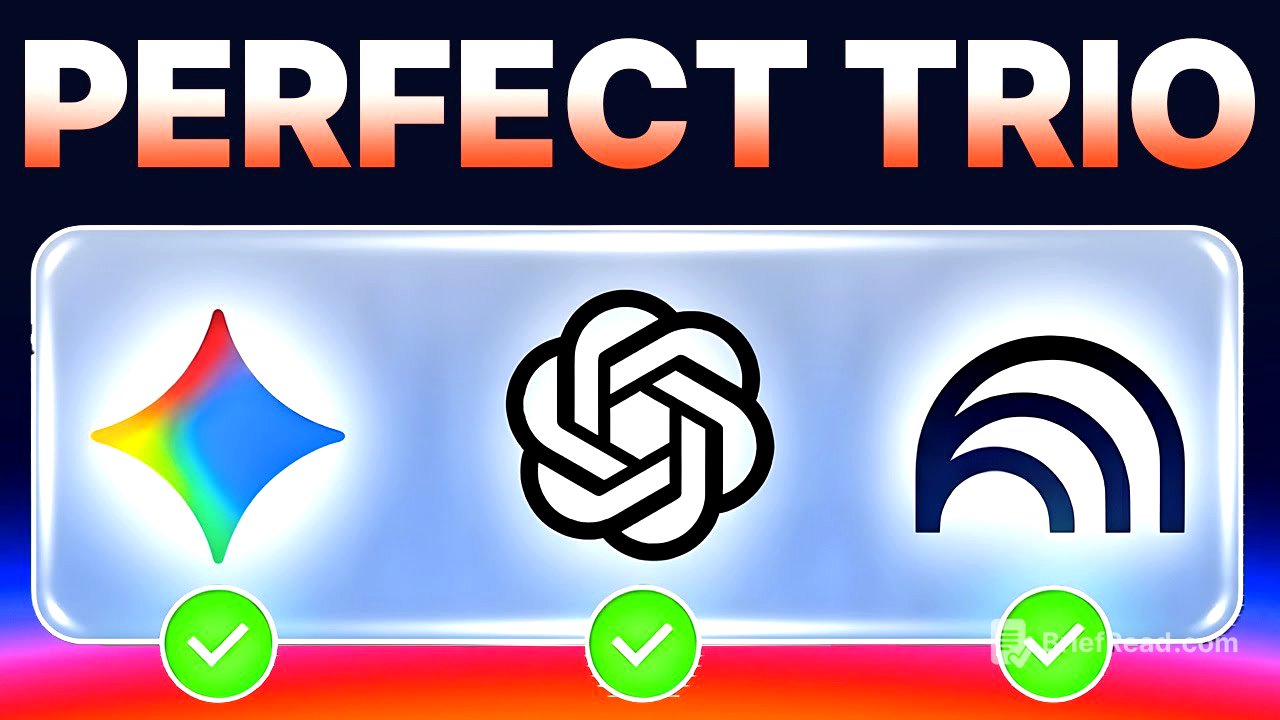
TLDR;
This video introduces a powerful AI stack consisting of Gemini, NotebookLM, and ChatGPT, explaining how their combined use can revolutionise workflows. It details how to use Gemini for real-time research, NotebookLM for organising insights, and ChatGPT for high-converting writing. The video provides step-by-step instructions and examples for various applications, including creating research-backed emails, developing social media strategies, and conducting product research.
- Gemini is used for real-time, up-to-date research.
- NotebookLM organises research and creates summaries.
- ChatGPT crafts content based on the organised research.
Intro to the Triple AI Stack [0:00]
The video introduces a powerful combination of AI tools: Gemini, NotebookLM, and ChatGPT, which together can transform the way you work. This setup enables faster research, improved writing, and automation of tasks. The presenter emphasises that stacking these tools unlocks a level of power beyond using them individually, leading to deeper research, better content, and significant time savings.
Real-Time Research with Gemini [1:01]
Gemini, Google's AI, is highlighted for its real-time internet connectivity, allowing it to provide the latest information. Unlike other tools that rely on outdated data, Gemini can pull current trends and information. For example, asking Gemini about top AI automation trends for online communities will yield up-to-date and relevant data.
Organizing Insights in NotebookLM [1:24]
NotebookLM, Google's research tool, is designed to organise information efficiently. Users can upload documents, research, and notes to create a comprehensive knowledge base. This tool acts as a research assistant, ensuring no information is forgotten. By feeding the data obtained from Gemini into NotebookLM, users can systematically organise their research.
High-Converting Writing with ChatGPT [1:48]
ChatGPT is presented as the premier writing tool, capable of producing high-quality content when provided with organised research. By inputting the organised research from NotebookLM into ChatGPT, users can generate targeted content, such as landing pages, that are backed by real data and current trends. This approach ensures the content is not only well-written but also highly relevant and effective.
The Step-by-Step AI Workflow [2:22]
The video breaks down the process step-by-step, starting with using Gemini to research a topic. For instance, when researching the AI Profit Boardroom, Gemini can identify the biggest problems online business owners face with AI automation, the solutions they seek, and the language they use. Gemini searches forums, social media, and recent articles to gather real data. This research is then copied into NotebookLM, where it is organised into sections such as pain points, solutions, and audience language. NotebookLM can also generate study guides, summaries, and FAQs based on the uploaded research, providing a complete overview of the topic. Finally, ChatGPT uses this organised information to write specific and targeted content.
Creating Research-Backed Emails [4:18]
The process extends to creating email sequences. Gemini is used to research email subject lines with high open rates, pain points to address, and effective calls to action for AI and automation content. This data is then organised in NotebookLM, highlighting patterns and effective strategies. Finally, ChatGPT uses this organised research to write a five-email welcome sequence, incorporating the researched subject lines, pain points, and calls to action, resulting in a research-backed and conversion-focused email campaign.
Social Media Strategy that Wins [5:16]
For social media content creation, Gemini identifies AI automation posts with the most engagement on platforms like LinkedIn, noting trending topics and effective formats. This research is organised in NotebookLM by topic, format, and engagement level to reveal patterns. ChatGPT then uses this information to write social media posts that are engaging, valuable, and shareable, based on proven formats and topics.
Product Research & Feature Planning [6:23]
The same process can be applied to product research and feature planning. Gemini researches features of successful online communities, member preferences, and engagement drivers. This data is organised in NotebookLM to identify frequently requested features and valued aspects. ChatGPT then creates a plan for a new feature, complete with descriptions, implementation steps, and member benefits, all backed by research.