TLDR;
Restaurant closures are driven by more than poor food: rising costs, weak visibility, limited marketing and operational strain can all threaten a business. The video tests the recovery plans of Applebee’s, Long John Silver’s and Red Lobster, then visits independent restaurants to identify their challenges and practical ways forward. Strong food still needs clear marketing, focused menus, reliable systems and active efforts to earn customers’ support.
- Applebee’s and IHOP’s combined restaurants do not clearly improve on IHOP’s own food, while Long John Silver’s rebrand shows promise.
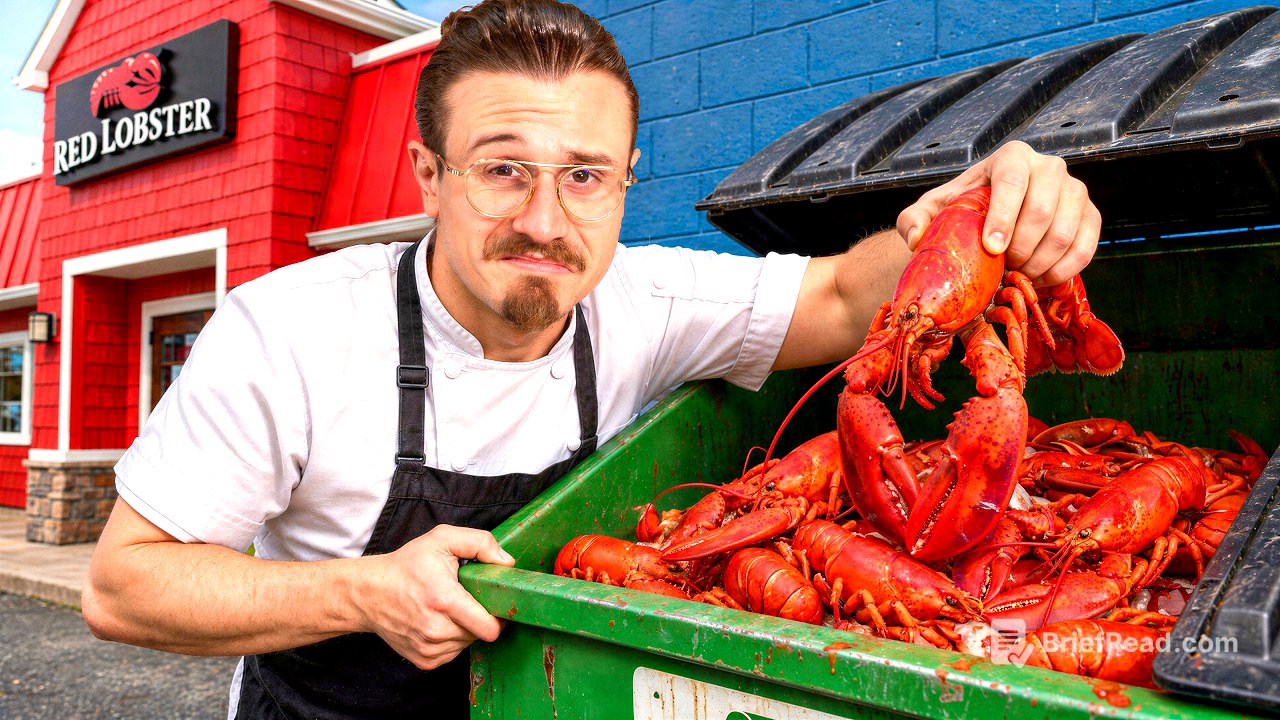
- Red Lobster’s comeback is held back by inconsistent food, including bitter sauces and oil, overcooked seafood and dry biscuits.
- Rollin’ Smoke BBQ serves excellent food but struggles with visibility, rising meat prices and owner burnout.
- Vaco House’s wide-ranging menu and workload create challenges; a focused Empanada Week draws a crowd and sells out.
- Successful restaurants need to market proactively, build teams and systems, educate customers and give people a reason to return.
Applebee’s and IHOP: Can a Combined Restaurant Work? [0:22]
Applebee’s and IHOP share a parent company, and more than 200 Applebee’s locations have closed. The company has responded by combining the brands: around 45 “IHOP-bee’s” were operating, with plans for 80 more by the end of the year. These restaurants serve both chains’ regular menus as well as crossover dishes, but the question is whether the combination genuinely improves the food and dining experience.
The restaurant’s layout shifts from an IHOP-like dining area towards an Applebee’s-style bar. The group orders pancakes, Applebee’s Riblets and an Ultimate Breakfast Burger, a crossover dish. The pancakes are soft and nostalgic, though they have an artificial flavour; the burger is a decent combination, with well-seasoned ingredients and hollandaise, but chewy hash browns. The Riblets are extremely dry, making them the weakest dish.
The IHOP dishes are the favourites, which raises doubts about whether combining the brands helps Applebee’s. One proposed alternative is for Applebee’s to focus on being a bar rather than a bar and grill, perhaps with a casual, drive-through drinks model. The idea is only a suggestion, but Applebee’s remains a difficult chain to fix.
Long John Silver’s: A Rebrand with Potential [4:01]
Long John Silver’s is known for fried fish and has previously served memorable chicken tenders, so its position among struggling chains is disappointing. Many locations are closing, and the company has broadened its identity from seafood to “Chicken + Seafood”, adding new menu items. This visit is to a standalone restaurant, whereas many locations share space with A&W.
The new menu receives mixed but generally encouraging reviews. Fried pickles are crisp but overly salty and eventually chewy. The wings work well with a shattering tempura-style batter and a sweet chilli sauce with noticeable heat. Cheese curds are acceptable but lack crunch, while the onion rings are fluffy, crisp and pleasantly fresh. The fish is flaky and cooked well, though the meal feels heavy.
The chicken tenders are crispy and moist rather than greasy, although they are not as good as on a previous visit. Overall, the food has a distinctive character that other chains do not offer, and the rebrand looks fresh and appealing. Long John Silver’s seems among the more likely chains to succeed, but it will need to maintain that standard.
Red Lobster: A Comeback Undermined by the Food [7:14]
Red Lobster appears busy at first, but the dining room is nearly empty when the group arrives. After a decade of financial problems, the company was bought by its shrimp supplier. In 2023, it made Endless Shrimp a permanent offer; the promotion contributed to chaotic long eating sessions and cost the chain more than $11 million. The CEO has promised a major comeback, with hush puppies returning and Cheddar Bay Biscuits staying on the menu, but Endless Shrimp remains.
The biscuits are dry, although their flavour is acceptable. The new crab queso is better as a seafood dip than as a cheese-heavy queso, and would work well with toasted bread. The hush puppies fare much better: they are crunchy outside, sweet with fresh corn inside and provide a welcome lift to the meal. By contrast, some shrimp and accompanying sauces have a strong bitter taste that spoils the dishes.
The seafood boil also disappoints. Its lobster is very chewy, the corn is overcooked and the crab is cold, although the butter is good. Because seafood boils are readily available elsewhere, Red Lobster needs to match competitors’ quality. The meal’s problems add up—from bitter oil and sauces to overcooked seafood and dry biscuits—and the high cost of seafood makes an endless offer a risky strategy. The suggested route to recovery is to fix the food, reduce the menu and create a more casual atmosphere rather than trying to make the experience fancy.
Rollin’ Smoke BBQ: Excellent Food, Limited Visibility [12:04]
The focus shifts from national chains to independent restaurants, which may be struggling even when their food is excellent. Rollin’ Smoke BBQ, run by Chef Kyle Stallings, grew from an acclaimed food truck into a restaurant. Kyle posted that the business was “dying”; the post briefly increased business, but the situation remained serious.
The food is strong. The brisket has well-rendered fat, good seasoning and a juicy lean, while a brisket taco has depth of flavour without becoming greasy. The sausage stands out for its spice and smoky flavour, and other dishes also impress. There are no obvious food-quality problems, so the discussion turns to why the restaurant is not attracting more people.
The restaurant is tucked behind a large sports-bar and food-truck area, and it was difficult to find on Google Maps. Kyle says that he runs the restaurant’s Instagram himself and has become burnt out on social media. He also points to the economy, the high price of meat, reduced office catering compared with before COVID and the strain of working without taking a proper break. The suggested response is to promote the restaurant’s distinctive dishes and make its affordability part of its marketing, while improving awareness of its location. The food and setting are praised, and viewers are encouraged to support it.
Vaco House: A Broad Menu and a Focused Experiment [16:19]
Vaco House is a Venezuelan-Colombian food truck run by Chef Roger, his husband and their family. Its mission is to share regional food, but its large menu may be spreading the business too thin. AI-generated food photographs on its promotional material could also deter first-time customers, who may be unsure whether the images show the real dishes.
The food itself is impressive. Empanadas include beef with plantain and chicken with cheese; the latter is crisp outside and moist within. Other dishes, including arepas, tequeños filled with guava and cheese, and cachapa, offer distinctive flavours and textures. The food is especially strong, but some items may be rich or unfamiliar to the general public, and the truck offers many different products, including coffee. Clearer promotion of the dishes—such as explaining that some fried items are gluten-free—could help customers understand what they are ordering.
Roger explains that the business began with family recipes passed down through generations. Running the truck means managing shopping, suppliers and social media at once, while food costs are difficult because the business does not buy through large distributors. The owners want to share the breadth of Venezuelan culture, but the advice is to first build recognition around one or two core items, especially the empanadas, then introduce more of the menu as customers return.
The restaurant follows this advice with Empanada Week, offering empanadas as the main focus, including breakfast versions with avocado and egg, bacon and egg, or shredded beef and egg. The event attracts a long line and sells out. Customers praise the empanadas, and Roger says he wants to repeat the event; the experience also opens the possibility of focusing the business on empanadas and coffee. The successful trial gives the owners renewed confidence.
Mattenga’s Pizzeria: How a Struggling Restaurant Recovered [20:50]
In San Antonio, Mattenga’s Pizzeria owner Enga explains how she and her husband rescued a failing restaurant despite having no previous experience in food service. Both were engineers, and they sold their home in New Mexico to buy the pizzeria for $140,000. It was roughly $200,000 a year below break-even. For a year and a half, the family worked without taking a day off, living at the restaurant with their children while Enga’s parents also helped.
When the restaurant was empty, they went out to find customers rather than waiting for them to arrive. They took five to ten pizzas a day, five days a week, to people within a ten-mile radius for around a year and a half, helping to double sales. Enga’s central lesson is that people need to know a small business exists: “Obscurity is the enemy of small business.”
The business has since grown to nine locations. Enga says that sales come first, followed by sound operations and management. Building a team requires clear structures that help employees progress from new hires to shift leads, assistant managers and managers. There is no quick fix in the restaurant industry; growth depends on consistent work, systems and people.
Practical Advice: Visibility, Customer Education and Sales [22:54]
Enga assesses the two independent restaurants. For Rollin’ Smoke, she recommends making its hidden location more visible by putting a team member outside on a busy street with a sign during peak hours. Her experience is that people notice a small business making an effort and may come in to support it. The discussion also highlights that personal service matters: welcoming customers and helping them can build the foundation of a people-focused business.
For Vaco House, the key concern is the number of menu items. Its arepas and empanadas are excellent, so the restaurant could lead with those core products while introducing familiar local variations, such as a bacon, egg and cheese breakfast empanada. Customers may hesitate to buy food they do not recognise, so restaurants should explain what dishes are, describe what makes them special and offer samples. Familiar options can help bring people in, while distinctive dishes give them a reason to return.
Enga believes struggling restaurants can recover if they actively sell their products, adapt and learn. She recommends first becoming effective marketers, then improving operations through systems, and finally developing strong people-management practices. Local restaurants cannot blame the market alone: they must earn customers’ support through good food, outreach and service to their community.
Vaco House’s Empanada Week Sells Out [26:25]
Vaco House puts the focused-menu idea into practice with Empanada Week. The menu features different empanada options, including breakfast fillings such as avocado and egg, bacon and egg, and shredded beef with egg and cheese. A ham, cheese, avocado and plantain combination is also offered.
The empanadas receive enthusiastic reviews, with their crisp shells and rich fillings making them memorable. Customers praise them as among the best in Austin, and the event creates a lively atmosphere as orders keep coming. By the end of the day, the business has sold out of empanadas.
Roger says the event went better than expected and attracted a large line. Although it was challenging because the team was not used to serving this way, he plans to run it again and considers selling only empanadas and coffee. The result demonstrates how emphasising a standout product can bring in new customers and give an owner renewed belief in the business.
Final Updates and Supporting Local Restaurants [29:02]
The follow-up shows promising progress for both independent businesses. Vaco House’s owners plan to repeat Empanada Week after its success. Rollin’ Smoke’s catering is picking up again, and, to respond to high beef prices, Kyle is promoting a $15 pulled-pork deal called the “Silk-Flation Stimulus Package”.
The restaurants are examples of broader pressures facing independent businesses around the world. When people value a restaurant, the most direct way to help is to visit, tell friends and bring family. Local support can make a significant difference to businesses trying to stay open.