TLDR;
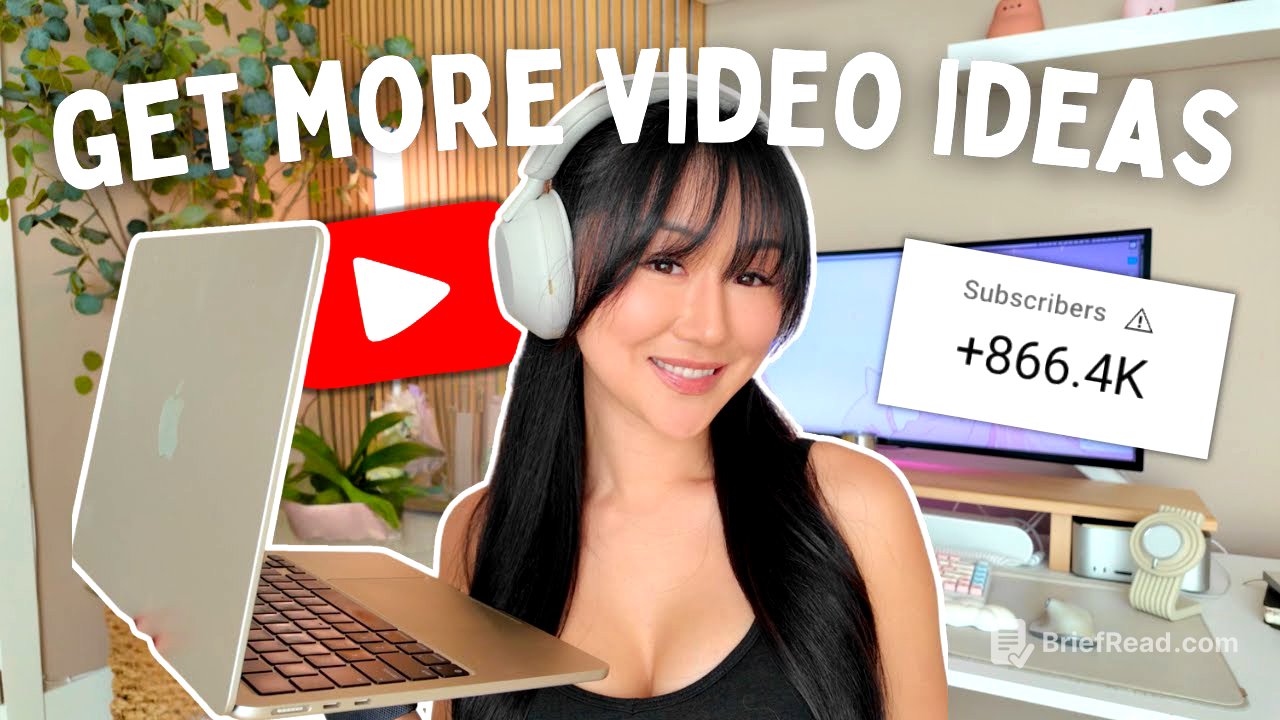
Vanessa Lau explains her process for finding YouTube ideas, planning and scripting videos, and organising the workflow in Notion. She draws ideas from personal experience, audience feedback, other creators’ titles and YouTube Analytics, then uses journalling and AI tools to develop them. Her main advice is to share personal stories alongside useful guidance, focus on viewers’ feelings and needs, and make each video’s opening and call to action clear.
- Build ideas from your own experiences instead of relying only on what competitors are doing.
- Use a structured Notion system to track ideas, scripts, B-roll and short-form content.
- Write scripts to clarify your thinking, but use bullet points while filming if memorising a full script feels stressful.
- Make content personal and useful by connecting your story to what viewers can learn or feel.
What to Expect [0:00]
This video covers how Vanessa finds YouTube topics, scripts videos and organises her workflow in an updated Notion system. It is the second instalment in a six-part behind-the-scenes series about making YouTube videos. She films with a DJI Osmo Pocket and shares her screen to show her planning process.
Idea Source #1: Personal Experiences and Journalling [0:36]
Vanessa’s first source of ideas is her own experiences. She used to study competitors’ popular videos and recreate their topics, but found that this made her feel inauthentic and focused on views rather than genuine expression. She now labels her Notion idea section “thoughts, experiences, lessons and stories”, which encourages her to reflect on what she has personally gone through.
Journalling helps her uncover ideas she might otherwise miss. She recommends The Artist’s Way and its “morning pages” exercise: writing three pages of free-flowing thoughts each morning. This can reveal worries, struggles, judgements and lessons that were not immediately apparent. Putting those thoughts on paper can also feel therapeutic, and gives her a store of personal experiences to use in YouTube videos, newsletters and Instagram Stories.
Idea Source #2: Titles Outside Your Niche [3:51]
Vanessa looks at titles outside her niche and adapts their structure to her own subject matter. A title such as “The Substance discourse is getting unbearable” might inspire a related title about YouTube growth or being a creator. The goal is not to copy the topic, but to notice what makes a title compelling and apply that pattern to a different subject.
She also looks for videos that are performing well relative to a creator’s subscriber count. For example, a running video with 415,000 views on a channel with fewer subscribers suggests the topic and title have reached beyond the existing audience. She could adapt its structure into a title such as “How to start a YouTube channel and actually enjoy it, from someone who used to hate doing YouTube”.
Idea Source #3: Audience Feedback and Follow-up Videos [5:20]
Vanessa often makes list-based videos packed with tips, but recognises that viewers may not watch the whole video and that a long list can limit how deeply she explores each point. After publishing, she checks comments to find which lessons resonated most. She can then make a separate, more detailed video about the topic viewers responded to, such as setting creative goals instead of goals based on metrics.
A single point from a crowded video can also become a standalone topic. When she felt overwhelmed scripting a video about ten social media rules, she chose one lesson and developed it into a separate video about not following a niche and building a personal brand instead. This approach makes filming more manageable and can turn one broad idea into several focused videos.
Idea Source #4: Updating Older Videos [7:06]
More established YouTubers can revisit their older, popular videos. Vanessa noticed that some of her most successful uploads focused on growing on YouTube, but her experience and values had changed since making them. Those changes inspired her to remake or update some of the topics, including the series this video belongs to.
Idea Source #5: YouTube Analytics’ Inspiration Tab [7:29]
The Inspiration tab in YouTube Analytics shows what an audience is searching for, breakout videos from similar channels and suggested topic ideas. Vanessa uses it to inform potential topics, titles and thumbnails. Searching for a phrase such as “how to grow on YouTube” can reveal related videos and ideas that her audience may already be watching.
The tab can also identify “content gaps”: areas where viewers cannot find enough quality search results for a particular topic. These gaps can point to underserved demand, which may be especially useful to smaller creators. For example, searches around YouTube growth revealed questions about deleting a channel, creating a new account, adding links, posting a picture and finding a video’s URL.
Notion Planning System [9:06]
Vanessa uses Notion as a central home for planning content across platforms, although she focuses here on its YouTube section. Her dashboard tracks each video’s format, planned publishing date and status, including whether it has been scheduled, published, is in production or is still only an idea. She describes the ideas area as “thoughts, experiences and lessons”, rather than simply “content ideas”, to encourage more reflective topic development.
Ideas Section: Titles and Thumbnails [10:20]
The Ideas section is mainly for title and thumbnail concepts. Vanessa already knew the likely title for this video, but wanted inspiration for its thumbnail. She searched for creators covering similar topics, noted which thumbnails caught her attention and used them as references for her own design.
Seeds Section: The Initial Brain Dump [10:42]
The Seeds section holds the initial outline of what a video might cover. For this video, Vanessa wrote down three guiding questions: where she gets ideas, how she organises them and how she knows what to say. She then added a quick bullet-point list of the topics she wanted to include. These notes provide a concise overview to refer back to during filming.
Expanded Section: Developing the Script [11:05]
Vanessa expands her Seeds notes into a fuller written script so she can picture the video’s flow and decide what to cover. She does not necessarily follow that script word for word when filming; it is a way to get ideas out of her head and organise them. While recording, she often refers more to the Seeds section, since it captures the big-picture points without requiring her to read the full draft.
B-Roll Section: Planning Supporting Footage [12:23]
As she writes, Vanessa notes B-roll shots—supporting footage that makes a video more visually engaging. For example, when discussing journalling, she planned a shot of herself writing morning pages. She records each shot idea and can later add a link to the file and mark it as filmed.
Notion connects these shot ideas to a central B-roll library. If she adds “walking the dog” to an individual video, it also appears in the library alongside the video it came from. Once the footage file is linked, that information is available both in the library and in the video’s own script, creating an organised overview of footage needed and already captured.
Micro Lessons Section: Turning Long Videos into Short-Form Ideas [14:09]
While scripting longer videos, Vanessa often identifies ideas that could work as separate short-form videos. Horizontal long-form footage does not always repurpose well as vertical content, so some ideas need to be filmed specifically for short-form platforms. Examples from this video include the five sources of content ideas and how YouTube’s Inspiration tab works.
When she adds a “micro lesson” to a video, it appears in her Shorts tracking area with a link to the longer video that inspired it. This helps her organise short-form ideas and see how they connect to her longer content.
How I vs. How To [15:32]
Vanessa finds it easier to make videos framed around “how I” rather than “how to”. Changing a topic from “how to script” to “how I script” or “how I organise things” reduces the pressure to present a universal method. Sharing what she has personally done feels more relaxed and genuine because she can speak from experience rather than pretending to know more than she does.
ChatGPT Prompt for Scripting [16:37]
When she is unsure what to cover, Vanessa asks ChatGPT what questions people searching for a particular topic might have. For a video about scripting on YouTube, the tool generated a useful list of questions that she could use to shape the video. This provides a way to check whether a script addresses the concerns viewers are likely to bring to the topic.
My Favourite Camera [17:13]
Vanessa pauses to praise the DJI Osmo Pocket, which tracks her face as she moves around. She demonstrates how it can follow her through her office and down to show her dog, Nugget. The camera’s tracking makes it possible to film moving shots and casual tours without staying fixed in one place.
Word for Word vs. Bullet Points [17:46]
Vanessa writes her scripts word for word because doing so helps her clarify the flow, imagine the finished video and plan the B-roll. During filming, however, she usually refers to bullet points rather than trying to memorise the full script. Memorisation makes her stressed and more likely to stumble, so the detailed script is primarily a planning tool.
Video Structure [18:12]
Vanessa organises a YouTube script into three main parts: an introduction or hook, the body and an outro with a call to action. She gives particular attention to the opening and ending. The opening needs to reassure new viewers that the video will deliver what they expected, or spark enough curiosity to keep them watching.
Intro and Hook [18:27]
Vanessa emphasises the first 15–30 seconds as important for first-time viewers and non-subscribers. Rather than listing every hook style, she suggests giving a script to ChatGPT and asking for ten hook ideas designed to capture attention in the first 15 seconds. This can generate suggestions tailored to the specific video.
Her own approaches include starting immediately with a strong point or hot take, which avoids dragging viewers through a lengthy setup. For story-driven videos, she may show a compelling moment from later in the video at the beginning. For instance, she used a clip of herself crying during a coaching call to create curiosity; placing a climactic moment upfront helps viewers understand what to look forward to.
Outro and Call to Action [19:55]
Vanessa recommends being specific about what viewers should do after watching. If the goal is to increase views, she suggests directing viewers to a particular next video and explaining why it is relevant. In this video, she could connect scripting to filming and invite viewers to watch the next instalment about her filming process.
She noticed that clearly naming the next video led to more clicks than giving a generic sign-off or failing to mention it. The end screen—the clickable video or videos embedded at the end of a YouTube upload—can support this call to action.
AI Tools to Use [20:45]
Vanessa uses Notion to store and organise her scripts, and ChatGPT as a creative collaborator. She sometimes pastes in a complete script and asks for suggestions on improving it or making sure the tips flow logically. She has also tested Claude AI, which she says feels more natural to her for content work.
She sees AI as a useful source of a second opinion, rather than a replacement for her own judgement. Creators can ask these tools to review structure and clarity, then decide which suggestions fit their voice and video.
Storytelling vs. Actionable Tips [21:29]
Vanessa wants to tell more stories while ensuring viewers still receive practical value. A video focused entirely on the creator can put people off if they cannot relate to it, so she explains why she is teaching something and includes personal examples. Information alone is increasingly easy to find through AI, but anecdotes and lived experiences give audiences reasons to connect with a particular creator.
She aims to leave viewers with a clearer sense of who she is, while still keeping the viewer’s needs central. A video should not be only about the creator: it should have a clear main point, takeaway or benefit. When sharing her burnout or business experiences, for example, she connects the story to lessons that could help other creators avoid similar problems.
Focus on Feelings [24:12]
Vanessa says that universal feelings can help personal stories resonate with people at different stages of life. Fear, shame, sadness and the desire to belong are experiences many people share. When discussing her own business or creator journey, she connects it to viewers’ feelings—for example, the pressure to keep up with the algorithm and the risk of losing yourself while chasing views.
Explaining why a story matters to the audience makes it clear that she is not simply talking about herself. The story becomes a way to help viewers recognise their own experiences and understand the lesson.
The Six-Part YouTube Series [25:01]
Vanessa recaps the video’s subjects: finding content ideas, organising them and scripting. She invites viewers to subscribe or turn on notifications for the next instalment, where she and Nugget will cover how she films videos and tries to speak naturally on camera. She stresses that scripting alone does not create a finished video; the creator still needs to film it, and she directs viewers to the next video when it is available.