TLDR;
This video explains how to use the MQ2 gas sensor module with Arduino to detect various gases, including LPG, smoke, alcohol, propane, hydrogen, methane, and carbon monoxide. The MQ2 sensor operates on 5 volts DC, changes its electrical resistance when interacting with gases, and includes safety features to prevent fire hazards. The video outlines how the sensor works, its internal components, how to install it on an Arduino, and what the outputs signify.
- MQ2 sensor detects multiple gases and operates safely.
- Understanding the sensor's internal mechanisms and wiring is essential for effective usage.
Introduction to the MQ2 Gas Sensor [0:00]
The video introduces the MQ2 gas sensor module, which can detect a variety of gases, enabling projects to "smell" the air around them. It outlines the sensor's capabilities, mentioning that it can sense gases like LPG, smoke, alcohol, propane, hydrogen, methane, and carbon monoxide.
MQ2 Sensor Functionality and Safety Features [0:30]
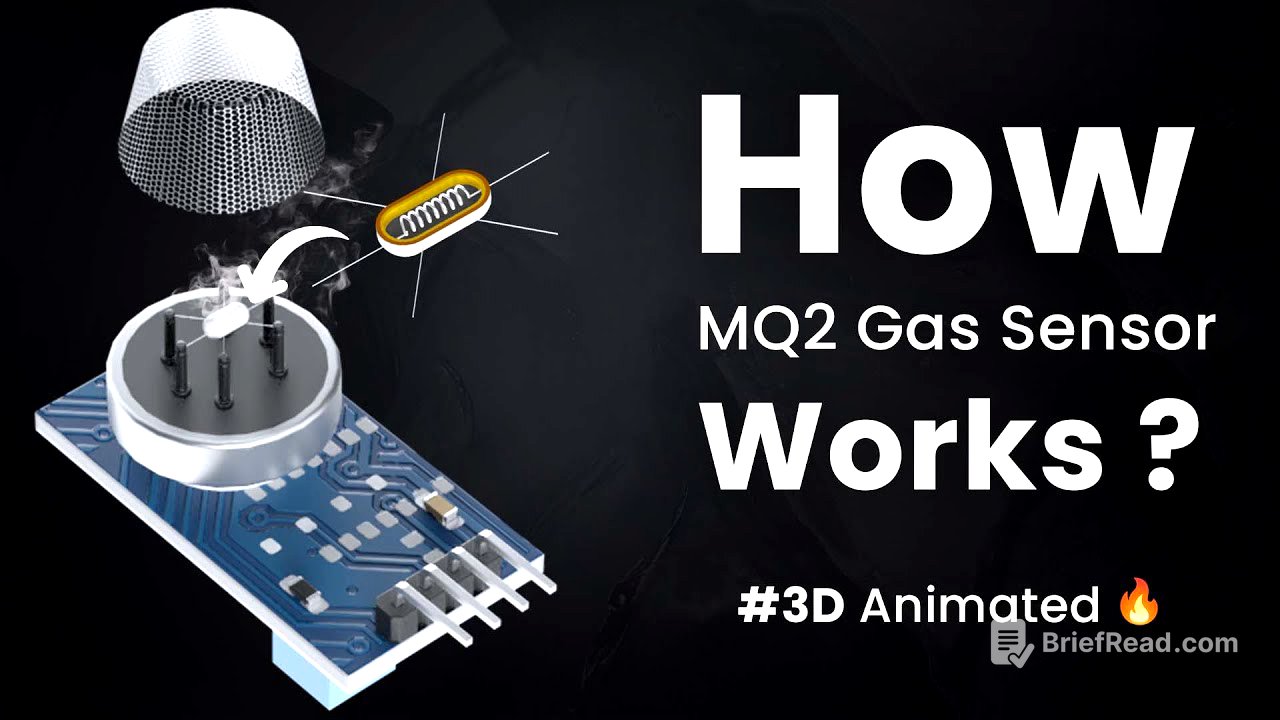
The MQ2 sensor is part of the MQ family of gas sensors, specifically a metal oxide semiconductor sensor known for altering its electrical resistance upon contact with gases. It operates on 5 volts DC and consumes approximately 800 mWs of energy. The sensor's safety design includes a two-layer stainless steel mesh that prevents fire or explosions from flammable gas detections. This mesh also filters out dust and solid particles, ensuring only gases reach the sensing area.
Internal Structure of the Sensor [1:30]
Inside the sensor is a heating element attached to six metal legs arranged in a star pattern, designed for both heating the sensing element and carrying electrical signals. The heating element uses a nickel chromium alloy for its properties, while the signal-carrying legs are connected to a sensing element made of aluminum oxide ceramic coated with tin dioxide. This key coating reacts with gases, altering the sensor's electrical resistance.
How the Gas Sensor Operates [3:25]
When activated, the MQ2 gas sensor heats its tin dioxide layer, which absorbs oxygen molecules from the air. This process leads to a depletion of free electrons and a high resistance state. When flammable gases enter, they react with the absorbed oxygen, releasing electrons and reducing resistance, which allows more electric current to flow. The sensor detects these variations in resistance to measure gas concentration.
Signal Output and Actions [4:33]
The sensor's analog output voltage changes based on gas concentration. Increases in gas lead to higher output voltage, while decreases result in lower voltage. This output links to an LM393 comparator, which triggers low or high digital signals based on whether gas levels exceed a pre-set threshold. This digital output can activate alarms or alerts on connected devices. The module also features indicator LEDs for power and gas concentration status.
Wiring the MQ2 Sensor to Arduino [5:45]
Finally, the video discusses the pin layout of the MQ2 sensor, including connections for VCC (power), GND (ground), AO (analog output), and DO (digital output). Proper wiring to the Arduino is essential for the sensor to function correctly, ensuring accurate gas detection and output signalling. The video concludes by encouraging viewers to like and subscribe for more content.