TLDR;
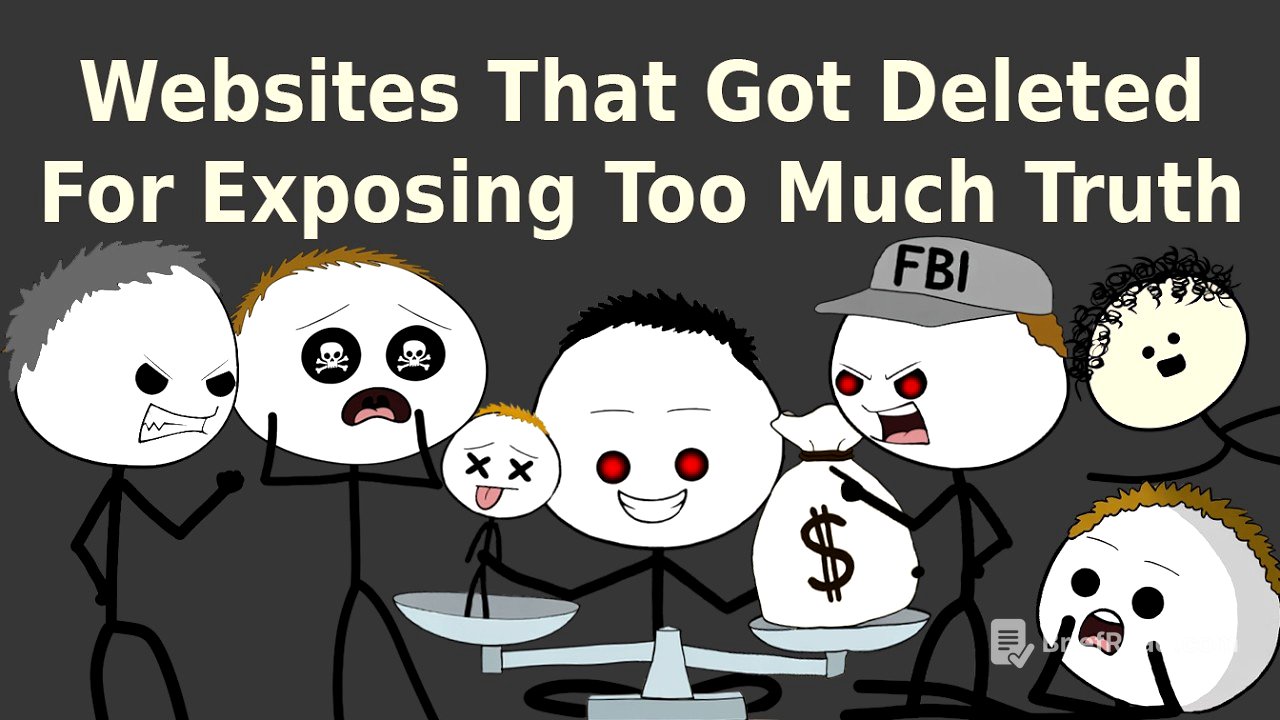
This video explores ten instances of online archives and websites that exposed corporate and governmental misconduct, only to mysteriously disappear. These include databases revealing right-to-repair sabotage, unpublished pharmaceutical trial failures, lobbyist-written bills, biased pre-crime algorithms, smart device eavesdropping, corporate water grabs, delayed product recalls, politician stock trading, and psychological warfare manuals. The video highlights the challenges of maintaining transparency and accountability in the face of powerful interests, with Cryptome as a notable exception due to its simple, resilient structure.
- Exposes the suppression of information revealing corporate and governmental misconduct.
- Highlights the tactics used to silence these sources, including legal threats, defunding, and technical sabotage.
- Emphasises the importance of transparency and accountability in maintaining a just society.
The "Right to Repair" Sabotage Archive [0:00]
An archive of leaked repair manuals revealed that manufacturers intentionally design devices to be difficult, if not impossible, to repair. The archive contained schematics for non-existent screws and exposed hidden software locks that brick devices after unauthorised repairs. John Deere was cited as an example, where farmers were unable to repair their own tractors due to software restrictions. Internal memos showed executives discussing repair restrictions as revenue strategies. The archive was eventually taken down following DMCA takedown notices, with corporations claiming copyright infringement.
The Pharmaceutical Trial Failure Graveyard [1:14]
A website mapped unpublished pharmaceutical trial data, exposing failed tests, patient injuries, and aborted studies. It highlighted that drug companies are not legally required to publish trial results, leading to the suppression of negative data. An example cited was antidepressant trials, where many negative trials were erased, skewing the published science. The site used public registries and FOIA requests to compile its database before it went offline, with archived pages scrubbed and critical medical data disappearing from the public domain.
The Lobbyist Bill Writing Database [2:22]
Influence Explorer compared bills introduced by congressmen with private memos written by corporate lobbying firms, revealing identical text. This demonstrated that lobbying firms write the laws they want and hand them to politicians. The American Legislative Exchange Council (ALEC) was identified as a key player in drafting model legislation. In one instance, a Florida insurance bill matched a lobbying document word for word, including a typo. The website's funding dried up, the domain expired, and the search function broke, effectively silencing the tool.
The Pre-Crime Prediction Algorithm Exposé [3:27]
A website leaked the source code of predictive policing software, revealing a feedback loop where the algorithm analysed past arrest data to predict future crime hotspots. Police were then dispatched to these areas, leading to more arrests and reinforcing the algorithm's predictions. The code was weighted towards zip codes, disproportionately targeting poorer neighbourhoods, creating a self-fulfilling prophecy. The website vanished after going viral, but the software is still used by many police departments, with the code no longer accessible to the public.
The "Smart Device" Eavesdropping Archive [4:27]
The Smart Device Eavesdropping Archive published leaked data packets and internal memos, proving that smart speakers are always listening. Amazon's Alexa program employed human workers to listen to audio recorded in homes, which was then used for emotional state detection and sold to advertisers. Devices were programmed to record after secret trigger words. The site was hit with legal strikes from tech giants and subsequently shut down, but the devices remain in many homes, continuing to listen.
The Corporate Water Grab Registry [5:35]
A website tracked corporate water grabs in the western US, where water rights are bought and hoarded. The interactive map showed which hedge funds had purchased a region's water rights. One case exposed a private equity group buying up water in a rural farming town during a drought, leaving farmers without water. The site exposed a legal system of water banking where corporations hoard water rights to drive up prices during droughts. The site went down without explanation as it gained traffic.
The Product Recall Delay Timeline [6:33]
The Product Recall Delay Timeline documented the gap between when a company learned about a fatal flaw in their product and when they issued a recall, highlighting the corporate calculus of weighing the cost of lawsuits against fixing the defect. The site displayed the days delayed and the body count. Examples included the GM ignition switch and the Ford Pinto, where the company decided it was cheaper to let people die than fix the problem. The site was shut down after legal threats due to a live tracker for current products.
The Politician Stock-Trade Tracker [7:44]
A website tracked stock trades made by members of Congress in real time, using publicly available data. It revealed patterns suggesting insider trading, such as senators buying shares in defense contractors before voting to approve military contracts. The site highlighted examples like Nancy Pelosi's husband making millions on tech options before government regulations impacted those companies. The penalty for hiding a trade was noted as a mere $200 fine. The founder received legal threats, and the data is now buried within unnavigable government websites.
The Psychological Warfare Manual Repository [8:51]
A digital archive of declassified military documents detailed how to psychologically manipulate populations. Documents included a US Army Field Manual on psychological operations and files on COINTELPRO, an FBI program designed to destroy domestic political movements. The site also hosted manuals on astroturfing, updated for the internet age and weaponized for social media. The site was hammered with takedown requests and subsequently vanished.
Cryptome [10:08]
Cryptome, a website run by John Young, has relentlessly posted leaked government documents since 1996. Despite posting classified surveillance manuals, black budget spy agency financials, and unredacted lists of undercover agents, it remains online. Cryptome's resilience is attributed to its lack of funding, donors, or corporate structure, making it difficult to pressure or defund. Every attempt to silence Cryptome simply becomes another document hosted on the site.