TLDR;
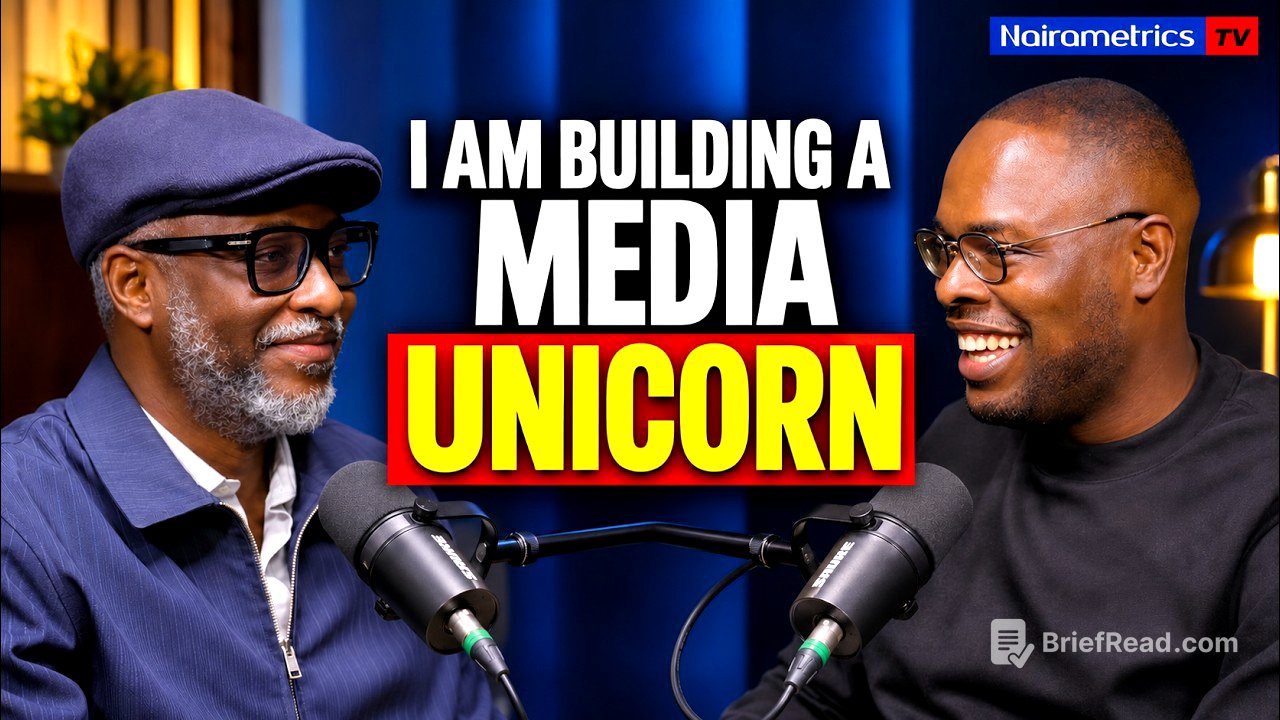
Chude Jideonwo explains how Nigerian media businesses can survive by understanding local audiences, keeping costs low and building reliable cash flow rather than copying foreign models. He discusses creator-led revenue, subscriptions, platform dependence, regulation, investment in African media technology and his plans to back creators through Fort Mainland Fund. His experience building Red Media Africa and WithChude also shows how purpose, audience knowledge and financial discipline can support long-term growth.
- Individual creators can now build media brands directly, but platforms remain rented space; owning a URL and a strong audience relationship helps reduce that risk.
- Advertising will remain important, but direct audience payments, subscriptions and creator-led income offer additional routes to revenue.
- African media businesses need solutions suited to local economics, spending habits and institutions, not imported models.
- Low margins make cash reserves, lean operations and close attention to revenue essential.
The Reality of the Nigerian Media Economy [0:00]
Nigeria produces influential newspapers, television stations, digital platforms, podcasts and social media brands, yet high content volumes and large audiences do not guarantee sustainable revenue. Media companies can attract millions of followers and billions of impressions while still struggling to meet costs, grow beyond their founders or remain in business. Advertising’s future is uncertain as Google, Meta, YouTube and TikTok shape how audiences discover and consume content. Chude Jideonwo draws on more than two decades in the industry to explain what audiences pay for and why publicity does not always deliver a return.
Chude Jideonwo’s Origin Story: Getting Hired Live on TV at 15 [2:31]
Jideonwo began working in media before university. He wrote several books as a child, and one was published when he was 15, during his WAEC examinations. When his publisher struggled to organise publicity, he used his knowledge of Nigerian media to approach television stations and newspaper figures himself. During a live NTA programme, presenter Dr Livinus Jonomar offered him a youth-presenter segment on air. He later approached Funmi Iyanda, appeared on her show and, aged 16, became a researcher; a year later, he was producing it. He describes his work in media as his real education.
Why Individual Creators Hold All the Power Today [6:01]
Media power has shifted towards individual journalists, creators and other creatives. In the past, building a public profile meant securing a newspaper column, meeting editors and producers, organising press events or paying for appearances. Today, someone can start a LinkedIn page or a Substack newsletter and publish directly to an audience. Jideonwo points out that every newsletter can function as a media brand, even if its writer does not think of it that way. The barriers to publishing have fallen so far that individuals and businesses can build an audience without traditional gatekeepers.
“Copying Bloomberg or Vice in Nigeria Is a Foolish Answer” [9:33]
Jideonwo argues that Nigerian founders should learn from businesses that have survived the local market, such as Linda Ikeji, Instablog, BellaNaija and Nairametrics, rather than copying Vice or Bloomberg. Nigerian companies face political patronage networks, slow-paying advertisers, less loyal audiences and irregular paths to monetisation—conditions foreign media businesses may not understand. He also notes that several prominent US digital publishers have struggled or failed, making them poor models even on their home turf. Local experience matters: TechCabal, for example, benefited from its founder’s understanding of traditional journalism at The Guardian.
Why Traditional Print Media Survived Digital Disruption [11:38]
Some traditional publishers adapted quickly to digital media. Vanguard treated its website more like a blog, prioritising speed in ways that would not have fitted the newspaper’s original verification standards. Jideonwo also points to Nduka Obaigbena’s investment in video and Arise, and to newspaper groups building studios and social media operations. Many familiar Nigerian newspaper brands remain relevant online, which he considers a significant achievement in a difficult market. Their margins have narrowed because internet operations do not reward high cost structures in the same way, so publishers are cutting costs and redesigning newsrooms and reporting operations.
The Real Reason Radio Struggles While Podcasts Thrive [14:50]
Radio has generally adapted more slowly than print to digital consumption, and the problem is not limited to Nigeria. Radio’s continuous broadcast format differs from podcasts, which are divided into individual episodes and are easier to publish and consume on demand. This difference also reflects the way radio organisations work and think about programming. Radio businesses had long benefited from advertising revenue and relatively modest expenses, so declining income did not immediately force rapid change. Jideonwo cites early cost-cutting at Wazobia FM, which operated from a small space, but argues that the sector still needs to respond faster to audiences moving towards podcasts and other digital formats.
Is the Traditional Advertising Model Dying? [17:55]
Advertising is likely to remain a significant source of media revenue for decades, but Jideonwo does not expect it to remain the dominant model for every business. Even Google is adapting as AI tools change search activity, and generative AI companies are also considering advertising. He sees no clear alternative that will replace ads entirely, but says media companies need additional revenue streams. In particular, direct relationships with audiences are becoming more valuable. The challenge is to build businesses that can earn from different sources rather than depend solely on advertising.
Why Live Streamers and Direct-to-Consumer Are the Future [19:28]
Jideonwo describes livestreamer Peller as a media innovator because his audience pays directly to watch him on platforms such as Twitch and TikTok Live. Viewers may send substantial gifts or payments because they enjoy the entertainment and want it to continue; it is not necessarily a formal donation request. This model lets creators earn from their audience without depending on conventional adverts or a fixed subscription price. Jideonwo believes direct-to-consumer income will become a major part of media monetisation, as audience engagement itself can generate revenue.
The Danger of Rented Platforms and Why You Must Own Your URL [21:28]
Social platforms are rented property: Instagram, Facebook and other services can suspend accounts or change their rules, leaving creators without access to their followers. Jideonwo built a permanent URL for WithChude—watch.wechooseday.com—which can direct viewers to whichever service hosts the programme. Vimeo once provided much of the show’s revenue, but when it closed, viewers could still use the same URL after the destination changed. He recommends owning a domain and building a recognisable brand, even while continuing to use platforms that currently generate income. Cash flow is also essential because a business may lose access to a platform at any time and need resources to move elsewhere.
The Business Case for Africa-First Media Tech Platforms [25:16]
Jideonwo argues for Africa-first platforms on practical business grounds, not simply because they are African. When a major platform removes a page, local offices such as Meta Africa may lack the authority to restore it, leaving complaints to be handled overseas. African creators also face moderation and monetisation decisions that may penalise their content differently, including the use of words that can trigger demonetisation or removal. Governments could set conditions for international platforms that extract value from local markets, but many regulators do not yet understand the opportunity or have the resources to act. Building a competing platform is difficult because it requires technology expertise and network effects—the value that grows as more people use a service—so Jideonwo believes media professionals should work with engineers and investors capable of solving those problems.
Why African Creators Earn Lower Ad Revenue: CPMs Explained [31:40]
Jideonwo says lower creator earnings in Nigeria and other African markets largely reflect local economic conditions, rather than a promise of equal payment being broken. CPM means “cost per mille”, or the amount paid for every thousand advertising impressions. The rate depends on how much advertisers are willing to spend to reach a particular audience and how much competing advertisers bid for that attention. Advertisers generally pay more to reach consumers in wealthier markets, so a view in Los Angeles can be worth more than one in Lagos. Raising Nigerian creator earnings would therefore require a stronger economy or policy measures that increase the value attributed to local audiences.
How Government Regulation and Quotas Can Protect Local Creators [36:38]
Governments can set conditions for technology companies entering their markets, including requirements, quotas and other protections for local industries. Jideonwo points to examples of countries imposing terms on international platforms and to policies that have supported local businesses in other sectors. He believes Nigeria’s creative economy has strong growth potential, but it remains underfunded and is not sufficiently understood by decision-makers. A successful film earning billions of naira without much institutional support should demonstrate that the sector can grow rapidly if the right systems are built. Regulation could help protect and develop local creators, although Jideonwo is unsure whether such measures will be adopted soon.
Can Paid Subscriptions Work in Nigeria? [38:28]
Jideonwo’s WithChude has a successful subscription model, though he considers his case unusual. He designed the programme around an audience that wanted stories about celebrities and everyday people, rather than assuming that political or business interviews would sell best. A viewer’s comment—that the show was “for us, not for them”—helped him understand the audience’s expectations. He also made payment flexible: viewers can subscribe monthly or pay for individual episodes, and the website makes it simple to watch or subscribe. His approach was to match the content, price and payment options to how his audience actually consumes media.
Rethinking Disposable Income: How Nigerians Really Spend Money [40:34]
Jideonwo challenges the idea that Nigerians have little disposable income. He points to spending on parties in Lagos, cash gifts at events and betting as signs that money is available, although people may spend it in ways conventional media businesses do not expect. He argues that publishers often copy subscription models from The New York Times or The Washington Post instead of studying local habits. Models framed as memberships, small contributions or payments for particular content may fit audiences better. The key question is not how to transfer a foreign model into Nigeria, but how people in the local market prefer to pay.
Why Nigerian Billionaires Don’t Buy Media Houses [43:09]
Jideonwo thinks Nigerian billionaires may avoid owning media because the risks can outweigh the rewards. In a market where business owners depend on licences, approvals and government decisions, a credible news outlet could create conflict with officials and threaten their other businesses. Media margins are also low, and patronage can make it possible to influence coverage without buying the outlet outright. He contrasts this with the political institutions that have historically allowed wealthy owners to control major newspapers in the US, while noting that political pressure has also weakened safeguards there. Businesspeople in countries that punish independent action may be cautious for rational reasons, even if greater courage would benefit the public.
Building Red Media Africa and Surviving on Cash Flow [48:45]
Jideonwo says he entered media because he cared deeply about it, not because it was the easiest route to wealth. He jokes that importing rice might have been a better investment, and says media founders often continue because they are passionate enough to invest in people and equipment despite the risks. He learned early that media is a low-margin business after seeing projects run out of money and established companies collapse. Before building Red full-time, he worked in other organisations, including Virgin Nigeria and Nigeria LNG, helping to support the business until it could stand on its own. His experience taught him to avoid businesses without a near-term route to revenue and to maintain substantial cash reserves.
Low Margins and High Discipline: How to Avoid Financial Collapse [52:54]
Red Media was profitable from the beginning in part because it operated with low costs. Jideonwo says a large staff or prestigious office is not an achievement unless the company can afford it and earn enough to support it; Red worked for years without its own office and later occupied a small room in another organisation’s premises. He warns media owners not to confuse public attention with financial health and urges them to study their profit and loss (P&L) accounts. Cash reserves provide protection against unexpected downturns, as illustrated by major companies that keep large sums available. His practical understanding came from working across print, radio, public relations, television and film, and from seeing how money moved through the industry.
Battling Depression and Finding New Purpose [57:05]
In 2016, Jideonwo was diagnosed with clinical depression after first realising that something was wrong and stepping down as CEO of Red. He spent about two years uncertain about what to do next, even as Red continued expanding into Ghana, Senegal, Kenya, Sierra Leone and Liberia. During that period, he noticed that negative attention on social media sometimes brought new clients, including political campaigns, because it spread awareness of his work. While searching for help after being criticised online, he watched an interview with researcher Brené Brown and felt understood. That experience inspired him to imagine a programme that would help Africans find answers to personal problems through other people’s stories.
The Genesis of #WithChude: Creating What Africans Need [1:00:32]
Jideonwo’s idea for WithChude came from wanting to create interviews that could help viewers facing issues such as anxiety, depression and divorce. He returned to Nigeria after a Yale fellowship and eventually recorded the first season, but left it unreleased for two years because he feared audiences would prefer skits, action films or marriage content. After encouragement and prayer, he released it; the programme’s first major response surprised him, and he initially suspected that his team had paid for the views. He continued experimenting with the format and later developed a subscription model. By then, he had already achieved professional recognition and was more interested in work that brought him joy than in fame or money.
Making Six Figures in Dollars with Zero Adverts [1:03:32]
WithChude earns from YouTube, paid subscriptions and smaller amounts from Facebook and Apple Premium, without running advertisements on the show. Jideonwo stopped approaching advertisers in 2022 after he felt brand requirements were pressuring the team to change the programme’s vision. He says the audience data showed that younger viewers were subscribing, even when advertisers wrongly assumed that the show’s subjects were unsuitable for brands. The business generates six figures in US dollars, although he clarifies that it is not close to seven figures. YouTube revenue and subscriptions form the foundation, while commissioned documentaries and international projects provide additional income.
Why You Should Never Be “Too Big” to Review Your Headlines [1:07:17]
Jideonwo says digital revenue depends on details, so no media leader should consider themselves too senior to review headlines. A former CEO candidate told him he was too important to check headlines, but Jideonwo believes that was a sign the person could not run a media business. He regards headline writing as one of his strengths because it directly affects how audiences find and watch content. He also encourages creators to stop treating brands as their only source of income and to explore the money available online. Platforms such as OnlyFans, he notes, host content beyond pornography, including romance and relationship material.
Fort Mainland Fund: Spotting Creators Before They Blow Up [1:09:30]
Jideonwo started Fort Mainland Fund after reflecting on investment opportunities in technology and recognising his own ability to identify creators with potential. He recalled backing creators mentally before they became popular: one who was considering returning to Oshogbo later grew from around 10,000 followers or views to 500,000, attracting brands. He wanted to invest in creators earlier and use his own money to support projects he could not personally join because of time constraints. The fund invests in creators as people and businesses, which requires a different approach from buying shares in a conventional company. Its purpose is to help capture value from a growing creator economy.
How to Structure Investments in African Content Creators [1:12:12]
Fort Mainland adapts each investment to the creator rather than applying one standard contract. Some partnerships create a company jointly owned by the creator and fund; others finance a specific amount of content, a film or a platform, with rights limited to that project. Arrangements can be short- or long-term, flexible or comprehensive, depending on the creator and the work. Jideonwo says broad agreements covering everything a creator makes carry particular risks and require careful consideration. He is especially interested in creators who do not rely on advertisers, because direct audience income can give them greater independence.
The Goal to Build Africa’s First Media Unicorn [1:15:28]
Jideonwo’s ambition is to build a media company from Nigeria and the region that reaches unicorn status—a private company valued at one billion dollars or more—and potentially list it later. He sees this as a personal goal rather than a public timetable. Building a company that can function without its founder is part of the ambition: he wants the operation to be strong enough that people may not recognise him as its owner. The scale of the goal also forces him to judge investments by whether they can make money, rather than by personal affection for a creator or project. He believes that discipline can turn the ambition into operational systems.
Global Influences: Naspers, Dangote and Warren Buffett [1:17:03]
Jideonwo admires Naspers and its growth into a multinational media business, especially through MultiChoice, which has operated across African markets for decades despite recurring complaints about subscription prices. He also admires Aliko Dangote’s focus on investing in areas he understands and his willingness to commit resources to long-term goals. Another major influence is Warren Buffett and Charlie Munger, whose ideas shaped Jideonwo’s business approach and gave him the confidence to appoint a non-founder CEO at Red. He values Buffett’s belief that trust is a demanding but powerful form of human cooperation. Jideonwo describes his business outlook as combining inspiration from media entrepreneurs with Buffett’s discipline in company-building.
The Boom in Live Events, Venues and “Dirty December” [1:21:24]
Jideonwo says the growth of Afrobeats has made large venues and event infrastructure more attractive to investors. International performers and rising streaming numbers help demonstrate that Lagos can support major events, even when ticket prices appear high. He welcomes the cost of “Dirty December” events because spending proves that the market can sustain live entertainment and encourages more investment. Lagos’s busy season is extending into November, with events such as Lagos Fashion and Design Week and Art X bringing visitors earlier. New event centres and increased use of the National Theatre could help keep more entertainment spending in the country. He believes institutional investment is especially useful because it brings operational and financial discipline.
How to Invest $1M in Nigerian Entertainment for Fast Returns [1:24:45]
For an investor with one million dollars seeking returns during Nigeria’s entertainment season, Jideonwo recommends three areas: concerts that are open to investment, December films from proven hit-makers, and creators who can earn during the season. Potential film partners include established Nigerian stars and filmmakers such as Funke Akindele, Iyabo Ojo, Toyin Abraham, Timini Egbuson and Kemi Adetiba. He says these investments can return money quickly: profits from YouTube films may begin the following month and continue over time. Investors should focus on what Nigerian audiences actually watch, not on abstract debates about what a film ought to be. A low-budget film can outperform a much more expensive production if it matches audience demand; he cites northern Nigerian films attracting millions of views.
Final Thoughts: What Really Makes Media Businesses Survive [1:27:36]
Jideonwo’s closing lesson is that media businesses must understand their own market rather than assume that foreign success stories apply locally. Creators and companies should build around audience behaviour, maintain cash flow, control costs and develop revenue beyond advertising. He argues that the goal is not simply to create more content but to build systems that capture value from what audiences already watch and pay for. A realistic understanding of local tastes can lead to viable investment, even when those tastes differ from international expectations. The conversation ends with both speakers recognising the importance of believing in a business and continuing to build it. lion
TLDR;
Chude Jideonwo explains how Nigerian media businesses can survive by understanding local audiences, keeping costs under control and building dependable cash flow instead of copying foreign models. He discusses the growing power of individual creators, the risks of relying on social platforms, new ways to earn directly from audiences and the need for African media technology. Drawing on his experience at Red Media Africa and WithChude, he also describes his approach to investing in creators and building a large, independent media company.
- Individual creators can now build media brands without traditional publishers, but owning a website address and a recognisable brand can reduce reliance on platforms.
- Advertising will remain important, but subscriptions, livestream payments and other direct audience income can provide additional revenue.
- Media businesses need models suited to local audience habits and economic conditions.
- Low margins make lean operations, careful spending and substantial cash reserves vital.
The Reality of the Nigerian Media Economy [0:00]
Nigeria has produced influential newspapers, television stations, digital platforms, podcasts and social media brands, but abundant content and large audiences do not guarantee financial stability. Media companies can attract millions of followers and billions of impressions while still struggling to pay their bills, grow beyond their founders or remain in business. The industry also faces questions about whether advertising can remain sustainable as Google, Meta, YouTube and TikTok shape how audiences discover and consume content. Chude Jideonwo draws on more than two decades in media to explain why popularity and publicity do not always translate into revenue.
Chude Jideonwo’s Origin Story: Getting Hired Live on TV at 15 [2:31]
Jideonwo began working in media before university. He wrote several books as a child, and one was published when he was 15, during his WAEC examinations. When his publisher struggled to organise publicity, he used his knowledge of Nigerian media to approach television stations and newspaper figures directly. During a live NTA programme, presenter Dr Livinus Jonomar offered him a youth-presenter segment on air. Jideonwo later approached Funmi Iyanda, appeared on her show and, aged 16, became a researcher; a year later, he was producing it. He says his work in media became his real education.
Why Individual Creators Hold All the Power Today [6:01]
Media power has shifted towards individual journalists, creators and other creatives. In the past, building a public profile meant securing a newspaper column, meeting editors and producers, organising press events or paying for appearances. Today, someone can start a LinkedIn page or a Substack newsletter and publish directly to an audience. Jideonwo says every newsletter can function as a media brand, whether or not its author recognises it as one. The barriers to publishing have fallen so far that individuals and businesses can build an audience without traditional gatekeepers.
“Copying Bloomberg or Vice in Nigeria Is a Foolish Answer” [9:33]
Jideonwo argues that Nigerian founders should learn from businesses that have survived the local market, such as Linda Ikeji, Instablog, BellaNaija and Nairametrics, rather than copying Vice or Bloomberg. Nigerian companies face political patronage networks, slow-paying advertisers, less loyal audiences and irregular routes to making money—conditions that foreign media businesses may not understand. He notes that several prominent US digital publishers have struggled or failed, making them poor models even in their home market. Local experience matters: TechCabal, for example, benefited from its founder’s understanding of traditional journalism at The Guardian.
Why Traditional Print Media Survived Digital Disruption [11:38]
Some traditional publishers adapted quickly to digital media. Vanguard treated its website more like a blog, prioritising speed in ways that would not have fitted the newspaper’s original verification standards. Jideonwo also points to Nduka Obaigbena’s investment in video and Arise, as well as newspaper groups building studios and social media operations. Many familiar Nigerian newspaper brands remain relevant online, which he considers a significant achievement in a difficult market. Their margins have narrowed because internet operations do not reward high cost structures in the same way, so publishers are cutting costs and redesigning newsrooms and reporting operations.
The Real Reason Radio Struggles While Podcasts Thrive [14:50]
Radio has generally adapted more slowly than print to digital consumption, and the problem is not limited to Nigeria. Radio’s continuous broadcast format differs from podcasts, which are divided into individual episodes and are easier to publish and consume on demand. This difference also reflects how radio organisations work and think about programming. Radio businesses had long benefited from advertising revenue and relatively modest expenses, so declining income did not immediately force rapid change. Jideonwo cites early cost-cutting at Wazobia FM, which operated from a small space, but says the sector still needs to respond faster as audiences move towards podcasts and other digital formats.
Is the Traditional Advertising Model Dying? [17:55]
Advertising is likely to remain a significant source of media revenue for decades, but Jideonwo does not expect it to remain the dominant model for every business. Google itself is adapting as artificial intelligence changes search activity, and generative AI companies are also considering advertising. He sees no clear alternative that will replace advertising entirely, but says media businesses need additional revenue streams. In particular, direct relationships with audiences are becoming more valuable. The challenge is to build businesses that can earn from several sources rather than depend solely on advertising.
Why Live Streamers and Direct-to-Consumer Are the Future [19:28]
Jideonwo describes livestreamer Peller as a media innovator because his audience pays directly to watch him on platforms such as Twitch and TikTok Live. Viewers may send substantial gifts or payments because they enjoy the entertainment and want it to continue; this is not necessarily a formal request for donations. The model lets creators earn from their audience without relying on conventional adverts or a fixed subscription price. Jideonwo believes direct-to-consumer income will become a major part of media monetisation, as audience engagement itself can generate revenue.
The Danger of Rented Platforms and Why You Must Own Your URL [21:28]
Social platforms are rented property: Instagram, Facebook and other services can suspend accounts or change their rules, leaving creators without access to their followers. Jideonwo built a permanent web address for WithChude—watch.wechooseday.com—which can direct viewers to whichever service hosts the programme. Vimeo once provided much of the show’s revenue, but when it closed, viewers could still use the same address after the destination changed. He recommends owning a web address and building a recognisable brand, even while continuing to use platforms that currently generate income. Cash flow is also essential because a business may lose access to a platform at any time and need resources to move elsewhere.
The Business Case for Africa-First Media Tech Platforms [25:16]
Jideonwo argues for Africa-first platforms on practical business grounds, not simply because they are African. When a major platform removes a page, local offices such as Meta Africa may lack the authority to restore it, leaving complaints to be handled overseas. African creators also face moderation and monetisation decisions that may penalise their content differently, including the use of words that can trigger demonetisation or removal. Governments could set conditions for international platforms that extract value from local markets, but many regulators do not yet understand the opportunity or have the resources to act. Building a competing platform is difficult because it requires technology expertise and network effects—the value that grows as more people use a service—so Jideonwo believes media professionals need to work with engineers and investors who can solve these problems.
Why African Creators Earn Lower Ad Revenue: CPMs Explained [31:40]
Jideonwo says lower creator earnings in Nigeria and other African markets largely reflect local economic conditions, rather than a failure to pay creators what they are owed. CPM means “cost per mille”, or the amount paid for every thousand advertising impressions. The rate depends on how much advertisers are willing to spend to reach a particular audience and how much competing advertisers bid for that attention. Advertisers generally pay more to reach consumers in wealthier markets, so a view in Los Angeles can be worth more than one in Lagos. Raising Nigerian creators’ earnings would require a stronger economy or policy measures that increase the value attributed to local audiences.
How Government Regulation and Quotas Can Protect Local Creators [36:38]
Governments can set conditions for technology companies entering their markets, including requirements, quotas and other protections for local industries. Jideonwo points to countries that impose terms on international platforms and to policies that have supported local businesses in other sectors. He believes Nigeria’s creative economy has strong growth potential, but it is not sufficiently understood or funded by decision-makers. A successful film earning billions of naira without much institutional support should demonstrate the sector’s capacity to grow if the right systems are built. Regulation could help protect and develop local creators, although Jideonwo is unsure whether such measures will be adopted soon.
Can Paid Subscriptions Work in Nigeria? [38:28]
Jideonwo’s WithChude has a successful subscription model, though he considers his case unusual. He designed the programme around an audience that wanted stories about celebrities and everyday people, rather than assuming political or business interviews would sell best. A viewer’s comment—that the show was “for us, not for them”—helped him understand the audience’s expectations. He also made payment flexible: viewers can subscribe monthly or pay for individual episodes, and the website makes it simple to watch or subscribe. His approach was to match the content, price and payment options to how the audience actually consumes media.
Rethinking Disposable Income: How Nigerians Really Spend Money [40:34]
Jideonwo challenges the idea that Nigerians have little disposable income. He points to spending on parties in Lagos, cash gifts at events and betting as signs that money is available, although people may spend it in ways conventional media businesses do not expect. Publishers often copy subscription models from The New York Times or The Washington Post instead of studying local habits. Models framed as memberships, small contributions or payments for particular content may fit audiences better. The key question is not how to transfer a foreign model into Nigeria, but how people in the local market prefer to pay.
Why Nigerian Billionaires Don’t Buy Media Houses [43:09]
Jideonwo thinks Nigerian billionaires may avoid owning media because the risks can outweigh the rewards. In a market where business owners depend on licences, approvals and government decisions, a credible news outlet could create conflict with officials and threaten their other businesses. Media margins are low, and patronage can make it possible to influence coverage without buying the outlet outright. He contrasts this with political institutions that have historically allowed wealthy owners to control major newspapers in the US, while noting that political pressure has also weakened safeguards there. Businesspeople in countries that punish independent action may be cautious for rational reasons, even if greater courage would benefit the public.
Building Red Media Africa and Surviving on Cash Flow [48:45]
Jideonwo says he entered media because he cared deeply about it, not because it was the easiest route to wealth. He jokes that importing rice might have been a better investment, and says media founders often continue because they are passionate enough to invest in people and equipment despite the risks. He learned early that media is a low-margin business after seeing projects run out of money and established companies collapse. Before building Red full-time, he worked in other organisations, including Virgin Nigeria and Nigeria LNG, helping support the business until it could stand on its own. His experience taught him to avoid businesses without a near-term route to revenue and to maintain substantial cash reserves.
Low Margins and High Discipline: How to Avoid Financial Collapse [52:54]
Red Media was profitable from the beginning in part because it operated with low costs. Jideonwo says a large staff or prestigious office is not an achievement unless the company can afford it and earn enough to support it; Red worked for years without its own office and later occupied a small room in another organisation’s premises. He warns media owners not to confuse public attention with financial health and urges them to study their profit and loss (P&L) accounts. Cash reserves provide protection against unexpected downturns, as illustrated by major companies that keep large sums available. His practical understanding came from working across print, radio, public relations, television and film, and seeing how money moved through the industry.
Battling Depression and Finding New Purpose [57:05]
In 2016, Jideonwo was diagnosed with clinical depression after realising something was wrong and stepping down as CEO of Red. He spent about two years uncertain about what to do next, even as Red continued expanding into Ghana, Senegal, Kenya, Sierra Leone and Liberia. During that period, he noticed that negative attention on social media sometimes brought new clients, including political campaigns, because it spread awareness of his work. While searching for help after being criticised online, he watched an interview with researcher Brené Brown and felt understood. That experience inspired him to imagine a programme that would help Africans find answers to personal problems through other people’s stories.
The Genesis of #WithChude: Creating What Africans Need [1:00:32]
Jideonwo’s idea for WithChude came from wanting to create interviews that could help viewers facing issues such as anxiety, depression and divorce. He returned to Nigeria after a Yale fellowship and eventually recorded the first season, but left it unreleased for two years because he feared audiences would prefer skits, action films or marriage content. After encouragement and prayer, he released it; the programme’s first major response surprised him, and he initially suspected that his team had paid for the views. He continued experimenting with the format and later developed a subscription model. By then, he had already achieved professional recognition and was more interested in work that brought him joy than in fame or money.
Making Six Figures in Dollars with Zero Adverts [1:03:32]
WithChude earns from YouTube, paid subscriptions and smaller amounts from Facebook and Apple Premium, without running advertisements on the show. Jideonwo stopped approaching advertisers in 2022 after he felt brand requirements were press