TLDR;
The video covers the essential fats-soluble vitamins E and K, focusing on their functions, dietary requirements, sources, and toxicity.
- Vitamin E acts as a key antioxidant and is vital for cell membrane protection.
- Vitamin K is crucial for blood coagulation and bone health.
Vitamin E Overview [0:16]
The session introduces vitamin E, a collective term for eight fat-soluble compounds including alpha-tocopherol, which is the most biologically active form and serves as the body's primary lipid-soluble antioxidant. The structure of vitamin E consists of a chromanol ring with a phytyl side chain, with alpha-tocopherol being the only form to meet human requirements. Vitamin E is stored in adipose tissue and the liver, with high concentrations in adrenal glands.
The transport mechanism involves absorption in the small intestine, facilitated by chylomicrons and very low-density lipoproteins (VLDL). Vitamin E breaks free radical chain reactions through its antioxidant action, protecting polyunsaturated fatty acids (PUFAs) in cell membranes from damage. The regeneration cycle involves vitamin C and glutathione interfering in the regeneration of vitamin E following its antioxidant function.
Vitamin E Mechanisms and Functions [7:49]
Vitamin E serves not only as an antioxidant but also contributes to various non-antioxidant functions, including protection against hemolytic anemia in red blood cells and aiding in the prevention of atherosclerosis by stopping low-density lipoprotein (LDL) oxidation. The video discusses how Vitamin E inhibits protein kinase C, which leads to reduced platelet aggregation and smooth muscle proliferation, and modulates inflammatory responses by suppressing cytokines and inflammatory mediators.
Vitamin E Dietary Requirements and Toxicity [8:44]
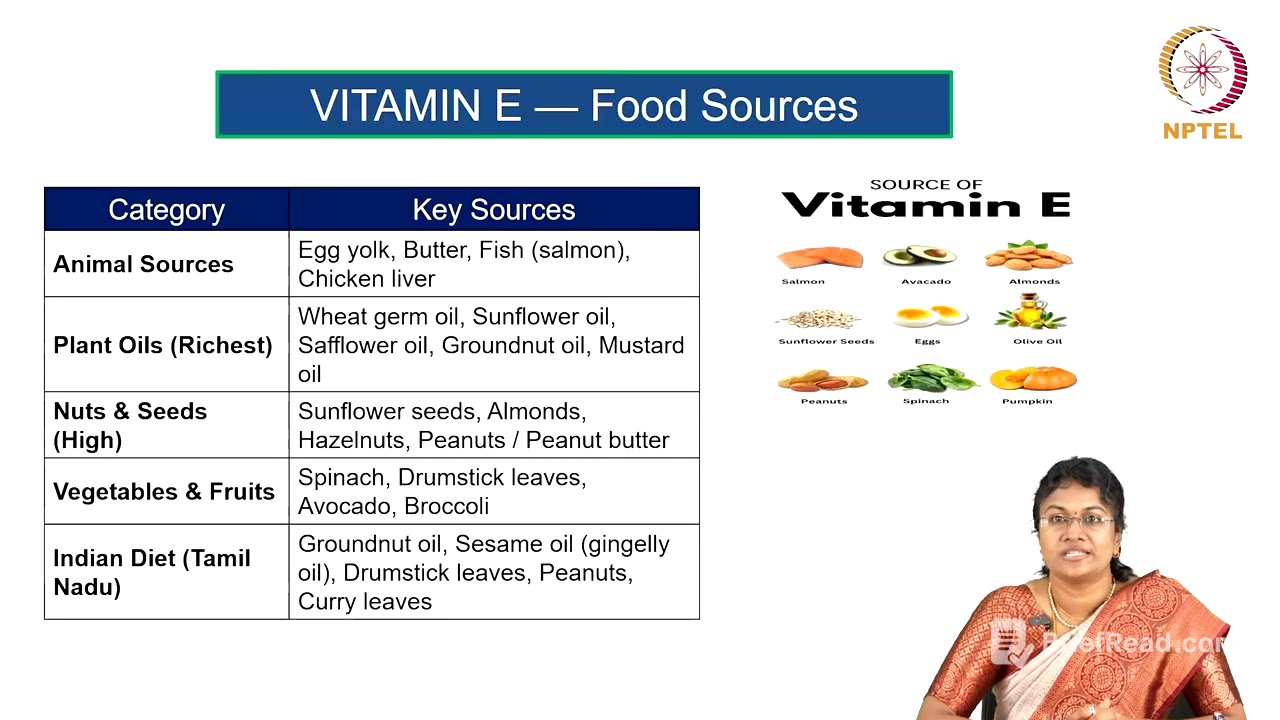
The video outlines the recommended dietary allowances (RDA) for vitamin E, which differ based on age, with adults needing about 15 international units per day. Toxicity from vitamin E is rare, but large doses can lead to coagulopathy, particularly in those deficient in vitamin K. Food sources rich in vitamin E include vegetable oils, nuts, seeds, and green leafy vegetables.
Bioavailability ranges from 20% to 80%, with dietary fat and bile salts being essential for absorption. The storage and preparation of vitamin E-rich foods are also discussed, emphasising that exposure to heat, light, and oxygen can degrade its content.
Vitamin K Overview [13:59]
The session transitions to vitamin K, an essential cofactor for the enzyme gamma-glutamyl carboxylase that plays a key role in blood coagulation, bone metabolism, and preventing vascular calcification. Various forms of vitamin K are discussed, including phylloquinone (K1) and menaquinones (K2), with the latter being produced by gut bacteria and found in fermented foods.
Vitamin K Mechanisms and Functions [14:35]
Vitamin K acts primarily through its mechanism to carboxylate proteins that are essential for blood clotting and bone mineralisation. The video explains the formation and activation of coagulation proteins such as prothrombin and the anti-coagulant proteins C and S, which are vital for maintaining normal coagulation processes.
Vitamin K Dietary Requirements and Bioavailability [18:02]
The recommended dietary allowance for vitamin K is highlighted, indicating a dosage of 55 µg per day for adults. Vitamin K absorption relies on dietary fat, and factors affecting bioavailability include dietary fat quantity and the presence of gut microbiota that synthesises K2.
The video contrasts the absorption capabilities and half-lives of vitamin K1 and K2, emphasising that K1 is primarily involved in blood clotting while K2 supports bone health. The food sources of vitamin K include green leafy vegetables and fermented foods, which are essential for achieving adequate intake and preventing deficiency.
Conclusion of Vitamins E and K [24:18]
The conclusion reiterates the significance of vitamins E and K as essential antioxidants, with vitamin E protecting cell membranes from oxidative damage and vitamin K being crucial for blood coagulation and bone health. Adequate intake through a balanced diet carries minimal risk of toxicity, underscoring their importance in maintaining physiological functions in the body.