TLDR;
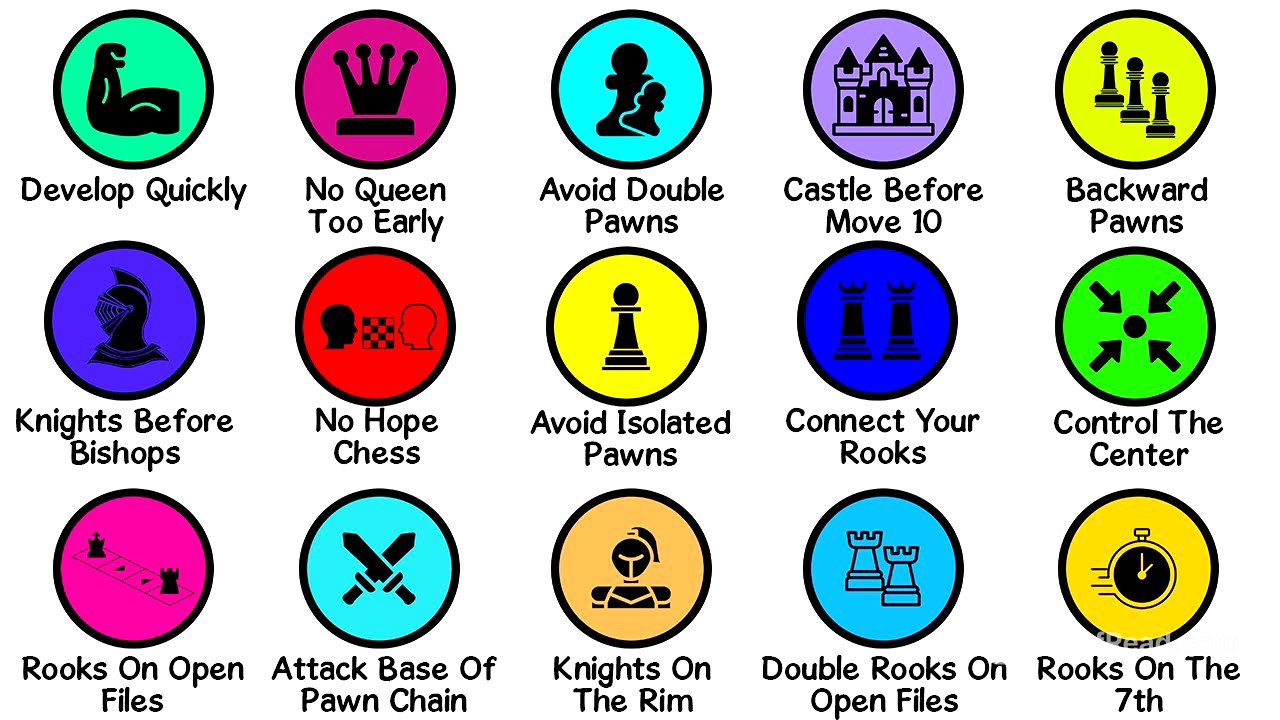
This video from Chess Thugs discusses essential chess principles that every player should follow to improve their game. Key points include:
- Avoid moving the same piece multiple times in the opening.
- Prioritise development of pieces, especially the knights and bishops.
- Understand the importance of pawn structure, including avoiding double and isolated pawns.
- Rooks should be centralised and connected, while strategies in the endgame involve active use of the king.
Early Game Principles [0:00]
Avoid bringing out the queen too early in the game as she can be easily threatened, leading to wasted turns. Instead, focus on developing pieces quickly without moving the same piece multiple times. Quick development helps in controlling the board and sets up for future attacks. Grandmasters suggest that all pieces, including bishops and knights, should be moved off the back rank, allowing for a safer king and a more potent attack against the opponent.
Pawn Structures [0:52]
Be cautious of double pawns, which cannot defend each other and make you vulnerable to attacks. Isolated pawns should also be avoided as they are easy targets. Sacrificing isolated pawns can disrupt your opponent’s pawn structure. In the endgame, the king should be brought into play early, as it becomes a powerful piece.
Castling and Rook Strategies [1:43]
Castling should be done before move 10 to ensure the safety of the king. Rooks should ideally be placed behind passed pawns to protect them and maintain activity. Knowing when to open up the position is crucial, especially if your king remains in the centre.
Piece Coordination [2:43]
Bishops excel in open positions but are limited in closed positions, whereas knights are more effective in closed situations. Avoid hope chess—always anticipate that your opponent will make the best possible moves. Rooks are stronger when connected, allowing for better control of the board.
Material Value and Pawn Control [4:43]
Two minor pieces are generally superior to a rook and pawn due to their ability to control more squares. When capturing, always aim to take towards the centre of the board, enhancing control and setting up attacks. With two connected pawns on the sixth rank, they can be overwhelming for a rook.
Endgame and Trading Strategies [6:05]
In the endgame, opposite-coloured bishops can create dangerous positions for the opponent, although they often lead to draws. Rooks perform best on open files; trading pieces instead of pawns is often more advantageous to maintain winning chances. The position may dictate whether to trade pieces or simplify the game.
Knight Positioning [7:41]
Knights should not be positioned on the rim as they can control fewer squares. In cramped positions, trading pieces can simplify the position and improve chances. Always look for better moves after spotting a good one, ensuring the most effective strategies are employed.
Doubling Rooks and Central Attacks [9:01]
Doubling rooks on an open file can create significant threats for your opponent. The seventh rank (for White) and second rank (for Black) are powerful positions for rooks to dominate the board. Recognising when to initiate attacks on the centre while defending a flank attack can turn the game in your favour.
Ignoring Principles When Necessary [10:13]
Understand that there will be situations where conventional principles may need to be bypassed to make the best move. Flexibility in strategy and maintaining a sense of enjoyment in play can significantly enhance your chess experience.