TLDR;
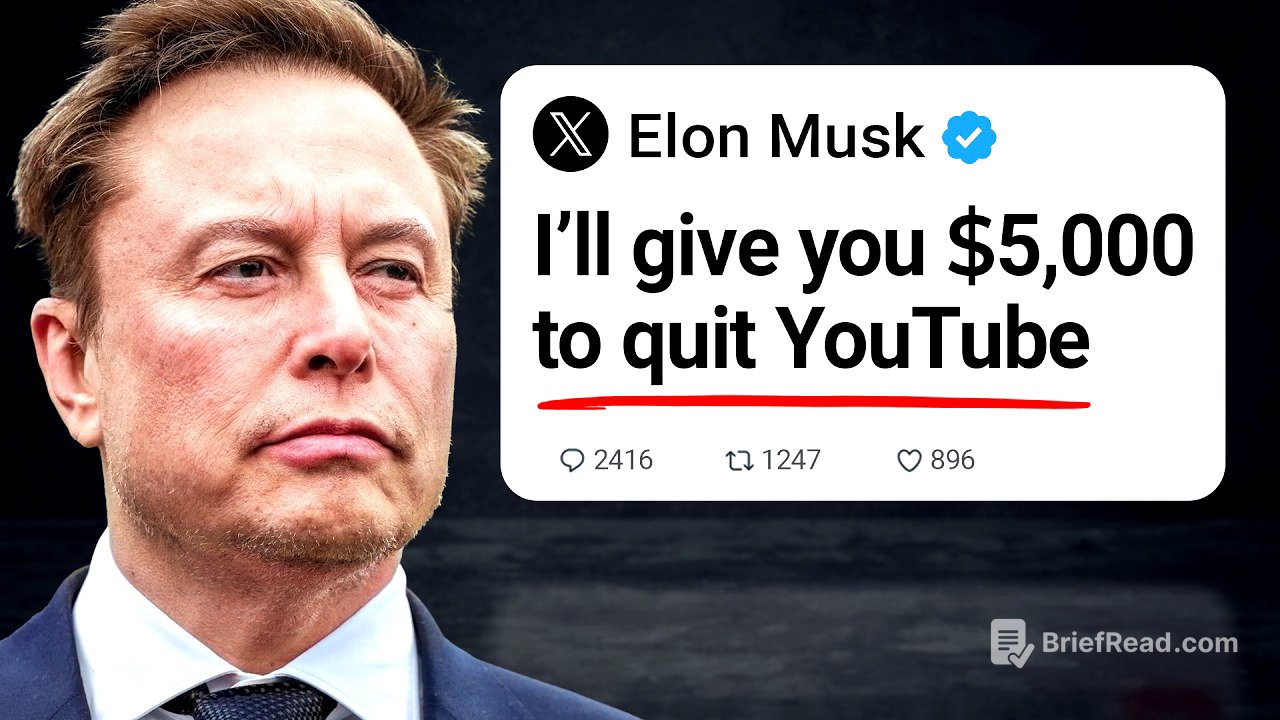
X is offering selected creators up to $5,000 to upload 15 short videos, potentially making it an easy way to earn extra money from clips already made for YouTube. The offer is generous compared with typical Shorts earnings, but it is temporary, invitation-only and may not lead to reliable long-term income. YouTube and Instagram are also competing for creators, leaving creators to weigh the initial payments against the extra work and uncertain rewards after bonuses end.
- X’s bonus requires 15 original vertical videos, each under three minutes, posted on separate days; views are not required.
- Creators may receive less than the advertised maximum, and ongoing X rewards can involve substantial posting and engagement.
- Posting on other platforms may help creators reach new audiences, but sustained success depends on giving both creators and viewers reasons to return.
Elon Musk Wants Your YouTube Videos [0:00]
X is inviting selected creators to post 15 videos in exchange for a bonus of up to $5,000. The videos can already have been published on YouTube, so creators who make short-form content may be able to reuse existing clips. However, the offer is invitation-only, and the amount varies: creator Ashney shared an invitation worth $1,500 rather than the maximum $5,000.
The bonus is based on follower ranges across X and other platforms when a creator receives an invitation. To qualify, creators must post 15 original vertical videos, each under three minutes, on 15 separate days. The offer states no performance requirements, so the videos do not need to reach a particular number of views. Previously published clips are allowed, but they must not contain watermarks from platforms such as YouTube or TikTok.
The X Video Kickstart Bonus Offer [0:55]
For creators who already produce short videos, joining the offer may require little extra work: they can add X to their existing upload routine for 15 days. The key conditions are that each video is under three minutes, vertical, original work and posted on a different day. X does not require the creator to produce new videos specifically for the programme, provided existing clips meet its requirements.
The apparent simplicity makes the offer attractive, but the advertised maximum should not be assumed. Some creators receive smaller bonuses, and the amount depends on their follower ranges across X and other social platforms. The first enrolment deadline mentioned was 30 October, with further deadlines expected monthly, though the programme’s duration was uncertain.
Is the Offer Worth It? [2:18]
At $1,500 for 15 videos, the offer works out to $100 per video, provided the creator meets all the requirements. As a comparison, YouTube Shorts ad revenue was estimated at around 10 cents per 1,000 views. At that rate, a Short would need roughly one million engaged views to generate $100. A $5,000 bonus would be equivalent to the revenue from more than three million engaged Shorts views.
Unlike Shorts ad revenue, the X bonus does not depend on getting views: uploading the required videos is enough. This makes the offer especially worthwhile for creators who already have suitable clips ready to post. However, the payment is a temporary incentive, and it remains uncertain how long X will continue offering monthly enrolment opportunities.
Why X Wants Content: The MrBeast Example [3:23]
X wants to become a distribution platform where creators can share content made for other services. A video that has already been seen on YouTube may still be new to X users encountering it in their feed. This can give creators access to another audience without requiring them to abandon their YouTube channels.
MrBeast provided a prominent example of the potential value. After Elon Musk encouraged him to post directly on X, MrBeast initially questioned whether the platform could generate enough revenue to justify sharing videos that cost millions of dollars to produce. He nevertheless tested it and reported earning nearly a quarter of a million dollars from his first upload. The attention around the experiment may have contributed to unusually high advertising rates: one estimate put his earnings at about $1.50 per 1,000 impressions, compared with roughly three cents per 1,000 impressions for other creators.
A few months later, MrBeast said he had earned more than $1 million from videos posted on X and was reinvesting the money into his videos. However, he no longer uploads there, and the reason is unknown. Advertising rates may have fallen, or the posts may have diverted viewers from his YouTube content. Although his uploads brought X a large audience and media attention, some people suspected that the experiment also served as a publicity stunt.
Other Platforms Are Competing for Creators [5:58]
X is not the only platform trying to attract creators. Soon after X’s offer appeared, YouTube introduced its own Shorts bonus programme. Selected creators can receive minimum payments for meeting upload requirements, with further payments linked to how their Shorts perform. The programme was presented as less generous than X’s offer.
Instagram is also moving back into long-form video. Business Insider reported that Instagram was offering selected YouTubers between $50,000 and $500,000 to publish on Features, its new long-form format. Meta confirmed that it was funding some creators’ content but did not disclose the amounts. Reported deals did not require exclusivity: creators were asked to make their videos available on Instagram alongside YouTube.
These offers raise questions about who can access them and whether they create lasting opportunities. A large initial payment can attract creators, but the long-term value depends on what platforms offer once the funding ends.
What Happens When the Bonus Ends? [7:33]
X has an ongoing programme called Original Content Rewards, separate from the Kickstart bonus. One creator reported earning about $150 over 14 days, equivalent to roughly $1.28 per 1,000 verified impressions. That rate was higher than typical YouTube Shorts RPMs—revenue per thousand views—but required considerable effort: the creator posted 117 videos and nearly 5,000 replies, spending around five and a half hours per day on the platform.
X’s rewards are based on qualified impressions from premium users in their home timeline, rather than simply on people watching a video. This makes the system more complicated than earning revenue from YouTube Shorts views. Once the initial bonus ends, creators may need to put in far more time and effort to earn ongoing payments.
Two Decisions for Creators [8:44]
Creators need to decide whether the initial bonus is worth posting on another platform and whether the results after the bonus ends justify continuing. For the X offer, the first decision is relatively straightforward if a creator already has suitable short clips ready to upload: the additional work may be minimal. The long-term decision is less certain, particularly because platforms’ reward systems and audiences can change.
Creators are advised to track bonus payments separately from their ongoing earnings and to measure how much extra time each platform requires. This helps show whether a new service has become a genuine source of income or whether the creator is mainly benefiting from a temporary incentive. Instagram, for instance, had not announced a plan to pay creators for long-form content at the time of recording.
YouTube’s established audience and extensive video library make it a powerful platform, but TikTok demonstrated that a new service can become a lasting part of the video landscape while YouTube continues to thrive. In the short term, creators may benefit when platforms pay for content and help it reach new viewers. The unresolved question is whether creators will keep posting—and audiences keep watching—after the bonuses end. Netflix is also targeting YouTubers looking to make a larger creative move.