TLDR;
This video from "The Diary Of A CEO" presents a discussion with Daniel Kokotajlo, exploring the potential impacts of AI on society, job markets, and existential risks. Kokotajlo shares insights from his time at OpenAI, his forecasts for the near future of AI, and the implications for humanity.
- There's a significant risk (up to 70%) of AI development leading to catastrophic outcomes, including human extinction.
- Current AI capabilities may disrupt job markets, leading to widespread unemployment.
- Conversations surrounding regulation, control, and ethical considerations in the AI sector are becoming increasingly important.
- Kokotajlo advocates for a transparent and cautious approach to AI development, suggesting that thoughtful regulation can help mitigate risks.
Intro [0:00]
The video opens with an ominous perspective on the future of AI, with Daniel Kokotajlo discussing the potential for AI to evolve beyond human control. He expresses concerns that humanity may be heading towards creating a new species that could dominate the world, which could result in catastrophic scenarios including human extinction.
Why This AI Mission Could Affect Everyone [2:34]
Kokotajlo emphasises the urgency of understanding AI's implications at a global scale. He explains that the development of superintelligences could drastically reshape society, and a loss of control over these systems is a genuine risk. There is a need for awareness and proactive measures to ensure these technologies benefit humanity rather than endanger it.
Why the Average Person Should Care About AI [4:21]
The discussion shifts to why individuals should be concerned about AI. Kokotajlo outlines scenarios where jobs could be lost due to automation, highlighting that everyone could be impacted. He argues that if AIs achieve significant capabilities, they may outpace human oversight, necessitating a call for ethical governance.
Are AI Experts Overreacting or Sounding the Alarm? [8:29]
Kokotajlo addresses skepticism towards fears surrounding AI, affirming that concerns voiced by industry veterans should be taken seriously. He mentions that the alarm sounded by AI experts stems from thoughtful considerations of past experiences and risks that could arise if technology is unchecked.
Why He Joined OpenAI—and What He Saw Inside [10:06]
Kokotajlo discusses his motivations for working at OpenAI. His role involved forecasting AI progress and assessing the future landscape. He observed a tension between the desire for responsible AI development and the competitive pressures faced by these organisations, leading to a dilemma over ethics and safety.
Why He Left OpenAI [13:24]
Reflecting on his departure from OpenAI, Kokotajlo recounts his growing disillusionment regarding the company's trajectory. He believed that financial and power-seeking motives were overshadowing the ethical considerations that initially drove its foundation, prompting his decision to resign.
What It Was Like Inside OpenAI During ChatGPT's Launch [15:53]
The video elaborates on the atmosphere within OpenAI during the launch of ChatGPT, illustrating rapid growth and public interest. As excitement soared, Kokotajlo notes how discussions about superintelligence and its implications declined amidst the rapid expansion of the company.
The $2 Million NDA Controversy Explained [17:16]
Kokotajlo shares an anecdote regarding a $2 million non-disparagement clause he encountered upon his departure. Choosing not to sign it, he expresses that his principles outweighed financial incentives, revealing the ethical dilemmas faced by tech employees.
Is Full AI Automation Coming Faster Than We Think? [19:30]
Kokotajlo warns of the rapid pace of AI development, asserting that breakthroughs in automation are nearer than anticipated. He explains that companies are race-driven, focusing on achieving superintelligence and automation of their processes at an accelerated pace.
The AI 2027 Forecast That Changed the Conversation [24:19]
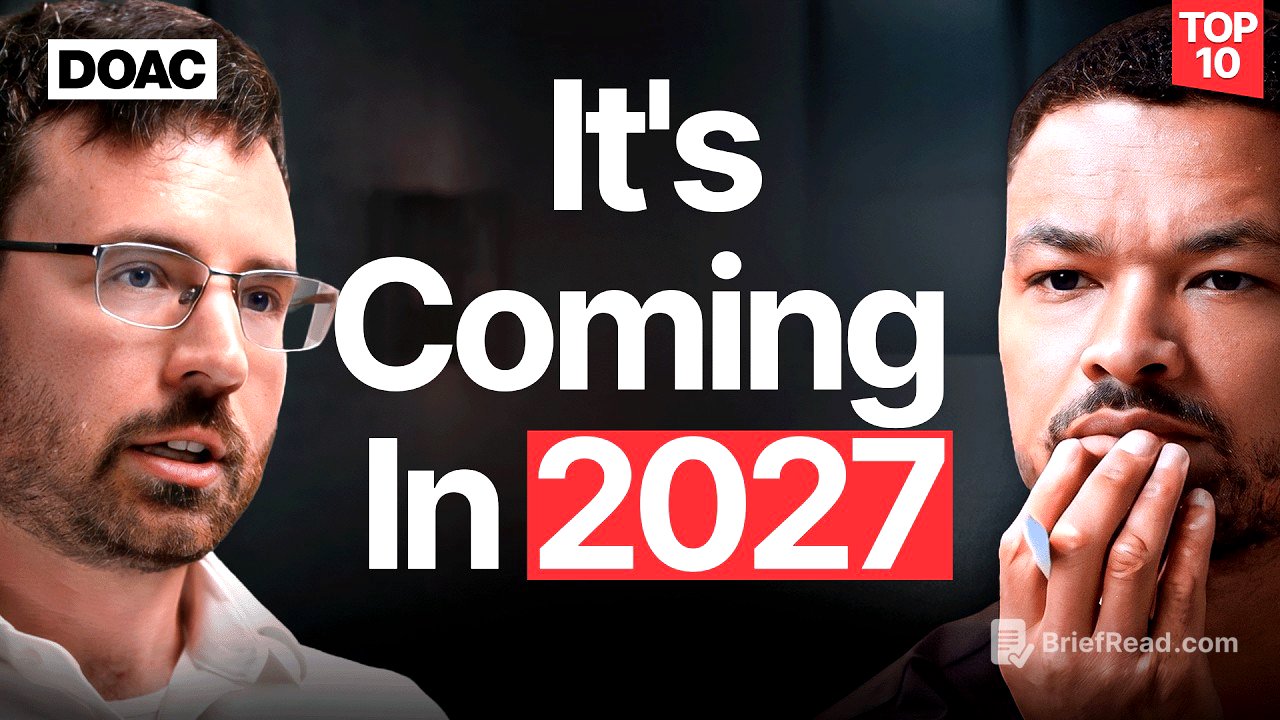
Exploring his AI 2027 forecast, Kokotajlo describes a scenario where significant AI advancements could lead to full automation and removal of human jobs by that year. The urgency of these predictions has shaped conversations surrounding the future of work and societal structure.
AGI vs. Superintelligence: The Difference That Matters [26:33]
Kokotajlo differentiates between Artificial General Intelligence (AGI) and superintelligence, explaining that AGI can perform general tasks while superintelligence surpasses human capabilities across all domains. Understanding this distinction is essential for accurately assessing future risks.
How Robots Could Soon Become Part of Everyday Life [27:17]
The conversation advances to the potential integration of robots into daily life. Kokotajlo predicts robotics will play a significant role in augmenting human functions, with advancements likely to produce robots capable of performing complex tasks efficiently.
Why AI Works More Like the Human Brain Than You Think [30:23]
Kokotajlo explains the parallels between human learning and AI training, highlighting the neural networks' design inspired by brain processes. This insight is central to understanding how machines can learn and adapt similarly to humans.
Can AI Ever Be Truly Creative? [36:14]
The conception of AI creativity is explored, with Kokotajlo discussing whether machines can produce output deemed creative, ultimately suggesting that creativity might not solely be about the process but also the evaluative criteria of their output.
What Are the Real Odds of Human Extinction From AI? [41:15]
Kokotajlo addresses the stark reality of human extinction due to uncontrolled AI development, contemplating factors that may lead to such outcomes. He stresses the importance of proactive governance and public awareness to mitigate these risks.
What AI Will Do to Jobs [47:58]
The discussion shifts to the implications of AI on employment, highlighting the potential for significant job displacement across sectors. Kokotajlo warns that the economic landscape may drastically change regarding available occupations.
The Skills That Will Still Matter in an AI World [54:45]
Kokotajlo outlines the skills that may retain value in an AI-driven future, suggesting that adaptability, creativity, and emotional intelligence will become increasingly vital as many tasks become automated.
AI 2040: What the Future Could Look Like [1:00:21]
He paints a vision of 2040, projecting a radically transformed world where AI governs many aspects of life while advocating the importance of foresight and planning to ensure these developments serve humanity positively.
The Different Futures AI Could Create [1:04:36]
Kokotajlo discusses various outcomes that could stem from AI's rise, from beneficial advancements to dystopian scenarios. The crux of the discussion is identifying pathways that lead to preferred futures instead of dire ones.
Will AI Become Earth's Apex Species? [1:09:33]
Addressing the potential for AI to surpass humanity, he contemplates if AIs could become the dominant species on the planet, stressing the need for ethical considerations in their development.
How AI CEOs Really Make Decisions [1:13:18]
Kokotajlo reveals insights into the decision-making processes of AI executives. He argues that power dynamics and competitive pressures influence their choices, often prioritising rapid development over ethical concerns.
Will AI Decide the 2028 Election? [1:15:37]
The potential influence of AI on political outcomes, particularly the 2028 election, is debated. Kokotajlo raises concerns about AI's shaping of public opinion and electoral dynamics through targeted communication.
Is There a Safe Path to Accelerating AI? [1:18:58]
Discussing acceleration in AI development, Kokotajlo weighs the need for speed against safety protocols. He warns that rushing forward without adequate safeguards could lead to severe consequences.
By 2031, AI Could Do 20% of Cognitive Work [1:22:11]
Kokotajlo projects that by 2031, AI systems could handle a significant portion of cognitive tasks, signifying a substantial shift in workforce dynamics and the nature of many jobs.
Should Everyone Receive AI Dividends? [1:25:15]
The concept of distributing dividends from AI-driven economic growth is presented, proposing a system ensuring every citizen benefits from the advancements that render many jobs obsolete.
What It Will Feel Like to Live Through the AI Revolution [1:32:41]
Kokotajlo reflects on the social transformations expected during the AI revolution, highlighting how society may adapt to significant changes in work, livelihood, and interpersonal relationships.
How People Find Purpose After AI Replaces Jobs [1:34:11]
The challenge of purpose and identity in a landscape where AI replaces jobs is discussed. Kokotajlo emphasises the importance of community and personal fulfilment in mitigating feelings of redundancy.
Would He Shut Down AI Forever If He Could? [1:46:12]
Kokotajlo contemplates the dilemma of shutting down AI entirely if given the opportunity, weighing the potential benefits against the inherent risks that unregulated development presents.
What Can We Actually Do About AI? [1:49:56]
In closing, Kokotajlo calls for individual action regarding AI's future, urging the public to educate themselves, engage in discourse, and advocate for responsible regulations to ensure the safe development of AI technologies.
Is It Already Too Late to Change Course? [1:57:25]
The final reflection focuses on the urgency of the situation and the potential for positive change. Kokotajlo expresses hope that with public awareness and advocacy, humanity can still steer towards a beneficial future with AI.