TLDR;
This video examines the troubling issue of substandard and unsafe school meals in mainland China, highlighting instances of poor quality food, unsanitary conditions, and corruption. It contrasts this with the more transparent and accountable system in Taiwan, where school lunches are subject to greater scrutiny and focus on the practicalities of children's dining experiences. The video also discusses recent government initiatives in China to address the problem, while raising concerns about the potential for these reforms to be undermined by existing power structures and a lack of transparency.
- School lunches in China are often of poor quality, with instances of rotten meat, bugs, and unsanitary preparation conditions.
- Parents in China face challenges in monitoring and holding suppliers accountable due to monopolies and opaque processes.
- Taiwan's school meal system is more transparent, with media access to central kitchens and a focus on practical considerations for children.
- Recent government initiatives in China aim to improve school meals, but concerns remain about the effectiveness of these reforms without systemic changes.
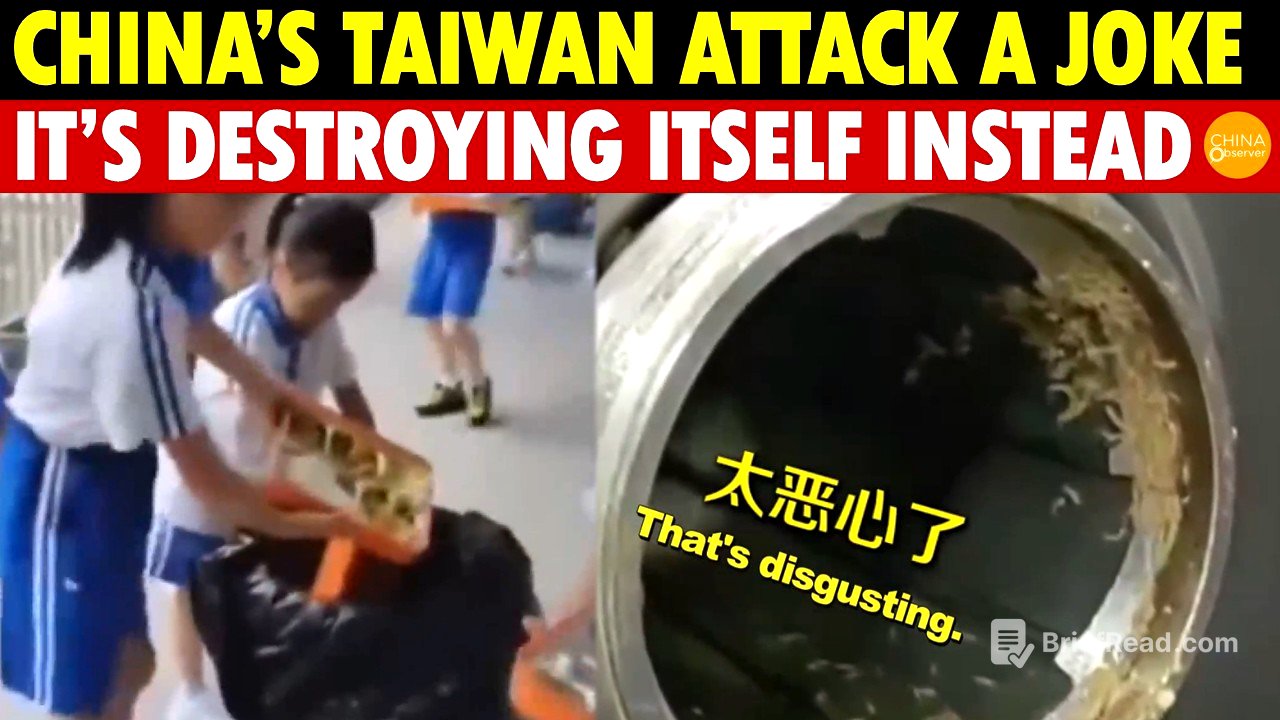
Student Discarding Lunch and Maggots in Meat Grinders [0:13]
In a Chinese elementary school, students were seen throwing away their lunches, finding them unpalatable. A parent reported discovering live maggots in the school cafeteria's meat grinder. The school responded by promising health checks, installing cameras, and urging parents to refrain from posting about the incident on social media.
Complaints About School Meal Quality [0:50]
In 2025, concerns arose regarding prepackaged meals and restaurant standards, with students protesting poor school lunches. A first-grade student criticised the unsanitary conditions, describing bugs in the food. Despite the principal's attempts to deflect, the student insisted on the poor quality, describing the food as watery and unpalatable. Other parents shared images of similarly unappetising school lunches, with separated oil and questionable meat. One parent who visited the school found the food plain and lacking in nutrition, and was asked to remove the footage after posting it online, raising further suspicions.
Food Waste and Unequal Distribution [3:10]
A school cafeteria was observed serving limited portions, with some students missing out on vegetables. A staff member was seen retrieving discarded food from the bin and re-serving it, including items with bite marks. This situation is contrasted with leaked footage of a Taiwanese legislative inquiry into nutritious school lunches, where a legislator questioned the practicality of serving whole fruits to young children with limited time and no utensils, highlighting the attention to detail in Taiwan's system.
Taiwan's School Lunch System vs. China's [5:56]
The Taiwanese legislator's focus was on the practicalities of how children eat, reflecting a well-established system of food sourcing and safety management, including traceability mechanisms and standardised processes. This contrasts with China, where school meals are often monopolised by connected suppliers, making accountability difficult.
Shanghai School Lunch Concerns and GreenJ [6:55]
In Shanghai, parents reported poor quality, unappetising, and inadequate school lunches, questioning why they were paying for such substandard food. A shrimp and scrambled eggs dish was removed due to its bad smell, sparking discussions among parents. One parent's daughter fell ill after eating a school meal, complaining of a strange smell and nausea. Parents reported the meals were often nutritionally inadequate, relying on fried and frozen products. Despite reporting to relevant departments, no clear investigation results were released. The supplier, Shanghai Lu Industrial Development Company (GreenJ), faces challenges due to its extensive network, complex structure, and suspected conflicts of interest with a related food testing agency.
Embezzlement and "Zombie Meat" [10:56]
A case of embezzling student meal fees was reported in southern China, where officials were found to be cutting corners and pocketing profits. Students from rural families were not receiving adequate meals despite their parents' sacrifices. Additionally, reports emerged of schools purchasing beef with a shelf life of up to 540 days and pork with a shelf life of 720 days, referred to as "zombie meat."
Rotten Pork and Unsanitary Kitchen Conditions [12:23]
In Satron Province, widespread incidents of food safety issues in school meals were reported, with schools serving spoiled pork. Parents gathered to demand answers, holding up the rotten meat. A secretly filmed video of a meal supplier's kitchen revealed filthy conditions, with high temperatures and humidity. The staff member who filmed the footage was fired.
Taiwan's Transparency vs. China's Challenges and Reforms [13:54]
Taiwan's school meal system is presented as a transparent and standardised model, with media access to central kitchens. In contrast, many school meals in China fail to meet basic safety standards. The Chinese government announced plans to tackle the student meal issue, with Beijing aiming to phase out outsourcing and switch to self-operated cafeterias by 2027. However, concerns remain about whether these reforms can be effective without addressing the underlying power structures and lack of transparency.