TLDR;
This video provides an in-depth look at nuts and oil seeds, covering their definitions, nutritional benefits, culinary uses, and health implications. Key takeaways include:
- Nuts are energy-dense, rich in antioxidants, vitamins, and healthy fats with various culinary applications.
- Ground nuts are noted for high protein content and are significant in Indian cooking.
- Oil seeds are essential for extracting oils used in cooking and other culinary products, with specific oils having unique health benefits.
Introduction to Nuts and Oil Seeds [0:00]
The lecturer introduces the topic of nuts and oil seeds, emphasising their importance in Indian cuisine and nutrition. By the end of the session, students will learn the structure, composition, and culinary roles of these ingredients. Nuts are defined as seeds or fruits with edible fat-containing kernels, providing a concentrated energy source.
Composition and Types of Nuts [1:00]
This chapter discusses the composition of nuts, describing them as dry, single-seeded fruits with hard shells. The protective outer layer is the husk, and inside is the kernel containing the plant's embryo. True nuts include acorns and chestnuts, while not true nuts like almonds and walnuts are seeds of drupes. Each type has different culinary uses, with variations in flavour and application in Indian sweets and desserts.
Ground Nuts: Proteins and Culinary Uses [3:20]
Ground nuts are highlighted as an essential source of protein and a low-cost food option in India. They are considered to contain more protein than meat and eggs, making them a valuable source for vegetarians. In addition to protein, they are rich in micronutrients and heart-healthy vitamin E. Ground nuts also play a significant role in various Indian dishes and can be consumed in multiple forms, including boiled, roasted, or as peanut butter.
Cashew Nuts: Health Benefits and Culinary Applications [5:20]
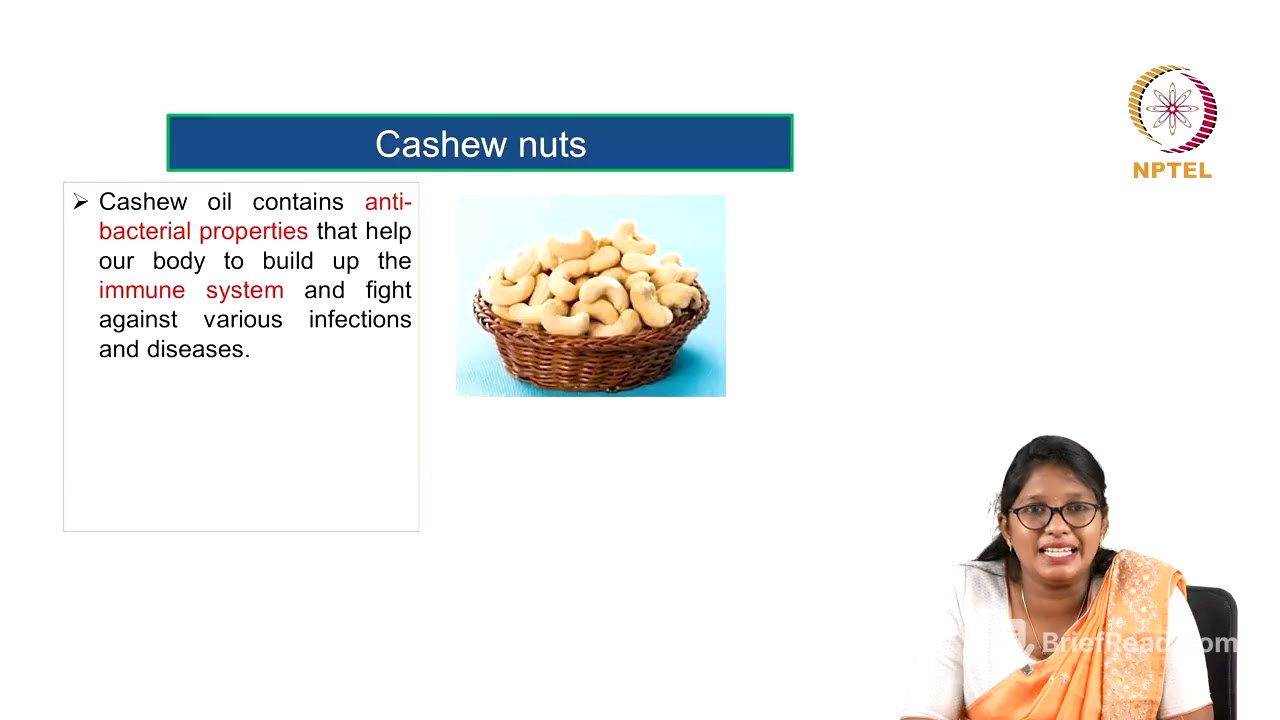
Cashew nuts are presented as a rich source of protein, essential minerals, and antioxidants. They contain antibacterial properties through cashew oil, contributing to immune health. Daily consumption supports eyesight and reduces irritation. Cashew nuts are versatile in cooking, used in sweets, main dishes, and garnishes in various Indian recipes, enhancing the flavour and nutrition of dishes.
Coconuts: Nutritional Value and Uses [7:10]
Coconuts are renowned for their caloric richness but not protein content. This chapter discusses their extensive use in cooking, particularly in South Indian cuisines. Coconut flesh can be processed into various forms, including flour, and plays a crucial role in thickening curries and enhancing flavours in many dishes. Health benefits include antioxidative properties and potential digestive improvements.
Nutritional Profile of Almonds [9:40]
Almonds are noted as a concentrated energy source with high fat and moderate protein content, contributing to heart health due to their vitamin E content. They are commonly used in various sweets and dishes as a garnish. The chapter highlights their role in reducing LDL (bad cholesterol) levels, promoting healthy heart functions.
Oil Seeds: Extraction and Types [11:20]
The discussion moves to oil seeds, which serve as sources for edible oils extracted via various processes. Not all seeds yield safe oils; some contain harmful compounds. Mustard oil, corn oil, sunflower oil, and more are featured for their health benefits and culinary uses in cooking.
Soybean and Sunflower Oils: Health Benefits [14:20]
Chapter insights on soybean and sunflower oils focus on their health benefits, including reducing LDL cholesterol and boosting heart health due to their high vitamin E content. Sunflower oil's nutrients are essential for overall health and the immune system.
Sesame, Palm, and Olive Oils: Uses and Benefits [17:00]
The use of various oils, including sesame, palm, and olive, is discussed. Sesame oil is used in both cooking and traditional medicine, while palm oil is noted for its antioxidant properties. Olive oil's heart-friendly benefits are acknowledged, especially as its popularity increases in India.
Fatty Acid Composition of Common Oils [19:20]
This chapter reviews the fatty acid profiles of commonly used cooking oils, indicating variations in saturated and unsaturated fat content. Coconut oil is rich in saturated fats, while polyunsaturated fats are prevalent in corn and sunflower oils.
Hydrogenation Techniques and Health Implications [21:40]
The hydrogenation process is explained, which transforms unsaturated fats into saturated fats, producing products like vanaspati and margarine. These fats can have both good and bad effects on health, necessitating cautious consumption.
Nutritional Value of Nuts and Oil Seeds [23:10]
Nuts and oil seeds are acknowledged for being energy-dense with beneficial fatty acid profiles. They provide important vitamins, including B vitamins and vitamin E, contributing to heart health. Moderation is emphasised as key to enjoying their health benefits without adverse effects.
Cooking with Nuts and Oil Seeds [25:10]
In the final chapter, the practical applications of nuts and oil seeds in various culinary contexts are explored. They can be consumed in various forms and used as snacks, garnishes, and ingredients in both sweet and savoury dishes. The importance of moderation is reiterated alongside the nutritional benefits they provide.