TLDR;
This video discusses how to remove plaque from arteries, focusing on the differences between soft and hard plaque, the CAC paradox, and the roles of LDL, HDL, and triglycerides. It provides methods to determine the type of LDL and suggests nutrients like pycnogenol, gotu kola, vitamin K2, nattokinase, and niacin to naturally clean arteries.
- Soft plaque is more dangerous than hard plaque.
- CAC scores may increase initially when converting soft plaque to hard plaque.
- Specific nutrients can aid in plaque removal and artery health.
Introduction: Clogged Arteries [0:00]
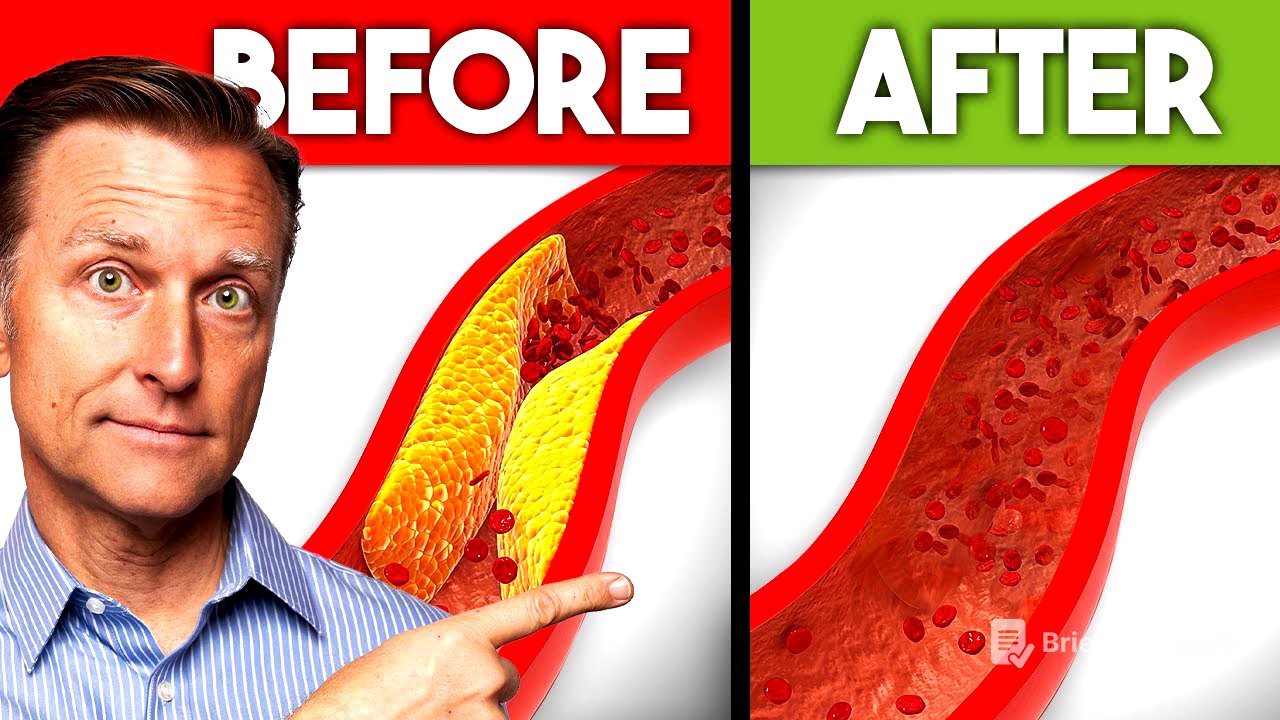
The video introduces the topic of removing plaque from arteries, defining plaque as a combination of cholesterol, a specific protein causing fibrosis, and calcium. These three components form a "Band-Aid" in response to inflammation or issues within the artery. The discussion will cover different types of plaque and nutrients that can help remove it.
Soft Plaque vs. Hard Plaque [0:20]
There are two types of plaque: soft plaque and hard (or calcified) plaque. Soft plaque is unstable and more dangerous, while hard plaque is denser, more stable, and less dangerous. Soft plaque is four times more common than calcified plaque. A CAC test measures the amount of plaque in the arteries, primarily calcified plaque, as soft plaque may not always be detected.
The CAC Paradox [1:08]
The CAC paradox refers to the phenomenon where a CAC score might increase after adopting a healthier diet. This increase doesn't indicate worsening health; instead, it signifies the conversion of soft plaque into more stable hard plaque. Additional tests can identify soft plaque, which the CAC test may not effectively detect. Glycation, the binding of sugar and protein, is often associated with soft plaque, as is the oxidation of LDL.
LDL, HDL, and Triglycerides [2:13]
The video specifies that not all LDL is harmful; small, dense LDL is more pathogenic than large, buoyant LDL. Biomarkers like myeloperoxidase and Lp-PLA2 can help identify soft plaque. A carotid ultrasound is a quick, inexpensive, and non-invasive test with a high prediction rate for detecting arterial issues. High HDL levels help clean up pathogenic LDL, while low triglyceride levels indicate lower carbohydrate consumption. Lipoprotein insulin resistance is a crucial test for assessing lipid health and is strongly associated with cardiovascular atherosclerosis.
How to Determine Which Type of LDL You Have [4:08]
To determine the type of LDL, divide the LDL value by APO B, a component of lipoprotein that indicates the number of particles. An ideal ratio greater than 1.2 suggests the presence of large, buoyant LDL, which is the non-pathogenic type.
Which Nutrients Clean Your Arteries Naturally? [4:49]
Several nutrients can help remove plaque. Pycnogenol (pine bark extract) at 150mg helps convert soft plaque to calcified plaque and prevents plaque formation. Gotu kola at 450mg enhances pycnogenol's function and also prevents plaque formation. Vitamin K2 is a potent inhibitor of vascular calcification. Nattokinase can decrease the thickness of the carotid wall, and niacin (the type that causes flushing) is also beneficial. Other helpful nutrients include tocotrienol (a type of vitamin E), berberine, aged garlic, magnesium, potassium, and vitamin D.
Check Out My Video About the Best Meal to Clean Out Your Arteries! [7:17]
The video directs viewers to another video about the best meal and foods to help avoid plaque formation, with references provided in the description.