TLDR;
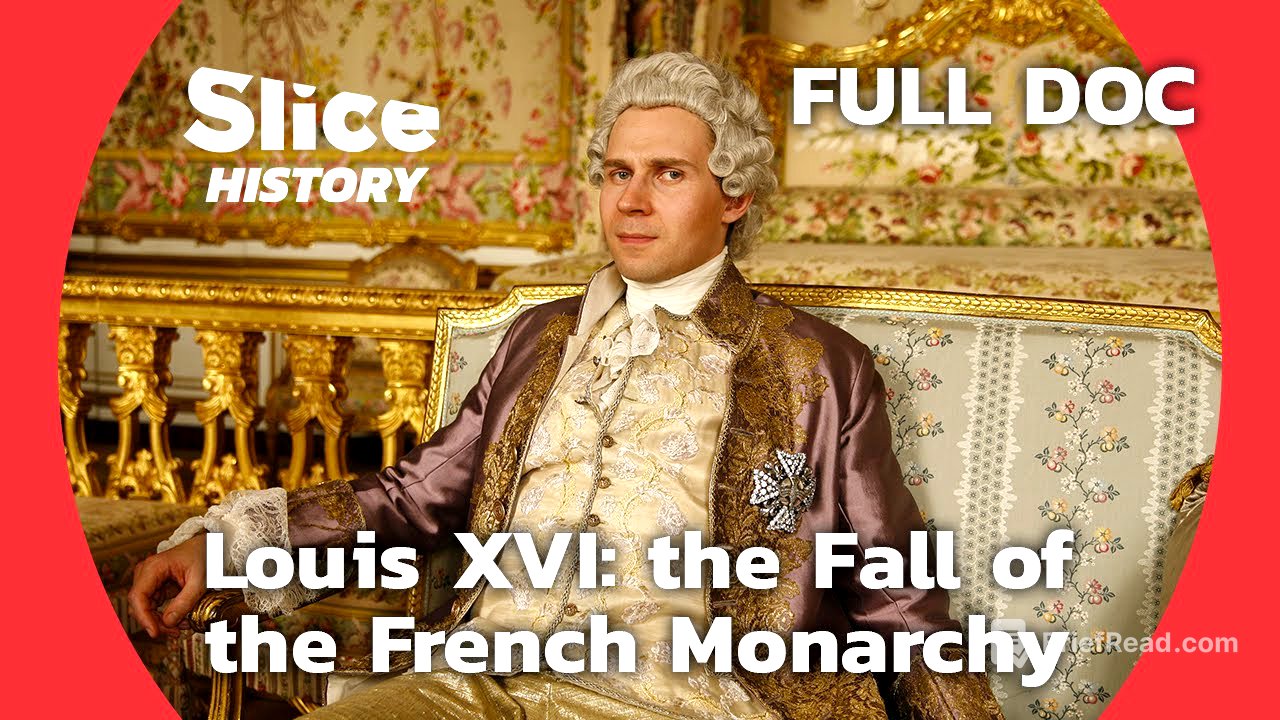
This documentary explores the reign of Louis XVI and Marie Antoinette, highlighting their initial hopes for a modern, philanthropic monarchy and the challenges they faced. The video details the couple's struggle to produce an heir, the King's attempts at financial reform, and the growing discontent among the French population due to economic hardship and perceived aristocratic excess. Ultimately, Louis XVI's indecisiveness and the couple's isolation from their people led to the French Revolution, their imprisonment, and execution.
- Louis XVI and Marie Antoinette's initial popularity waned due to their inability to produce an heir and the King's unsuccessful attempts at financial reform.
- France's involvement in the American Revolution exacerbated its financial woes, leading to increased taxes and resentment towards the monarchy.
- Marie Antoinette became a target of public anger, fuelled by scandalous pamphlets and accusations of extravagance.
- Louis XVI's indecisiveness and failure to address the growing economic crisis led to the French Revolution and the end of the Bourbon dynasty.
A Promising Start? [0:09]
In 1775, Louis XVI and Marie Antoinette ascended to the throne amidst public optimism. Louis XVI aimed to rule as an absolute monarch but also desired popularity by governing in the interest of all people. Embracing enlightenment ideals, he sought to be a just and philanthropic ruler, even taking the modern step of inoculating his family against smallpox, which demonstrated his willingness to lead with the times.
A Royal Marriage in Trouble [2:39]
Despite their public image of happiness, Louis XVI and Marie Antoinette faced a significant marital problem: the King's inability to consummate the marriage. This failure to produce an heir became a matter of state, leading to widespread gossip and embarrassment. The reasons behind this remain debated, with theories ranging from ignorance to a medical condition called phimosis. The king's hunting diary was used as evidence to debunk the phimosis theory.
Financial Woes and Reform Attempts [5:50]
Louis XVI inherited a nation burdened by poor finances, a problem exacerbated by the final years of Louis XV's reign. He appointed Jacques Turgot, an enlightened minister, to advise him on the economy. Turgot attempted to implement reforms, including taxing landed wealth, but faced resistance from powerful aristocrats and members of the parlements who opposed any changes that would threaten their privileged positions.
Undermining Reform [9:45]
Queen Marie Antoinette, influenced by gossip in Parisian salons, also opposed Turgot's reforms. The King's brother, the Comte de Provence, further undermined Turgot by clinging to the traditional three Estates system, where only the Third Estate paid taxes. This opposition, combined with Louis XVI's wavering confidence, led to Turgot's dismissal, marking a setback for reform efforts.
A Royal Heir and Renewed Hope [13:09]
After eight years of marriage, Louis XVI and Marie Antoinette finally had children, first a daughter and then an heir to the throne. The birth of the "doar" was celebrated as a miracle and a sign of salvation for France. This event boosted the Queen's reputation and brought great joy to the King.
Supporting the American Revolution [15:10]
To address the persistent financial problems, Louis XVI appointed Jacques Necker, a wealthy Genevan banker, as his finance minister. France saw an opportunity to get revenge on England by supporting the American Revolution. Despite concerns about supporting Republican insurgents, Louis XVI approved secret aid to the American colonies, which significantly strained the French treasury.
Franklin Mania and the Cost of War [19:59]
France's support for the American Revolution, while initially successful, proved increasingly expensive. Necker, having exhausted borrowing options, proposed taxing the nobility, which led to strong opposition from the courtiers at Versailles. Despite promising to back Necker, Louis XVI eventually dismissed him, repeating the pattern of failed reform attempts.
Scandal and Discontent [23:26]
Although the American Revolution resulted in a British defeat, France did not experience the anticipated economic benefits. Marie Antoinette, an Austrian outsider, became a target of public anger, portrayed as a symbol of aristocratic excess in scandalous pamphlets. These pamphlets accused her of wild sexual behaviour and blamed her for the country's financial woes, further damaging the monarchy's reputation.
A Glimmer of Hope and a Return to Crisis [28:26]
A visit to Normandy briefly boosted Louis XVI's spirits, as he experienced unexpected popularity among the people. However, upon his return to Versailles, he faced another crisis when Finance Minister Calonne proposed new taxes for the nobility. This proposal met with fierce resistance, leading to yet another failed attempt at financial reform.
Mental Breakdown and Unwelcome Gifts [31:29]
The repeated failures to enact meaningful change took a toll on Louis XVI, leading to a mental breakdown. He became indecisive and reliant on Marie Antoinette. An unsettling incident occurred when someone placed a portrait of the execution of England's King Charles I in his private chamber, reminding him of the dangers of his position.
The Estates-General and Growing Tensions [36:27]
In a final attempt to address the crisis, Louis XVI convened the Estates-General, a meeting of the nobility, clergy, and the Third Estate. However, the Third Estate's limited voting power led to a political deadlock. The death of Louis XVI's eldest son further strained the situation, pushing the King closer to the nobility and alienating the Third Estate.
The National Assembly and the Storming of the Bastille [39:27]
Frustrated by the lack of progress, the Third Estate declared itself the National Assembly, claiming to represent the majority of the French people. Louis XVI's refusal to meet with them and his decision to assemble troops around Paris sparked panic and unrest. The storming of the Bastille marked a turning point, as the people of Paris took up arms against the authorities.
March on Versailles and Imprisonment [42:37]
Despite his aversion to violence, Louis XVI faced increasing hostility from his people. A group of angry Parisians marched on Versailles, seeking to kill Marie Antoinette, who had become a symbol of the hated rich. The royal family was forced to surrender and was taken as prisoners to Paris, never to see Versailles again.
The End of an Era [46:58]
Louis XVI's attempts to change his kingdom had failed, leading to his and Marie Antoinette's execution by guillotine. Versailles, once a symbol of Bourbon power and prestige, came to represent a society that was fundamentally unfair and unequal, marking the end of an era.