TLDR;
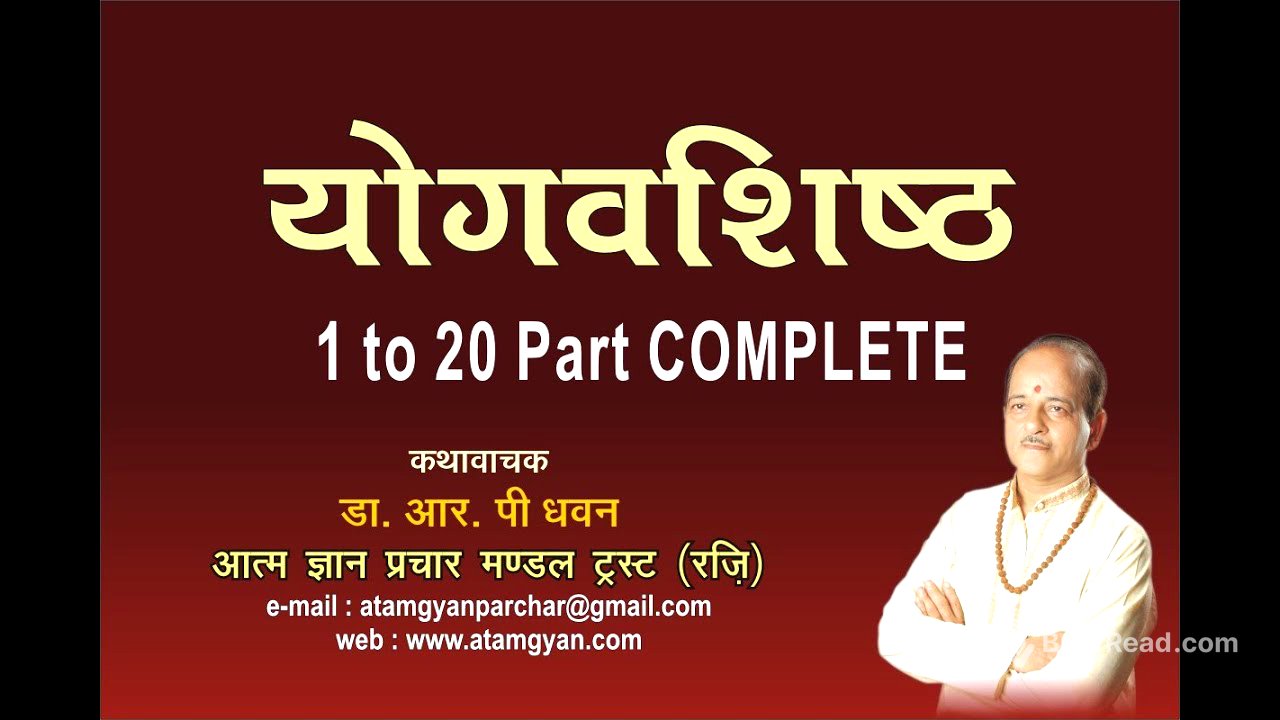
This YouTube video by Atamgyan Parchar features a discourse on the concept of Moksha (liberation) and the teachings from Yoga Vasistha, where Rishi Vasistha imparts self-knowledge to Lord Rama. The discussion covers the necessity of both action (karma) and knowledge (gyan) for achieving liberation, the nature of the mind, and ways to control it. It emphasizes that the world is a creation of the mind and true liberation comes from understanding the self and the ultimate reality.
- Moksha requires both karma and gyan.
- The world is a creation of the mind.
- Control of the mind is essential for liberation.
The Necessity of Karma and Gyan for Moksha [0:24]
The discussion begins with the question of how to attain Moksha, referencing a dialogue between Suteekshna Rishi and Agastya Rishi. Agastya Rishi explains that both karma (action) and gyan (knowledge) are essential for Moksha, just as both wings are necessary for a bird to fly. Those who believe only in karma without knowledge are like a bird with a broken wing, unable to rise. Similarly, those who forsake action for knowledge are like a bird with its other wing broken. True knowledge isn't just bookish or memorized; it's the realization of the self, where the destruction of attachment (Moh-Kshaya) leads to liberation.
The Nature of Consciousness and the Illusion of the World [5:40]
Consciousness, a part of the divine, resides within the intellect of the wise and is realized through knowledge. King Arishta Nemi's story illustrates detachment, as he renounced his kingdom and even declined heaven, seeking instead the wisdom of Valmiki Rishi. Valmiki then narrates the story of Lord Rama's वैराग्य (detachment) at the age of 15, his pilgrimage, and his subsequent disinterest in worldly pleasures.
Lord Rama's वैराग्य and Vasistha's Teachings [14:29]
Lord Rama expresses his वैराग्य, pointing out the transient nature of the world and the futility of desires. He likens people to frogs caught in a snake's mouth, still desiring fleeting pleasures. Rishi Vasistha smiles, knowing that Rama's वैराग्य is a result of divine will, aimed at the welfare of all beings. Rama laments the suffering caused by attachment to wealth, the body, and sensory pleasures, which are all impermanent.
The Importance of Both वैराग्य and Gyan [29:41]
Vasistha tells Rama that वैराग्य alone is insufficient for attaining the supreme state, just as drinking Kanji (a sour drink) does not satisfy hunger. Knowledge of both Purusha (the supreme being) and Prakriti (nature) is essential. Vasistha emphasizes that true liberation comes not just from renunciation but from understanding one's true self. He encourages Rama to continue performing appropriate actions while seeking knowledge, as all enlightened beings have done.
The Role of the Mind in Creating Reality [33:53]
Vasistha explains that the entire world is a creation of the mind. Liberation is achieved by freeing oneself from the mind's illusions. He quotes Patanjali's Yoga Sutras, emphasizing that yoga is the cessation of the fluctuations of the mind (Chitta Vritti Nirodha). Vasistha advises Rama that he is already qualified for ज्ञान due to his वैराग्य, दान, and तीर्थ, but he must now focus on controlling his mind.
The Nature of the Mind and Its Control [47:06]
Rama asks about the nature of the mind. Vasistha describes the mind as being like a bee, a cloud, a woman, wind, Lakshmi, Kamadeva, a drunkard, a monkey, a crocodile, water, a fish, a dancer, a horse, and a dog, yet ultimately it is शून्य (void) and like आकाश (space). The mind is not a tangible object but is like the relationship between a wave and water, or a jewel and gold. The world appears due to the mind, but in reality, nothing is created.
The Three States of Consciousness and the Fourth State [52:23]
Vasistha explains that there is no difference between जागृत (wakefulness), स्वप्न (dream), and परलोक (the afterlife); all are creations of the mind. He introduces the concept of three आकाशes: Chidakash, Bhutakash, and Chittakash, where the जीव (individual soul) wanders. He emphasizes the importance of realizing the fourth state, which transcends these three and is the ultimate truth.
Practical Methods for Mind Control and Achieving Liberation [1:09:23]
Rama inquires about how to control the mind. Vasistha advises cultivating वैराग्य towards worldly pleasures, following the Yamas and Niyamas (ethical guidelines in Yoga), observing the mind's activities, and focusing on परमात्मा (the supreme soul). He suggests practices like ध्यान (meditation) on the navel, नाद अनुसंधान (inner sound meditation), and abandoning निंदा (blame) and चुगली (gossip).
The Illusion of the World and the Story of Queen Leela [1:26:15]
Vasistha emphasizes that the world is an illusion created by the mind. To illustrate this, he narrates the story of Queen Leela, who, through the grace of Goddess Saraswati, could see her deceased husband in different states of existence. This story highlights how the mind's फुरना (thought-waves) create different realities.
The Nature of Maya and the Cycle of Rebirth [1:32:25]
Goddess Saraswati explains to Leela the nature of Maya, consisting of 24 elements, and the 25th element, चैतन्य (consciousness), which enlivens them. She describes how the जीव enters the world through अन्न (food) and is trapped in the cycle of rebirth due to मन के फुरने (mind's thought-waves). Vasistha reiterates that liberation comes from understanding both Maya and ब्रह्म.
The Importance of Purusharth and the State of a Liberated Being [1:56:03]
Rama asks about the state of someone who has realized the truth. Vasistha replies that such a person continues to perform appropriate actions, abandoning laziness and दरिद्रता (poverty), and remains steadfast in पुरुषार्थ (self-effort). He cautions against abandoning all rituals and duties, as it can lead to societal disruption.
The Story of King Lavana and the Power of the Mind [1:59:53]
Vasistha narrates the story of King Lavana, who, through a magician's trick, experienced an alternate reality for many years in just a few hours. This story further illustrates the power of the mind to create entire worlds. Vasistha concludes by emphasizing the importance of constantly striving to control the mind and realize one's true nature.