TLDR;
The video argues that openly revealing one’s feelings, motives, and weaknesses can make a person predictable and easier to manipulate. It promotes self-discipline, strategic silence, adaptability, and deliberate control of appearances as ways to gain influence and withstand changing circumstances.
- The central idea is to shape how others perceive you rather than expose every private thought or impulse.
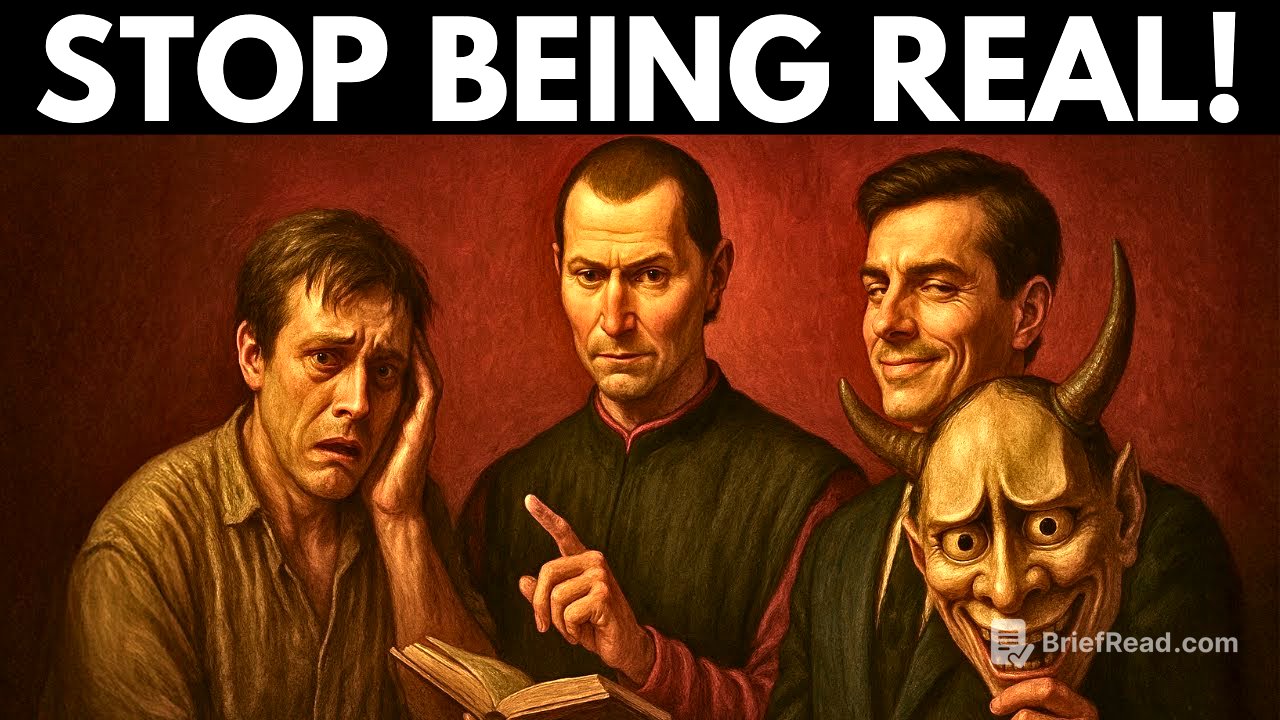
- The speaker uses Machiavellian ideas—especially the ruler’s need to balance the lion’s strength with the fox’s cunning—to frame masks and adaptability as tools of power.
- The video claims that people often respond more to appearances than to a person’s private character, while warning that predictability can invite exploitation.
- Its advice is intentionally stark: prioritize calculated action and control over an unfiltered display of emotion and identity.
Why Openness Can Make You Vulnerable [0:04]
Small signals—tone, posture, hesitation, and visible emotion—can influence how others judge and treat you. The video argues that revealing every desire, fear, and ambition gives people information they might use to pressure or manipulate you. It presents “being yourself” as risky in competitive settings such as politics, business, and relationships, where people may respond to perceived weakness rather than sincerity. Its proposed alternative is to manage what you reveal and cultivate a deliberate public image.
Identity as Something You Can Shape [2:31]
The speaker frames identity not as a fixed essence but as something that can be reshaped to meet a situation. A person seeking influence, the video argues, may need to act with restraint, conceal anger, or show mercy when doing so serves a purpose. It invokes the traditional Machiavellian image of the ruler as both lion and fox: strong enough to confront threats and cunning enough to recognize traps. The emphasis is on controlling impulses and adapting rather than allowing a single personality or emotional reaction to dictate every choice.
Appearance, Desire, and Public Perception [4:47]
The video extends its argument to love and other close relationships, claiming that people respond not only to private character but also to the image a person presents. It portrays mystery, restraint, and composure as qualities that can sustain interest, while unrestricted disclosure may expose vulnerabilities or weaken attraction. More broadly, it says that leaders and ambitious people must remain adaptable and difficult to read. The speaker contrasts ordinary routines, where self-expression may carry fewer risks, with positions of influence, where appearance and discretion are portrayed as important tools.
Adaptability, Self-Discipline, and Fortune [6:28]
Greatness is presented as the result of deliberate self-development rather than surrender to instinct. The speaker describes this process as sculpting oneself: identifying weaknesses, practicing restraint, and becoming suited to changing circumstances. Fortune—the unpredictable forces that shape events—is portrayed as favoring the prepared and adaptable. The section concludes that people seeking power should cultivate the ability to change their approach instead of relying on one fixed identity.
Masks as Protection and Strategic Performance [8:03]
The speaker returns to the claim that visible vulnerability can invite betrayal, opposition, or exploitation. Masks are described as protective tools, much like a shield in battle, because they limit what others can infer about a person’s intentions. The video presents rulers and political actors as people who often gain influence by concealing plans and projecting an image that serves their goals. It also calls for discipline rather than deception for its own sake: control anger, fear, and the urge to confess so reactions do not give others an advantage.
Control of Emotion and the Use of Appearances [10:25]
Power, in the video’s framework, depends on deciding what to show and when. A leader might display mercy to encourage loyalty, project strength to discourage opposition, or appear certain to reduce resistance. The speaker argues that people often judge by what they see, so an effective public image can shape how they interpret a leader’s actions. It presents calculated conduct—not immediate emotional response—as the basis for maintaining authority, while distinguishing strategic self-control from aimless deception.
Predictability, Loyalty, and Leadership [13:10]
Being predictable is described as a weakness because opponents may anticipate a person’s reactions and use known fears or desires to manipulate them. By contrast, uncertainty can make others cautious, giving a person more room to act. The video argues that loyalty often depends on the image people hold of a leader—such as appearing composed, strong, or merciful—rather than on knowledge of that leader’s private feelings. It also stresses that restraint matters when using force: the speaker contrasts prolonged revenge with decisive action followed by a visible display of mercy.
Ambiguity and the Politics of Performance [16:56]
The speaker claims that audiences often value security, order, and a sense of meaning more than complete candor. In this account, leaders use performance and symbolism to project confidence and stability, while concealing private calculations. The video argues that people judge public appearances more readily than unseen motives, so perceived virtue can matter greatly to a leader’s reputation. It further presents discipline as the ability to act according to circumstances instead of being ruled by anger, fear, pride, or affection.
Power, Betrayal, and Strategic Conduct [22:50]
Politics is compared to war because both involve conflict, hidden intentions, and competition for advantage. The video says that alliances may depend on mutual usefulness and can change when circumstances change; openly displaying weaknesses, it argues, may make betrayal more likely. Concealment and ambiguity are presented as ways to prevent opponents from knowing exactly when or how to act against you. The speaker also contends that results often shape how history judges leaders, even when their methods are controversial.
Reputation, Relationships, and Changing Roles [25:54]
The argument is applied again to friendship, love, and alliances, which the video portrays as influenced by perceived strength, mystery, and performance. It suggests that no single persona will suit every situation; people seeking influence should be prepared to change roles as circumstances demand. The speaker describes identity as a tool rather than something that must always be displayed unchanged. It connects this flexibility with self-command: freedom means choosing what to reveal rather than being compelled to expose every impulse.
Self-Mastery and Long-Term Influence [27:28]
The video contrasts applause for sincerity with the practical requirements of security and influence. It argues that a person who cannot hide intentions may be easier to undermine, while someone who can control their image can keep opponents guessing. Leaders, in this view, must distinguish between what they feel and what a situation requires, including when to show strength, mercy, or restraint. Self-mastery is presented as the foundation for managing others and responding effectively to setbacks.
Symbols, War, and Concealed Intentions [31:49]
The speaker applies the theme of appearances to governments, battlefields, and religion. Leaders may use symbols of virtue, faith, or protection to inspire trust, while military commanders use feints, ambushes, and false retreats to misdirect opponents. The common principle is concealment: revealing plans can allow others to counter them. The video argues that public leadership and warfare both depend on strategy, timing, and carefully managed impressions.
Authenticity, Control, and Adaptation [35:37]
This section restates the video’s central warning: unfiltered openness can leave a person exposed, predictable, and slow to act when circumstances demand difficult choices. It portrays adaptation as the ability to change one’s conduct without being trapped by a single role or emotional response. The speaker argues that leaders should offer subjects confidence and stability, since visible uncertainty may weaken trust. This claim is presented as a hard-edged theory of power, in which managing perception is as important as managing events.
The Final Call to Shape Your Public Image [40:01]
The closing section urges the audience to treat discipline, appearances, and adaptability as deliberate skills. It returns to the contrast between a fixed identity and a flexible one, arguing that changing course can help a person respond to new circumstances and protect against manipulation. The speaker uses images of sculpting, masks, and shifting roles to emphasize control over what others can know. The video ends by asking viewers to state whether they are willing to let go of a fixed self-image and adopt the approach it advocates.