TLDR;
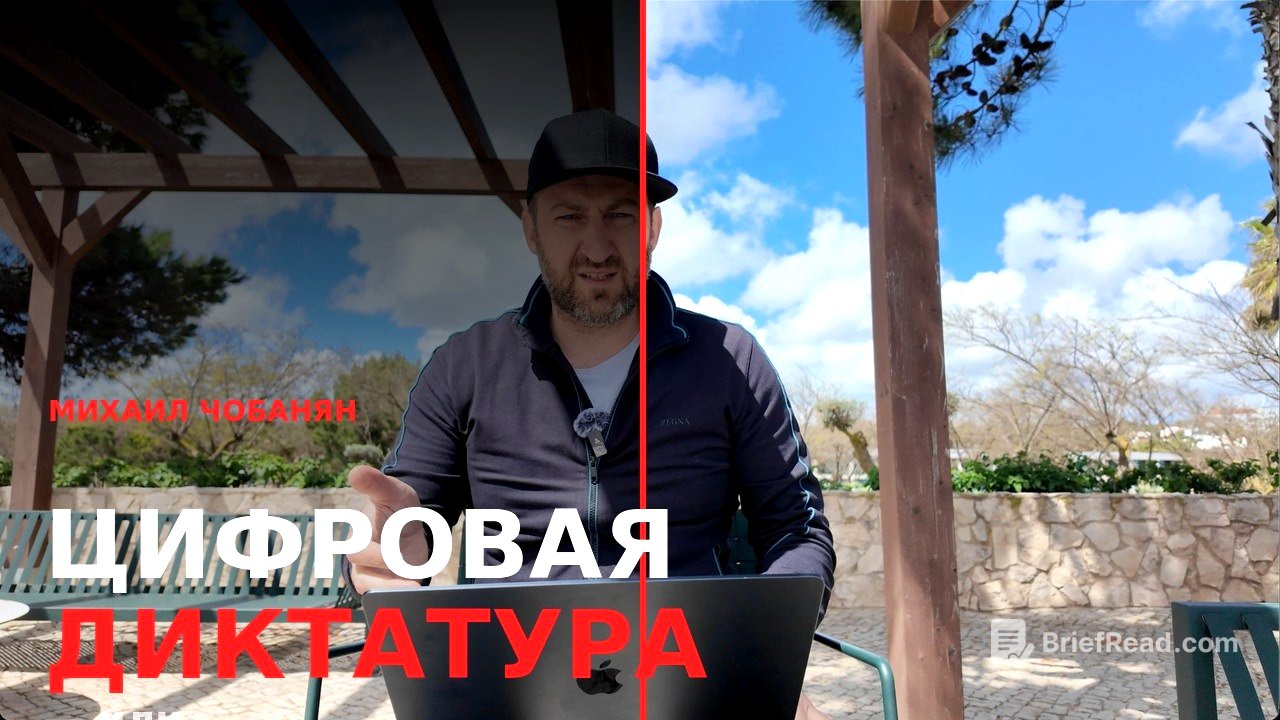
This video discusses the emerging importance of local AI models like Claude-Claude and OpenClaw, which allow users to run AI directly on their computers, granting full access to files and systems. It explores three potential future scenarios: those who rely on cloud-based AI, those who use a combination of local and shared AI, and those who maintain complete data sovereignty with their own servers. The video highlights the potential for AI to enhance personal well-being and efficiency, while also cautioning against the dangers of a centralised digital dictatorship. The creator encourages viewers to experiment with these technologies to stay ahead and shape a future where AI promotes symbiosis and individual empowerment.
- Local AI models like Claude-Claude and OpenClaw are becoming increasingly important.
- The future may involve different levels of AI sovereignty: cloud-based, hybrid, and fully sovereign.
- AI has the potential to improve personal well-being and efficiency.
- There is a risk of a centralised digital dictatorship if AI development is not approached carefully.
Introduction to Self-Sovereignty and AI [0:01]
The video begins with a greeting and a continuation of the discussion on self-sovereignty. The speaker seeks suggestions for translating the term "self-souverain" into Russian and Ukrainian. He transitions into the topic of artificial intelligence, specifically programmes like Claude-Claude and OpenClaw, and how they are changing the landscape of personal computing.
The Power of Local AI: Claude-Claude and OpenClaw [1:03]
The speaker explains that Claude-Claude and OpenClaw are AI modules that can be installed directly onto a computer, granting them complete control over the system. This differs from typical cloud-based AI accessed through websites or apps. By installing these modules, the AI gains access to files, cameras, and all other computer functions. The speaker shares his experience of experimenting with Claude-Claude on a separate Mac to explore its potential.
Why Local AI Matters Right Now [3:00]
The speaker emphasises the importance of focusing on Claude-Claude and OpenClaw, asserting that those who do not engage with these technologies risk falling behind. He believes that these AI systems have the potential to replace many computer-based jobs. The discussion then shifts to the broader implications of AI, considering the fine line between digital dictatorship and a symbiotic relationship between humans, AI, and the environment, which he refers to as "symbiocracy".
Symbiocracy: A Vision for the Future [4:21]
The speaker elaborates on the concept of symbiocracy, envisioning a world where AI enhances efficiency, eliminates scarcity, and promotes self-development. He describes humans as biological robots driven by algorithms shaped by various influences. The ideal future involves a symbiotic relationship between humans, AI, and the Earth, leading to a society of abundance and progress.
Three Scenarios for the Future with AI [5:48]
The speaker outlines three potential scenarios for the future, categorising people as those who have "surrendered," those who are "below," and those who are "above." The "surrendered" group will likely rely on cloud-based AI through devices like phones, with the AI focused on increasing their financial well-being. The "below" group, striving for leadership, will use a combination of personal computers and local servers for data sovereignty, connecting to AI via peer-to-peer technology. The "above" group, the wealthiest, will maintain complete sovereignty with their own servers and protocols, ensuring exclusive control over their data and AI models.
Avoiding Digital Dictatorship [10:59]
The speaker stresses that the development of AI must be guided towards benefiting humanity, rather than creating a digital dictatorship. He warns that a centralised system with complete knowledge of individuals could lead to a loss of freedom. To avoid this, he advocates for taking a proactive role in shaping the development of sovereign AI technologies.
Creating Sovereign AI: Steps and Recommendations [12:02]
The speaker recommends experimenting with AI on personal devices to maintain data ownership. He suggests starting with Anthropic's Claude, purchasing a basic plan, and using it to create a digital twin that can assist in personal development and wealth creation. He advises caution, recommending the use of a separate device and avoiding sharing sensitive information during initial experiments. He highlights that unlike cloud-based AI, local AI allows users to control their data and prevent it from being used to train other models.
Building a Network of AI Assistants [14:00]
The speaker shares his personal project, named "Sheva" after Taras Shevchenko, which involves building a system of interconnected AI assistants. The goal is to create a network where individual AI agents can communicate and collaborate, enhancing professional activities and providing valuable insights. He encourages viewers to explore this technology and become early adopters, learning how it works and contributing to its development.
Final Thoughts and Encouragement [16:09]
The speaker urges viewers to start experimenting with local AI, emphasising that it is not overly complicated and can be understood with effort. He reiterates the importance of data security and encourages viewers to share their experiences and insights in the comments and on Telegram. The video concludes with a call to action, encouraging viewers to embrace these new technologies and shape a future where AI empowers individuals and promotes progress.