TLDR;
The video focuses on summer river fishing, explaining the behavior of fish in warm water and highlighting where anglers can successfully catch them. It emphasizes the importance of finding cooler fishing spots rather than just beautiful locations, revealing seven effective summer fishing spots and tips on when and how to fish effectively.
- Fish behavior changes with rising water temperatures, leading to reduced feeding.
- Seven key fishing spots are identified for successful summer angling.
- The video outlines common mistakes anglers make that lead to unsuccessful fishing trips.
Understanding Fish Behavior in Summer [1:40]
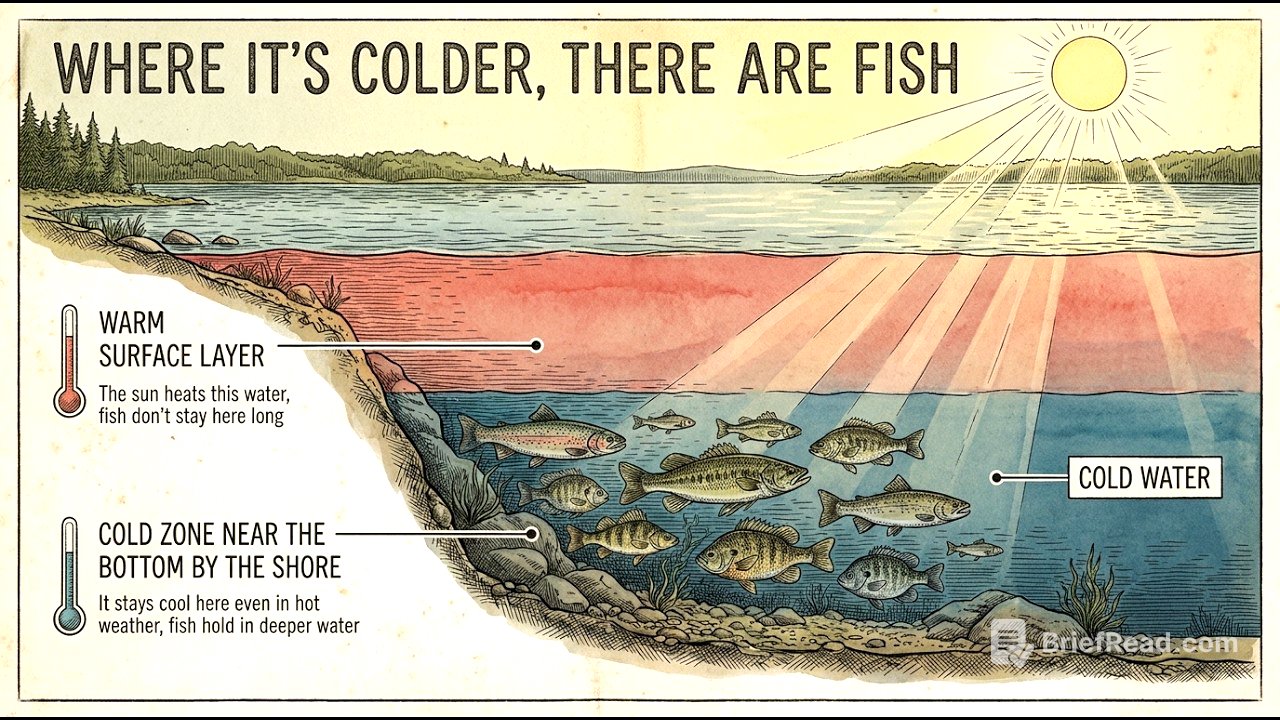
Fish are cold-blooded creatures, meaning their body temperature aligns with the water. When summer temperatures exceed 25°C, fish metabolism slows, leading to decreased feeding and increased vulnerability due to oxygen loss in warm water. Anglers often struggle to catch fish during summer heat, as the fish seek cooler areas rather than open, sunny spots. A story illustrates the importance of fishing in cooler locations over aesthetically pleasing ones, highlighting that finding "cold spots" is crucial to successful summer fishing.
Seven Key Fishing Spots [3:38]
The video outlines seven specific spots where fish hide in summer heat:
Deep Holes Under Steep Banks: These areas provide depth, reduced current, and shade, making them ideal for various species like bream and carp.
River Bends (Meanders): Outside bends erode into holes where food collects, attracting fish like pike and zander.
Snags and Fallen Trees: These spots offer cover and ambush points for predators such as perch and pike, even though anglers may lose tackle here.
Aquatic Vegetation Edges: The interface between vegetation and water presents a rich ecosystem where fish feed on insects and small crustaceans.
Mouths of Tributaries: The influx of colder water from springs and shaded streams creates excellent feeding zones with high fish concentrations.
Riffles and Holes: Riffles oxygenate water, and the holes behind them become feeding spots for species like chub and perch.
Oxbow Lakes: Former river paths provide cooler stagnant water with dense vegetation, ideal for fish like carp and bream.
Understanding Timing for Summer Fishing [8:43]
Timing is essential for effective summer fishing. The best feeding times are early morning until about 11:00 a.m., when the water is cooler and oxygen levels are high. Fish are most active during these hours, often moving to shallower areas. Evening fishing from 6:00 p.m. is also successful as the water cools again. Conversely, fishing at noon when water temperatures peak is often unproductive since fish retreat to deeper, cooler spots.
How to Identify Fishing Spots Without Equipment [11:03]
Anglers can find potential fishing spots without a fish finder by observing the river from the bank. Key indicators include:
Shoreline Characteristics: Steep banks indicate depth, while sloping banks suggest shallows.
Vegetation: Different aquatic plants indicate specific depths, helping to map the river.
Water Color and Ripples: Lighter water with ripples suggests shallows, while dark water indicates depth.
Surface Bubbles: Groups of bubbles on the surface may signal feeding fish.
Fish Behavior: Observing splashes and jumps can guide anglers to active feeding areas.
Weather Conditions Impacting Fishing [13:31]
Several weather factors affect summer fishing. Low atmospheric pressure causes fish to be less active, while a hot, windless day also reduces bites. A slight breeze is beneficial as it mixes water and increases oxygen levels. Wind direction impacts fish behavior; countercurrent winds drive fish into backwaters, while a gentle crossbreath is ideal. Post-rain conditions can improve bites but downpours may muddy waters, negatively affecting fishing. Additionally, moon phases may influence fish activity, with less action noted during full and new moons.
Common Fishing Mistakes [15:32]
Anglers frequently make mistakes that can hinder their success:
Fishing in Aesthetically Pleasing Spots: Beautiful areas often lack fish; prioritizing cold, shaded places is more effective.
Fishing During Midday: This is typically unproductive due to fish retreating to cooler depths.
Failing to Observe Vegetation: Anglers often set up without noticing water conditions, missing out on valuable cues.
Ignoring Tributaries: Overlooking these spots means missing colder, fish-filled waters that provide better fishing conditions.
These guidelines aim to enhance anglers' summer fishing experiences, enabling them to make informed decisions that lead to better catches.