TLDR;
This video discusses the effects of a One Meal A Day (OMAD) eating pattern on three key bodily systems: the gut, muscles, and insulin receptors. It examines how each system responds differently to the single meal consumed within a 23-hour fasting window. Key takeaways include:
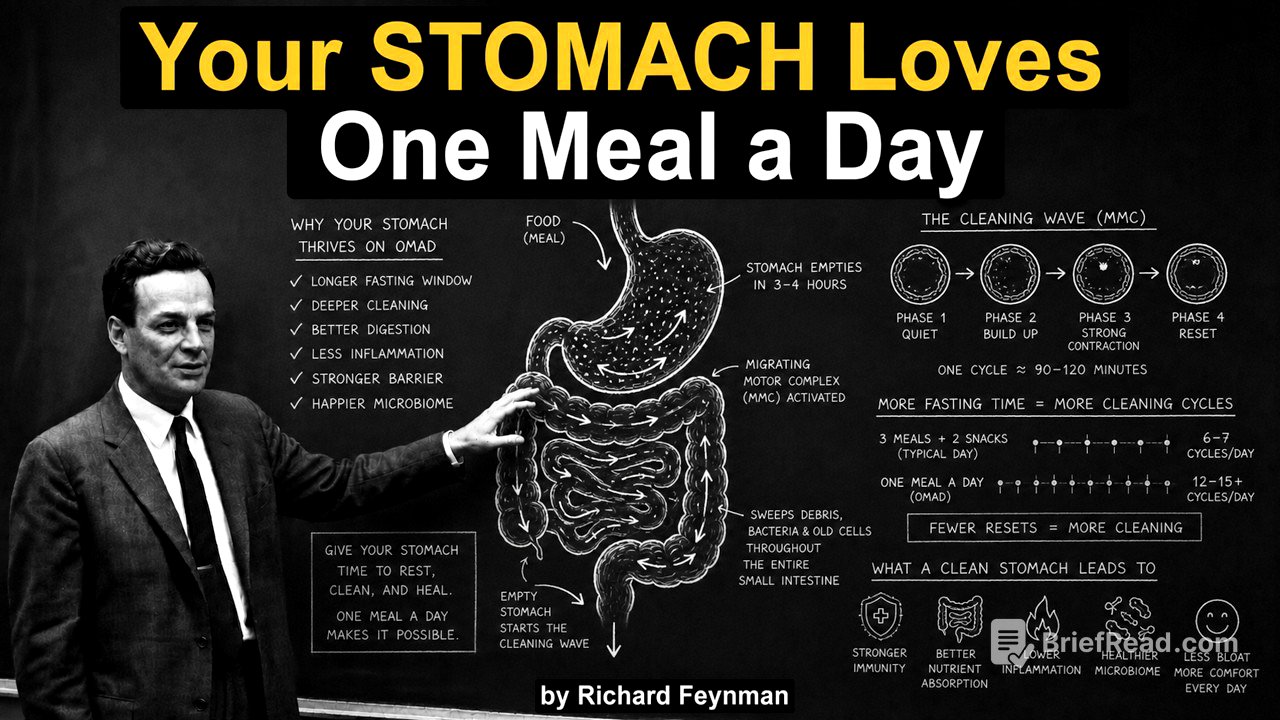
- The gut benefits from 12 to 15 cleaning cycles due to prolonged fasting.
- Muscle protein synthesis is compromised with only one mTOR activation instead of multiple for three meals.
- Insulin receptors experience a single spike of higher amplitude but a longer recovery time.
Introduction [0:00]
The video opens with initial observations around the OMAD protocol, noting the positive feelings of energy and clarity experienced after a 23-hour fast. The simplicity of OMAD reduces decision fatigue around meals, resulting in consistent energy levels and a significant reduction in hunger. However, questions arise about whether other bodily systems may be negatively affected while experiencing benefits in energy and focus.
Three Systems, Three Verdicts [1:35]
The video explains that OMAD leads to three systems within the body reacting in different ways to a single meal. The gut benefits significantly from the extended fasting period with 12 to 15 cleaning cycles. In contrast, the muscle system receives a single growth signal and will not be able to synthesize proteins as efficiently because of only one mTOR activation. Meanwhile, insulin receptors have longer recovery time but face stronger spikes in insulin levels.
The Cleaning Cycle Arithmetic [4:55]
The effectiveness of the gut cleaning cycles is discussed, detailing how fasting allows the migrating motor complex to operate without interruption. On OMAD, the small intestine can undergo 12 to 15 cleaning cycles over the fasting period, compared to significantly fewer in a regular eating pattern with multiple meals. This heightened cleaning response aids in reducing bacterial overgrowth and associated bloating or discomfort.
What One Meal Does to Muscle [7:34]
This chapter discusses muscle physiology, specifically the mTOR pathway, explaining that one meal generates a single activation for protein synthesis. With 40 to 50 grams of protein needed for maximal impact, larger amounts do not yield better results. As a result, OMAD restricts muscle protein synthesis opportunities to one window, limiting the total synthesized protein compared to a three-meal approach that activates three separate synthesis windows.
The mTOR Ceiling and Protein Waste [8:16]
The mTOR pathway is further explored, emphasizing that once the activation cap is hit (40 to 50 grams of protein), the excess amino acids are oxidized instead of being used for muscle synthesis. Consequently, this leads to increased renal processing of nitrogen waste, raising potential concerns for individuals with existing kidney issues.
Insulin: Frequency vs. Amplitude [13:51]
This chapter examines the dual impact of meal frequency and insulin amplitude on receptors. OMAD entails one insulin spike per day, allowing for better recovery time but delivering higher insulin levels during that peak compared to smaller, frequent spikes from multiple meals daily. The video discusses how meal composition also plays a role in determining insulin responses, stressing the importance of balancing meal timing and content to optimize these effects.
Cortisol, Timing, and Circadian Physics [18:28]
The impact of extended fasting on cortisol levels is analyzed in this section. Extended fasting elevates cortisol, aiding gluconeogenesis at the cost of muscle protein breakdown. This chapter discusses the balance needed to maintain protein synthesis while managing cortisol levels through mindful meal timing, emphasizing why meal timing aligns with the body’s natural rhythms for better metabolic outcomes.
Autophagy and the Extended Window [24:07]
Autophagy is presented as a critical advantage of extended fasting. The discussion clarifies how longer fasting windows promote increased autophagic flux, effectively clearing damaged cellular components. This autophagic process is particularly significant for aging cells, helping remove dysfunctional mitochondria and harmful substances that can lead to oxidative stress.
The Trade-Off Is Yours to Decide [25:54]
In the concluding section, the video emphasizes that each individual must weigh the potential benefits of OMAD against its drawbacks based on personal health conditions and goals. The differences in how the gut, muscle, and insulin receptors respond indicate that OMAD may be favorable for some while unsuitable for others. Ultimately, the decision of whether to adopt OMAD as a feeding strategy lies in understanding the trade-offs and choosing what aligns best with one's health priorities.