TLDR;
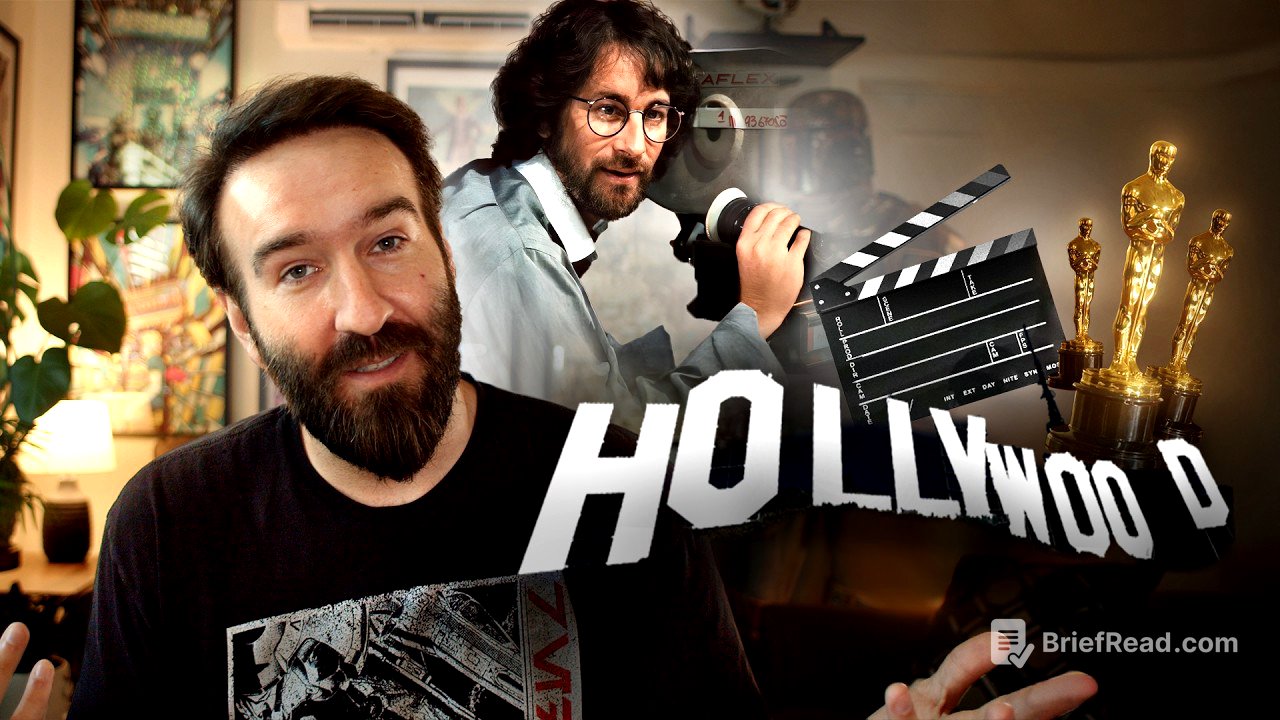
The video discusses common misconceptions about the film industry, including film festivals, production companies, acquisitions, the glamorous image of filmmaking, the Oscars, and the reality of filmmaking even after achieving success. It highlights the political and business aspects of the industry, emphasizing that filmmaking is often a challenging and complex process, far from the idealized image.
- Film festivals are businesses that prioritize films with established names or buzz.
- Studios often acquire independently made films for distribution.
- Securing a studio's green light doesn't guarantee a film will be made.
- Filmmaking is a stressful and political endeavor, not always glamorous.
- The Oscars involve political campaigning.
- Even successful filmmakers face challenges in getting their projects made.
Intro [0:00]
The video aims to reveal the less glamorous realities of filmmaking, contrasting the idealized image with the actual challenges and complexities of the industry. It promises to discuss how films are made, the inner workings of film festivals, the truth behind the Oscars, and the roles of production companies. The creator intends to share insights gained from navigating the film industry as a filmmaker, addressing common misconceptions.
Film Festivals [0:33]
Film festivals are often perceived as level playing fields where anyone can submit their film and have an equal chance of getting in. However, film festivals are businesses that tend to favor films with established names or buzz. Agencies like WME and CAA use their connections to festival programmers to promote their clients' films, giving them an advantage over independent submissions. Programs like the Sundance Lab nurture new talent and funnel them into the festival program. The presenter shares his experience of submitting films through online forums and later directly to programmers, highlighting the hierarchy and the importance of connections in the film festival world. The truth is that festivals are curated, and paying the submission fee doesn't guarantee equal footing with everyone.
What Production Companies Do? [4:45]
Many people assume that the production company logo they see on a film means that the company financed and produced the movie. However, especially with smaller production companies, they often acquire films that have already been made by independent filmmakers and producers, then distribute them under their logo. Companies like A24 built their reputation by acquiring films with buzz from film festivals. While big studios like Warner Brothers and Universal act as both production companies and distributors, some studios are solely distributors, buying films after completion. The presenter uses the film "Operation Avalanche" as an example, where the filmmakers had to take out a loan to produce the movie themselves, and Lionsgate only came on board after it was completed and accepted into Sundance.
Acquisitions & Greenlights [6:57]
A common misconception is that when a big studio buys your film, they will definitely develop and make it. However, studios sometimes buy scripts simply to rewrite them or shelve them to avoid competition with their own projects. This can lead to "development hell," where a project gets stuck in a loop of revisions and creative differences, ultimately falling apart. The presenter shares examples of short films that were purchased by major studios but never made into bigger films. In some cases, studios buy projects to prevent competition with their own films, even if it means shelving the acquired project. The presenter emphasizes that a green light from a studio should not be fully trusted until shooting is well underway, as projects can fall apart at any time.
Filmmaking is Glamorous [9:48]
The biggest misconception is that filmmaking is glamorous, with images of directors on set and red carpet events. In reality, filmmaking is often a stressful and chaotic process, filled with exhaustion and politics. It involves constant fighting to keep the project from falling apart, with script changes, producer arguments, and internal conflicts. The presenter quotes Stanley Kubrick, who described shooting a movie as the worst environment for creative work. He also references Francis Ford Coppola, who is honest about the struggles of filmmaking. The presenter notes that studios often try to package films to make the process appear smooth and problem-free, but the reality is often very different.
The Oscars [14:49]
The Oscars are often seen as an award ceremony where the best films rise to the top based on merit. However, the Oscars are more like a political campaign. Studios and producers must submit their films and actively campaign for them to be considered. This involves billboards, screeners, and significant financial investment. In some cases, studios spend more on the Oscar campaign than on the film itself. The presenter uses the independent film "Anora" as an example, where the Oscar campaign cost three times the film's budget. Therefore, winning an Oscar is not always about being the best but sometimes about campaigning the hardest.
Once You've "Made It" [17:07]
Even after achieving success as a filmmaker, it's not always easy to make whatever project you want. Steven Spielberg, despite being a top director, had to fight for ten years to get his film "Lincoln" made and released theatrically. Many top directors balance original concepts with studio films, and studios often approach them with specific projects. The presenter notes that even successful filmmakers must align their desires with what the studio is willing to make. He points to Francis Ford Coppola's self-funded "Megalopolis" and Guillermo del Toro's compromised budget for "Shape of Water" as examples. Even Martin Scorsese had to go to Netflix for "The Irishman." The presenter concludes that even at the highest level, filmmakers must navigate the system and compromise, or choose to self-fund independent projects.
Final Thoughts [20:23]
The presenter emphasizes that the purpose of the video is not to be cynical but to provide an inside perspective on the film industry. He acknowledges that the film industry is a business with rules and systems that may not be apparent from the outside. He encourages viewers to share their own experiences and thoughts on the topics discussed and to suggest other subjects for future videos.