TLDR;
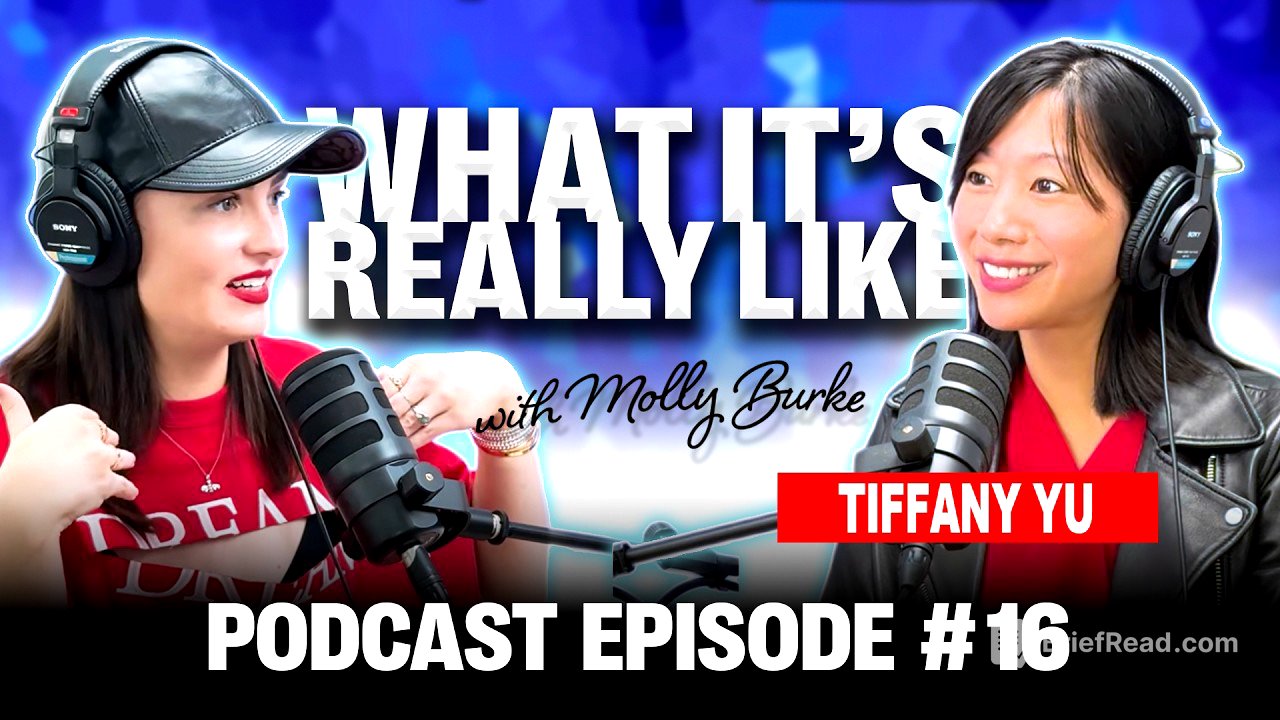
In this video, Molly Burke interviews Tiffany Yu, a disability advocate and author of The Anti-Ableist Manifesto. They explore Tiffany's journey from childhood trauma due to a car accident that left her disabled, to her efforts in advocating for disability rights and community building. The discussion covers topics such as grief, agency, medical trauma, the importance of school accommodations, and the societal perceptions of disability. Tiffany shares her experiences with mental health, cultural stigma, and the power of community, as well as her transitions through corporate life to full-time advocacy.
- Tiffany discusses grief and how it relates to disability and childhood trauma.
- The importance of societal perceptions and self-advocacy in the journey of those with disabilities is emphasized.
Cold Open: Grief, Disability & Hidden Truths [0:00]
Tiffany discusses the stigma surrounding death and how it has affected her family's narrative following her father's passing after her accident. She explains how her family chose to lie about her father's death to avoid the stigma of being seen as "bad luck." Tiffany reflects on the complexities of grief that come with becoming disabled and how they impacted her life, leading her to lie about her injury and family history for years. Eventually, she emphasized the need to share her full truth as part of healing and advocacy.
Welcome to What It’s Really Like [1:05]
Molly Burke introduces Tiffany Yu as a guest on her show, highlighting Tiffany's background as a disability advocate and author. Tiffany shares insights from her life, including how long she has been engaged in advocacy work and reflects on her childhood experiences leading to her disability.
Who Is Tiffany Yu? [1:23]
Tiffany provides a brief overview of her life, mentioning her upbringing in a family with immigrant parents and her experiences with constant relocation. She explains how a car accident at age nine changed her life by leaving her disabled and how that event shaped her identity and perspective on childhood.
The Accident That Changed Tiffany’s Life [2:39]
Tiffany narrates details of the car accident that led to her disability, including the resulting physical injuries and the emotional impact. She recounts her memories of waking up in the hospital and the confusion of understanding her situation at such a young age. Tiffany shares how she has processed this traumatic experience over the years.
What Tiffany Remembers From the Crash [5:11]
Tiffany describes her fragmented memories of the night of the accident and her gradual recollection of events. She shares her feelings of compassion for her younger self and her struggles to come to terms with the situation. Tiffany emphasizes the importance of understanding childhood trauma and grief.
Medical Trauma, Childhood Memories & Agency [9:07]
Tiffany discusses the medical trauma she faced after the accident, including her lengthy hospital stay. She reflects on feelings of powerlessness regarding her health care decisions as a child. The stigma surrounding her father's death also plays into the narrative of agency and understanding one’s health in the context of cultural backgrounds.
Why Tiffany’s Family Hid Her Father’s Death [10:00]
Tiffany explains how her family’s cultural background influenced their choice to present a narrative of her father being away on a trip instead of discussing his death. She describes the long-term effects of this decision on her understanding of grief and how it shaped her identity as a disability advocate.
Reconnecting With Her 9-Year-Old Self [12:30]
Tiffany reflects on her younger self and the emotional pain caused by the accident. She discusses reconnecting with her childhood experiences and addressing the trauma she endured. This process of reconnection is part of her healing journey.
Family Healing, Immigrant Parents & Messy Grief [15:00]
Tiffany shares her insights on family dynamics, healing, and the concept of messiness in grief, particularly in immigrant families. She discusses how her family has been navigating the aftermath of trauma and loss, recognizing that family healing is complex and ongoing.
Advocacy as a Part of Healing [18:00]
Tiffany explains how advocacy became a crucial part of her healing journey. She shares how using her voice to help others has motivated her to embrace her identity as a disabled person and work toward systemic change.
Learning About Her Injury in the Hospital [19:17]
Tiffany reflects on her experiences in the hospital after the accident and the difficulty of learning about her injury. She discusses the support systems available to her and her struggles with understanding her new identity.
IEPs, School Support & What Tiffany Didn’t Receive [22:21]
Tiffany describes her experience with Individualized Education Programs (IEPs) and the lack of support she received from the school system due to her disability. She emphasizes the need for better advocacy and awareness regarding educational support for disabled students.
Molly’s Experience With School Accommodations [24:00]
Molly shares her own experiences with school accommodations, drawing parallels to Tiffany's story and highlighting the challenges they both faced in navigating educational settings as disabled individuals.
Giving Disabled Kids Agency [27:31]
Tiffany discusses the importance of giving disabled children a voice and agency in their lives. She emphasizes empowering young individuals to advocate for themselves and their needs within educational and medical contexts.
Meeting Someone With the Same Disability [30:00]
Tiffany recounts her experience meeting another person with a similar disability, highlighting the significance of shared experiences in fostering community and understanding among disabled individuals.
Feeling Different Even in Disability Community [32:30]
Tiffany shares feelings of being different, even within the disability community. She discusses the challenges of fitting in and the intersectionality of disability with other identities.
Being Hope for Newly Disabled People [35:00]
Tiffany reflects on her role as a source of hope for those newly diagnosed with disabilities. She emphasizes the importance of visibility and representation in encouraging others on their journey.
From Hiding Disability to Writing The Anti-Ableist Manifesto [38:10]
Tiffany discusses her journey from concealing her disability to embracing her identity and writing her book. She shares how this transformation has shaped her advocacy efforts.
Disability Pride, Asian Identity & Belonging [40:16]
Tiffany explores the intersection of disability pride and her Asian identity, recognizing how cultural background influences one's sense of belonging within both the disability community and broader society.
Starting Diversability in College [42:39]
Tiffany recounts her experiences founding Diversability in college, sharing how it served as a catalyst for building community and support among disabled students.
Why “Diversability” Is a Name, Not a Euphemism [45:00]
Tiffany clarifies the meaning behind the term "Diversability," emphasizing that it represents a celebration of diverse abilities rather than a euphemism for disability.
Medical Model, Charity Model & Disability Tragedy [47:15]
Tiffany contrasts the medical and charity models of disability, discussing how societal perceptions often paint disabled individuals as tragic. She advocates for a shift toward a more positive narrative centered on empowerment.
Finding Community and Owning Disability Pride [50:20]
Tiffany reflects on the importance of community in fostering a sense of disability pride and belonging. She discusses how connecting with others can lead to greater acceptance of one’s identity.
Medical Model vs. Social Model [52:33]
Tiffany explains the differences between the medical and social models of disability, underscoring the need to prioritize the social model for advocating on behalf of disabled individuals.
Wanting a Cure, Changing Your Mind & Learning Out Loud [55:00]
Tiffany shares her evolving perspectives on wanting a cure for her disability, reflecting on how her thoughts and feelings have changed over the years as she embraces her identity.
Goldman Sachs, Corporate Life & Disability Identity [59:34]
Tiffany discusses her experiences working in corporate America and how her disability identity played a role in her career, highlighting the need for disability representation in professional environments.
“I Don’t See Your Disability” and Other Microaggressions [1:03:48]
Tiffany addresses common microaggressions faced by disabled individuals, including phrases that minimize their experiences. She emphasizes the importance of recognizing and addressing ableism in everyday language.
Everyday Self-Advocacy, Steak & Asking for Access [1:07:38]
Tiffany recounts her experiences with everyday self-advocacy, including asking for help with tasks that might be challenging due to her disability. She highlights the importance of being proactive in seeking accommodations.
Writing a Book With Speech-to-Text [1:10:24]
Tiffany explains how she utilized speech-to-text technology to write her book, demonstrating the accessibility tools that can empower disabled writers.
Accessibility, Opting Out & the Burden of Other People’s Comfort [1:12:30]
Tiffany discusses the pressures disabled individuals face to accommodate others' comfort while navigating social situations, reflecting on her moments of opting out of experiences that aren’t accessible.
Getting Fired & Pivoting From Corporate America to Advocacy [1:15:24]
Tiffany shares how being fired from her corporate job served as a pivotal moment, leading her to fully commit to her advocacy work and redefine her career path.
Rebuilding Diversability as a Young Professionals Community [1:18:00]
Tiffany explains her efforts to rebuild Diversability as a community for young professionals with disabilities, creating a space for networking and support.
Building a Portfolio Career [1:21:08]
Tiffany discusses the concept of a portfolio career, describing how diversifying her professional pursuits has provided her with fulfilling opportunities while advocating for disability rights.
How The Anti-Ableist Manifesto Began [1:22:35]
Tiffany recounts the origins of her book project, detailing her journey from idea inception to the writing process and eventual publication.
Writing a Book Rooted in Community [1:25:30]
Tiffany emphasizes the importance of community involvement in writing her book, sharing how different perspectives contributed to the narrative of The Anti-Ableist Manifesto.
Releasing a Disability Book During the Death of DEI [1:27:40]
Tiffany reflects on the challenges of releasing her book amidst a cultural shift in the discourse around diversity, equity, and inclusion, and the implications for disability advocacy.
Book Launch Pressure, Silence & Trusting the Timing [1:30:30]
Tiffany discusses the pressures associated with book launches, acknowledging the challenges of timely promotion and the importance of trusting the process.
AI as an Accessibility Tool [1:33:01]
Tiffany expresses her views on AI as a tool for accessibility, highlighting its potential benefits for disabled individuals and the importance of including disabled voices in the tech development process.
Why AI Needs Disabled People in the Room [1:35:30]
Tiffany advocates for the inclusion of disabled people in conversations about AI development, emphasizing that their perspectives can enhance the design and implementation of accessible technologies.
Losing Opportunities by Standing Behind Your Values [1:38:00]
Tiffany reflects on how standing by her values has led to the loss of certain opportunities but reinforces the importance of integrity in her advocacy work.
Reinvesting the Book Advance Into Disabled Community [1:39:02]
Tiffany shares how she reinvested her book advance into supporting the disabled community by hiring disabled professionals and collaborating with disability-owned businesses.
The Real-World Impact of Tiffany’s TEDx Talk [1:41:59]
Tiffany discusses the positive impact her TEDx talk has had on the community, illustrating how her message has influenced change and empowered others.
Molly’s Children’s Book & Giving Back to MIRA [1:45:00]
Molly shares her experiences with her children's book project and her commitment to giving back to organizations that contribute to the disabled community.
The Awkward Question [1:45:45]
Molly and Tiffany engage in a thoughtful dialogue about varying perspectives on sensitive language regarding disability, emphasizing the importance of understanding and acceptance among differing opinions.
“Blind Leading the Blind” & Disability Language [1:46:32]
Tiffany and Molly examine the phrase “blind leading the blind,” discussing its implications and the varying responses from the disability community regarding its use.
Does Policing Language Help or Hurt? [1:48:00]
Tiffany reflects on the challenges of policing language within the disability community and how this can impact conversations about advocacy and identity.
Reclaiming Harmful Phrases [1:50:00]
Tiffany discusses the potential for reclaiming harmful phrases, emphasizing the need for dialogue around context and intent while navigating language.
Why Language Still Matters [1:52:30]
Tiffany highlights the significance of language in shaping perceptions of disability, even while acknowledging the complexities around certain terms.
Blindness, Deafness & Common Phrases [1:55:00]
The conversation continues about the use of common phrases that reference blindness and deafness, exploring their meanings and impact on the disabled community.
Visual Descriptions and When They’re Actually Useful [1:57:16]
Tiffany discusses the relevance of visual descriptions in specific contexts, particularly when inclusion and understanding of a situation are necessary.
Why Disabled People Don’t Have to Agree [2:00:00]
Tiffany emphasizes that disagreement can coexist within the disability community, encouraging open dialogue and respect for diverse opinions.
Who Tiffany Is Today [2:01:13]
Tiffany reflects on her journey and growth as a disability advocate, recognizing her evolving identity and the work that still lies ahead.
Where to Find Tiffany & The Anti-Ableist Manifesto [2:02:32]
Tiffany shares where viewers can access her work and connect with her advocacy efforts, including her book and online presence.
Closing [2:03:00]
Molly concludes the interview, encouraging viewers to engage with Tiffany's work and highlighting the importance of continued dialogue around disability advocacy.