TLDR;
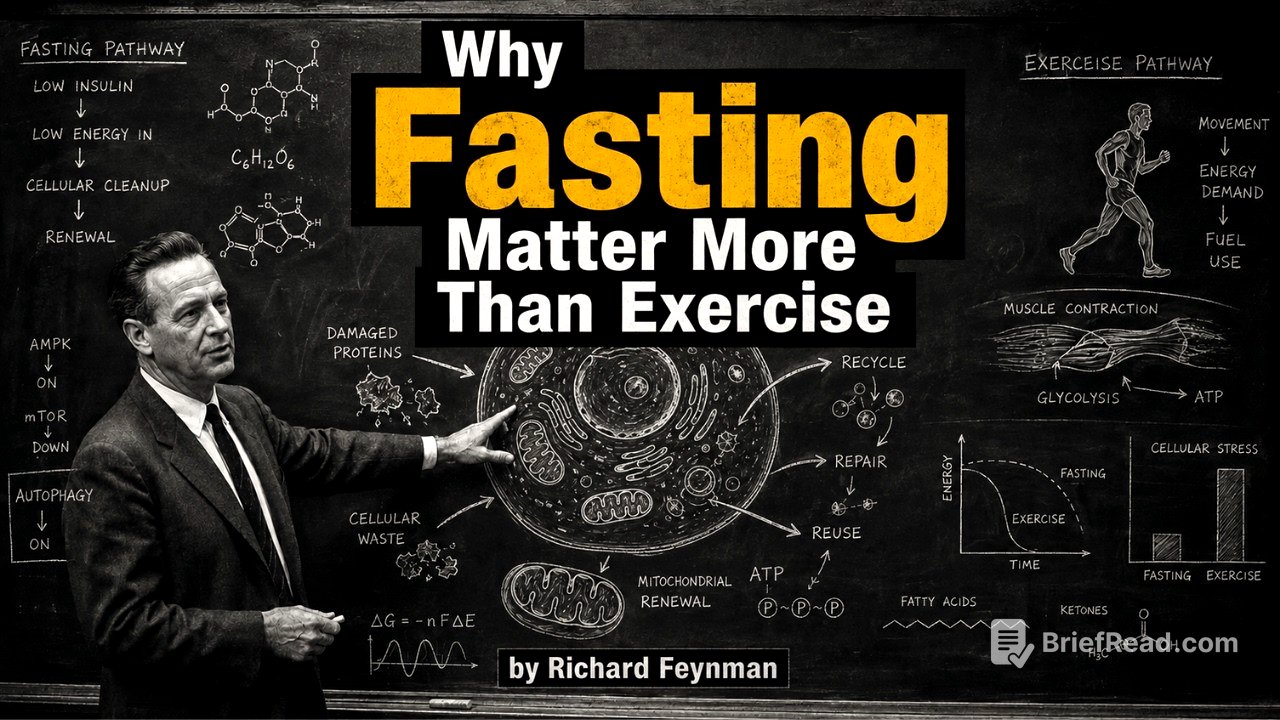
This video discusses the cellular processes of growth and repair, explaining how mTor (mechanistic target of rapamycin) and AMP (AMP-activated protein kinase) regulate these programs. It highlights the misconception that exercise alone cleans up cell damage, emphasizing that fasting is crucial for cellular repair. The video illustrates how the presence of nutrients can suppress the cleanup processes that occur during fasting and why both exercise and fasting are necessary but serve distinct biological functions.
- mTor promotes growth and suppresses repair during nutrient intake.
- Fasting activates autophagy, enabling cleanup of cellular debris and damaged components.
Cellular Cleanup and Growth [0:00]
In this chapter, the video introduces the concept that within every cell, there is a machine focused on garbage collection, known as autophagy, which operates effectively only when not fed. The video clarifies that exercise does not activate this cleanup process; instead, it is mobilized only when nutrients are absent, which allows the body to use its existing resources for repair.
Understanding mTor [2:53]
This chapter explains the role of mTor, which acts like a foreman in cells directing growth and building activities when amino acids are present. The video contrasts muscle growth—encouraged by new nutrients—with cellular cleanup, signifying that mTor's activation halts the repair processes, meaning that during feeding, the body focuses on building rather than repairing.
The Role of AMP [4:54]
Here, the video describes AMP as a sensor that detects low energy and nutrient levels in the cell. Once fasting begins and nutrient intake is halted for about 12 to 16 hours, AMP triggers cellular maintenance processes, highlighting the importance of fasting in activating autophagy while mTor is suppressed.
Autophagy Explained [10:10]
This section delves into autophagy, detailing how cells wrap damaged components in a double membrane to form an autophagosome that merges with lysosomes, where the debris can be dismantled and reused. The chapter emphasizes that autophagy is a critical recycling process, contrary to the notion that it equates to starvation—it's about inventory management and maintaining cellular health.
Impact on Mitochondria [12:52]
In this chapter, the discussion turns to mitochondria, which are vital for energy production but also damaged during exercise. The video explains that damaged mitochondria need to undergo a specialized form of autophagy called mitophagy. It stresses that while exercise creates the need for cleanup, it doesn’t stimulate the necessary state for autophagy unless combined with fasting.
Misfolded Proteins and Cellular Function [17:06]
This section addresses misfolded proteins that can accumulate and disrupt normal cell function, particularly neuron health, leading to cognitive decline. Autophagy plays a vital role in removing these aggregates, with the frequency and quality of this cleanup influenced by the mTor-AMP dynamics discussed previously.
Insulin's Role in Cellular Activity [19:30]
The chapter explores how insulin, released during food intake, reinforces mTor’s growth signals and restricts autophagy. It explains that even after exercise, a post-workout meal can prevent necessary cleanup by maintaining high insulin levels, thus underscoring how nutrition affects cellular recovery and repair.
Immune Cell Dynamics [22:13]
This chapter discusses how a balanced fasting and refeeding cycle aids the immune system. The video clarifies that fasting marks older, less functional immune cells for destruction while the subsequent feeding phase activates stem cells to replace them, promoting overall health.
Fasting vs. Exercise [23:41]
In this final chapter, the video synthesizes the entire message: exercise and fasting are not interchangeable but complementary. Proper timing of eating and exercise can optimize cellular cleanup and repair, emphasizing the necessity of structuring routines around fasting to promote overall cellular health. The conclusion urges viewers to understand each process's function, advocating for a strategic approach to nutrition and physical activity.