TLDR;
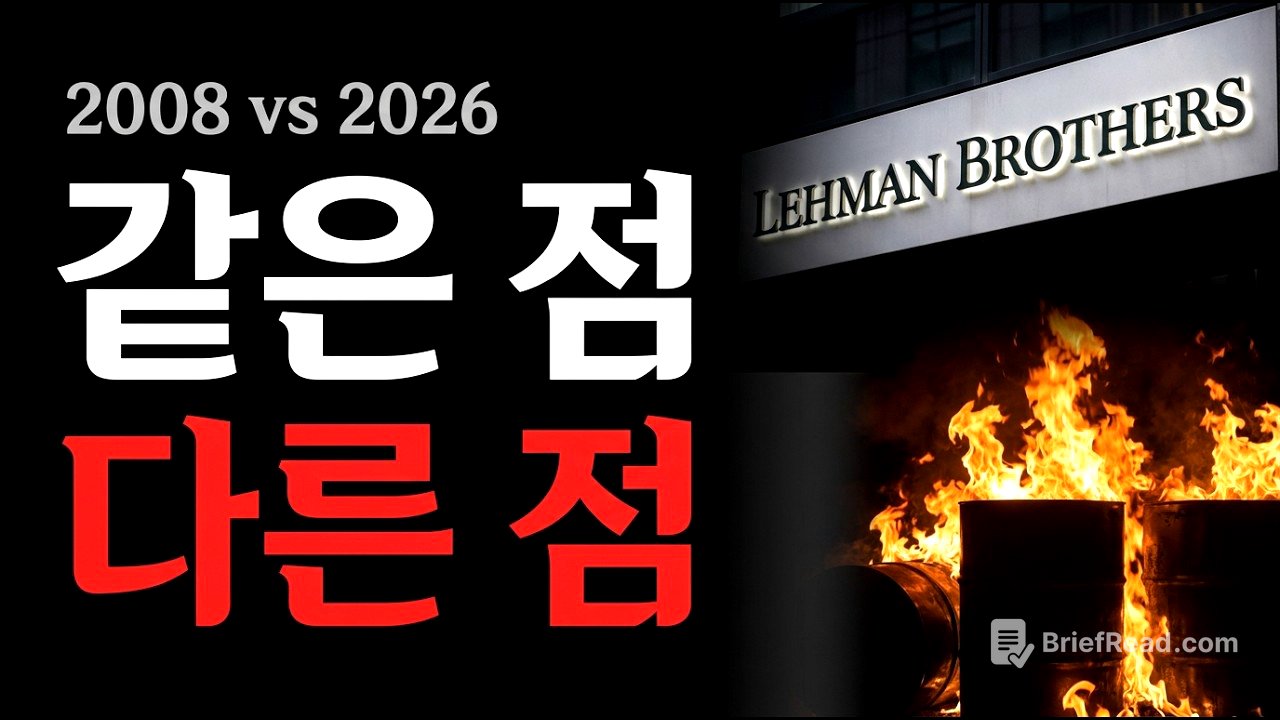
This video discusses the recent warning from Bank of America's Michael Hartnett about a potential "financial crisis" reminiscent of 2008. It explores the similarities between the current economic climate and that of 2008, focusing on rising oil prices and stresses in the credit market, particularly in private lending. However, it also highlights key differences, such as the stronger capital positions of major banks and the nature of risk transmission. The video also touches on potential policy responses and investment strategies in light of these factors.
- Key trigger levels that may force policy intervention
- Differences between the 2008 financial crisis and the current economic situation
- Investment strategies based on current market conditions
BofA가 2008년을 꺼낸 진짜 이유 [0:00]
Bank of America's Michael Hartnett issued a warning, drawing parallels to the 2008 financial crisis, which has stirred the market. However, the true message behind this comparison isn't necessarily that 2008 is repeating itself. Hartnett has specific reasons for making this comparison, which the video aims to explore.
하트넷이 제시한 네 개의 숫자 [0:39]
Hartnett has identified four key trigger levels that could prompt policy intervention: an S&P 500 below 4,600, oil prices exceeding $100 per barrel, the Dollar Index surpassing 100, and 30-year U.S. Treasury bond yields exceeding 5%. As of March 16, three of these levels have already been met or exceeded. These numbers are important because they represent levels at which economic pain becomes severe enough to force a response from policymakers.
2008년에 실제로 무슨 일이 있었나 [1:22]
In 2007, oil prices were at $70 per barrel, but by July 2008, they had surged to $147. During this period, the U.S. subprime mortgage market began to show signs of distress, with Bear Stearns hedge funds collapsing in the summer of 2007 and Bear Stearns being acquired by JP Morgan in March 2008. The European Central Bank (ECB) raised interest rates on July 3, 2008, to combat inflation due to rising oil prices, but this coincided with the peak in oil prices. Just 74 days later, Lehman Brothers collapsed. The ECB was then forced to cut interest rates by 325 basis points, and oil prices plummeted to $40. Hartnett considers the ECB's rate hike one of the worst policy mistakes in history because it focused on oil prices while ignoring the larger credit crisis.
유가 102달러, 이번에는 어디서 왔나 [2:53]
Currently, rising oil prices and credit stress are occurring simultaneously. Oil prices have surged due to geopolitical tensions, such as the conflict between the U.S., Israel and Iran, which led to the blockade of the Hormuz Strait. This has caused a significant disruption in global oil supply, with Brent crude oil prices rising from $60 to $102 this year. Hartnett believes the real risk of rising oil prices is the impact on corporate earnings, as higher costs reduce profit margins and lower earnings per share (EPS) forecasts, which in turn negatively affects stock prices.
사모대출 — 서브프라임의 자리에 들어온 것 [4:48]
The private lending market has grown significantly from 2020 to 2024 due to low interest rates and excess liquidity, expanding from $500 billion to $1.8 trillion. Private equity firms like Blackstone, Apollo, and KKR have driven this growth, opening up private lending to retail investors through semi-liquid funds that allow for quarterly redemptions. Much of this capital has been allocated to loans for mid-sized software companies. However, the rise of AI has created uncertainty about the future revenues of these companies. This has led to concerns about AI disruption risk, with UBS estimating that 25% to 35% of the private lending market is exposed to this risk.
2008년과 결정적으로 다른 것들 [7:01]
While there are similarities between the current situation and 2008, key differences exist. The biggest difference is where the leverage is concentrated. In 2008, banks themselves were highly leveraged, whereas now, major U.S. banks have stronger capital positions due to post-2008 regulations. The current concern is focused on the private lending market, which is outside of strict regulation. Additionally, the way risk spreads is different. In 2008, risk was transmitted throughout the financial system through complex securitization chains, whereas private lending involves direct loans from funds to companies. However, the presence of retail investors in semi-liquid funds introduces a new variable, as they may rush to redeem their investments, leading to potential liquidity issues.
ECB가 같은 실수를 반복하면 [10:30]
There are concerns that the ECB may repeat its 2008 mistake. Rising energy prices due to the conflict between Iran and other countries are increasing inflationary pressures in Europe, and traders are already pricing in two ECB rate hikes this year. If the ECB raises rates in response to oil-driven inflation, it could reduce global liquidity, strengthen the dollar, pressure emerging markets and risk assets, and increase private lending redemption pressures, similar to what happened in 2008.
돈은 지금 어디로 가고 있나 [11:28]
Hartnett's positioning suggests selling oil above $100, buying 30-year bonds if yields exceed 5%, buying the S&P 500 if it falls below 4,600, and selling the Dollar Index above 100. He considers gold, semiconductors, European stocks, and bank stocks as overbought, while software, Bitcoin, banks, and loan bonds may be closer to a bottom. There is an interesting trend in the private lending market where secondary funds are buying up distressed assets from retail investors at discounted prices, with long-term investors like family offices and large foundations entering the market through these funds.