TLDR;
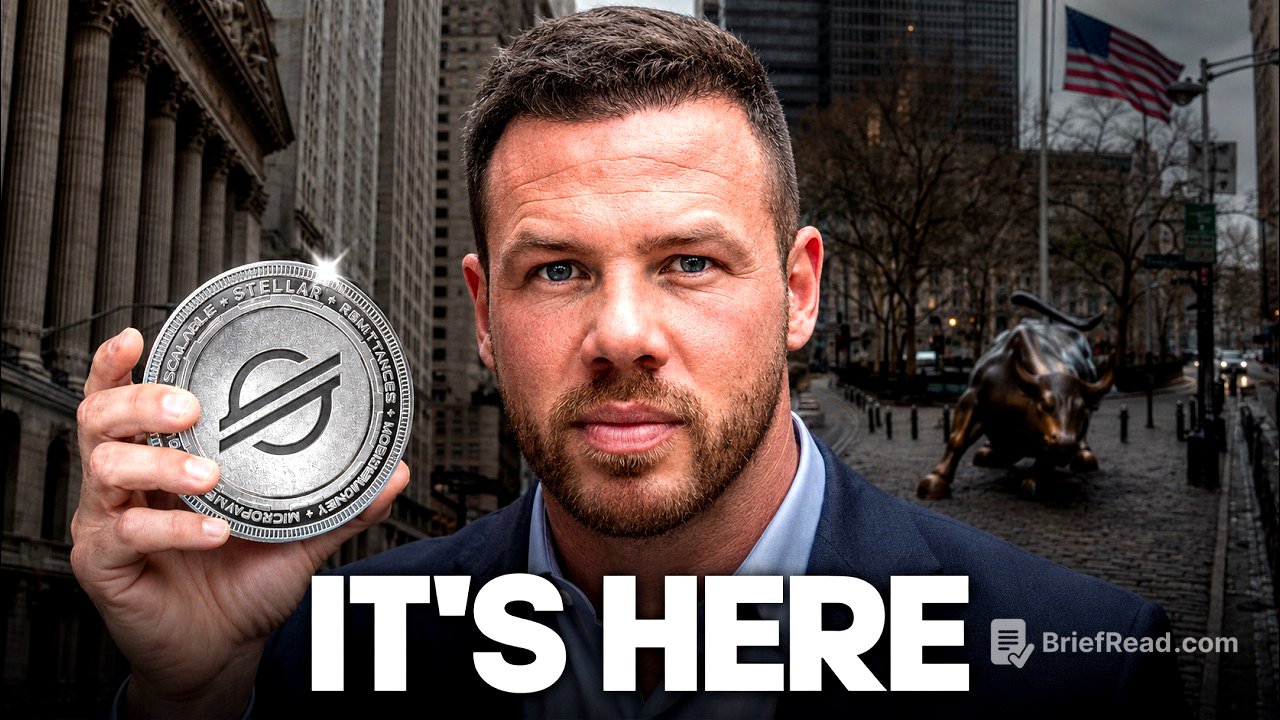
The video discusses a significant announcement from the DTCC regarding their transition to a tokenized securities platform built on the Stellar blockchain. It explains the implications of this development for both Stellar (XLM) and Ripple (XRP), including their shared history, differences, and potential roles in a rapidly evolving financial landscape. Key points include the current state of stock settlement, the benefits of tokenization, and how both Stellar and XRP can coexist within the ecosystem to address separate market needs.
- DTCC announces a tokenized securities platform on Stellar.
- XRP and Stellar share a co-founder and have similar infrastructure but target different markets.
What the DTCC Just Announced [0:00]
The DTCC, which processes $114 trillion annually in asset settlements for stocks and bonds, announced its integration with the Stellar blockchain to create a tokenized securities platform. This significant step is expected to allow for faster transaction settlements in real-time with lower costs and less counterparty risk. The change is anticipated to improve the current system, which takes up to one business day for settlement, and reflects a major institutional validation for Stellar’s infrastructure.
How Stock Settlement Works Today [1:25]
Currently, stock settlements take one day (T+1), having evolved from T+3 in the past. The DTCC serves as an intermediary, ensuring buyers have sufficient funds and sellers hold shares for transactions. The move towards tokenized securities aims to streamline this process, potentially allowing for settlements in seconds instead of days. This evolution highlights the need for a more efficient settlement system that could replace the traditional central depository model.
How Tokenization Moves It to Real Time [2:03]
Tokenization enables the ownership of assets to be recorded directly on the blockchain, facilitating real-time settlement and eliminating the need for a central depository. This transition reduces the number of intermediaries involved, ultimately lowering costs and minimizing counterparty risk. The DTCC’s integration with Stellar positions it to move towards a more efficient settlement process by harnessing blockchain technology.
The Stellar Announcement and What Triggered XLM's 44% Surge [2:35]
Following the announcement of the partnership with the DTCC, XLM saw a significant price surge of 44% in just one week. The market quickly recognized the implications of this major institutional adoption, which is one of the strongest endorsements for public blockchains in recent history. This integration is set for a test phase leading to full implementation by 2027, solidifying Stellar’s role in the tokenized future of asset management.
Why the DTCC Chose Stellar [3:09]
The partnership between the DTCC and Stellar is rooted in a decade-long relationship, bolstered by the DTCC's acquisition of Surrency, now known as DTCC Digital Assets. Stellar’s long-standing presence in the blockchain space and its connection to Ripple’s co-founder played a crucial role in this decision. The choice of a public blockchain reflects the DTCC's commitment to utilizing robust and transparent technological solutions in managing digital assets.
XRP and XLM: The Shared History [3:26]
XRP and XLM share a common lineage through their co-founder, Jed McCaleb, who established Stellar after leaving Ripple, which was founded to address similar cross-border payment problems. Both networks are designed to facilitate quick transaction settlements, with Stellar finalizing transactions in under six seconds and XRP typically processing in three to five seconds. Their shared infrastructure emphasizes their potential for synergy in evolving financial landscapes.
How XRP and XLM Are Different [4:24]
Despite their similarities, XRP and XLM target different markets. XRP focuses on institutional users such as banks and high-value transactions, whereas XLM is geared towards individual users, financial inclusion, and peer-to-peer transactions. This distinction allows both cryptocurrencies to solve similar problems of slow cross-border payments while individually addressing separate sectors of the financial ecosystem.
Why This Is Not Zero Sum for XRP [5:04]
The integration of Stellar does not preclude the potential use of XRP within the DTCC framework. Both tokens can operate in tandem, taking advantage of the burgeoning market for tokenized assets. The vast opportunity presented by tokenization indicates that both networks can thrive and cater to different aspects of the financial system rather than competing directly with one another.
Stellar Handles Tokenization, XRP Handles Liquidity [5:51]
In this new ecosystem, Stellar focuses on the tokenization of securities while XRP manages liquidity and cross-border transactions. This separation of roles can enable a unified global network of exchanges, linking different systems while enhancing operational efficiency. Ripple has been establishing interoperability between various financial systems, indicating a vision for a multi-chain future.
What Interoperability Between Chains Means [6:13]
Interoperability between different blockchain networks is essential for the future of financial transactions. Analysts expect the DTCC to test interoperability between Stellar and other permissioned ledgers. This capability would open the door for institutions to utilize XRP for liquidity while Stellar manages asset tokenization, creating a cohesive and efficient system for managing digital assets.
Why DTCC Validation Changes the Conversation for Every Public Blockchain [6:45]
The DTCC’s validation of public blockchains for institutional use alters the discourse surrounding blockchain technology. Rather than debating whether blockchains can support real assets, the conversation now shifts toward identifying which blockchains are most suitable for various applications. This evolving perspective benefits all in building robust, practical, and compliant solutions for digital asset management.
XRP's Regulatory Clarity and 75 Global Licenses [7:39]
XRP is positioned advantageously with regulatory clarity following its legal victory against the SEC. Ripple holds over 75 regulatory licenses across more than 55 countries, demonstrating its established operational framework in the global financial landscape. This regulatory standing could encourage more institutions to adopt XRP for diverse use cases alongside the advancements made with Stellar.
The Question Is No Longer Whether This Happens [8:01]
The focus has shifted from questioning the adoption of blockchain technology in traditional finance to preparing for its inevitable incorporation. Stakeholders are encouraged to strategically position themselves and their assets in anticipation of this transformation. The discussion emphasizes the complementary roles of Stellar and XRP in the future of tokenization within the financial sector.