TLDR;
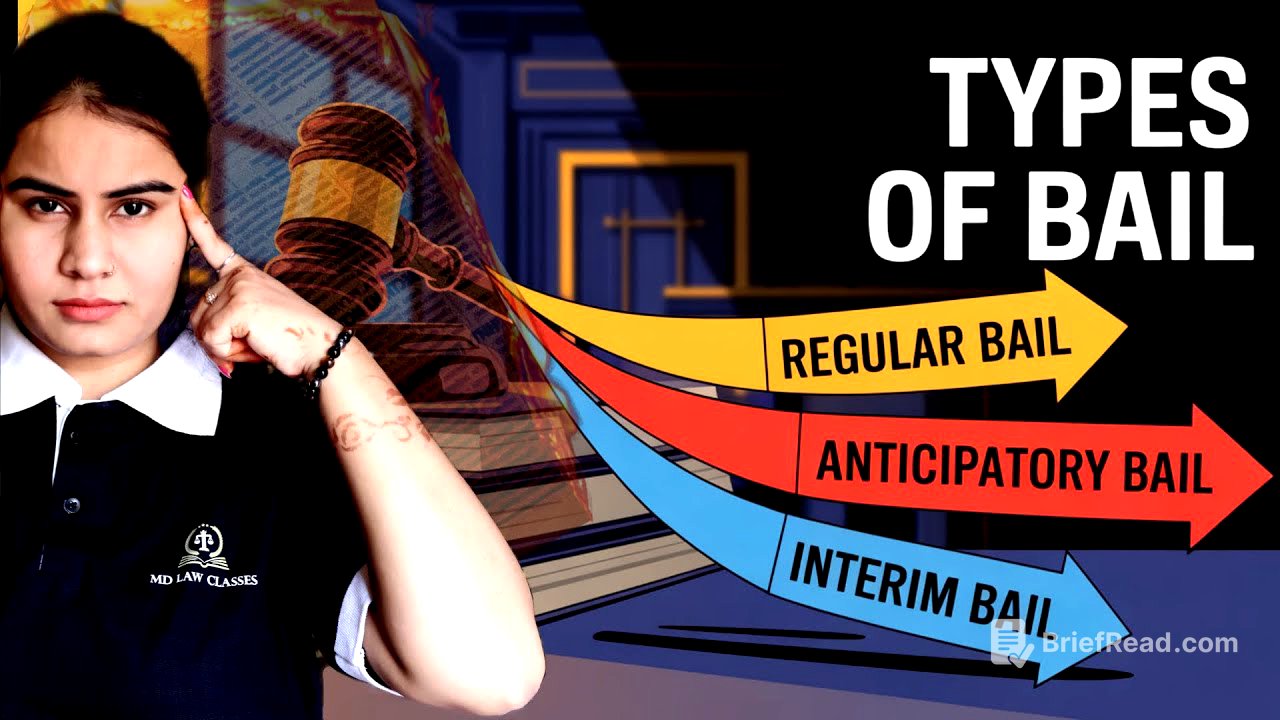
This video explains the three types of bail available in India: regular bail, anticipatory bail, and interim bail. It covers the circumstances under which each type of bail can be applied for, the relevant legal provisions under the Criminal Procedure Code (CRPC) and Bharatiya Nagarik Suraksha Sanhita (BNSS), and important case laws. The video also discusses the conditions that courts may impose when granting bail and the circumstances under which bail can be canceled.
- Regular bail is applied for after arrest, under sections 437 and 439 of the CRPC (now 480 and 483 of the BNSS).
- Anticipatory bail is applied for when a person has an apprehension of being arrested, under section 438 of the CRPC (now 482 of the BNSS).
- Interim bail is a temporary protection granted before a final decision on bail.
Introduction to Types of Bail [0:04]
The video introduces the topic of bail, distinguishing it from remand and custody discussed in a previous class. It highlights that bail is the right to be released on surety. The video outlines the three types of bail: regular bail, anticipatory bail, and interim bail. It emphasizes that understanding the nuances of each type requires a detailed study beyond just a brief overview.
Regular Bail: Meaning and Application [2:48]
Regular bail is applied for after an arrest. It is applicable in both bailable and non-bailable offenses, but the court has discretionary power to grant or deny it. An individual already in jail can also apply for regular bail. The video references the case of Goodie Kant Nurse E. Moore versus Public Prosecutor, 1978, emphasizing the Supreme Court's view that personal liberty is a fundamental right and bail should be granted unless there is a strong reason not to. Courts can impose conditions such as surrendering a passport or restricting contact with witnesses.
Anticipatory Bail: Seeking Protection Before Arrest [7:44]
Anticipatory bail is addressed under section 438 of the CRPC (now 482 of the BNSS). It involves applying for bail when a person has a reasonable apprehension of being arrested in a false case. The application can be made in either the session court or the high court, seeking protection in advance. The video references the case of Gurbaksh Singh Sibia versus State of Punjab, 1980. The Supreme Court may impose conditions such as cooperation with the investigation and restrictions on leaving the country.
Interim Bail: Temporary Relief [10:05]
Interim bail, or "antrim zamanat," provides temporary protection before a final decision on bail. It prevents the accused from going to jail while the court makes a decision. For example, if someone has applied for anticipatory bail and the court has set a hearing date for the following week, interim bail can be granted in the meantime. The video references the case of Lal Kamlendra Pratap Singh versus State of UP, stating that interim bail can be granted until the main bail is decided but can be canceled if the rules or conditions are violated.
Cancellation of Bail and Conclusion [11:28]
The video concludes by discussing the circumstances under which bail, whether anticipatory, regular, or interim, can be canceled. These include the accused absconding, not appearing in court regularly, threatening witnesses, or not cooperating with the investigation. The video summarizes the sections of the BNSS related to bail and encourages viewers to study the law in an easy and understandable way.