TLDR;
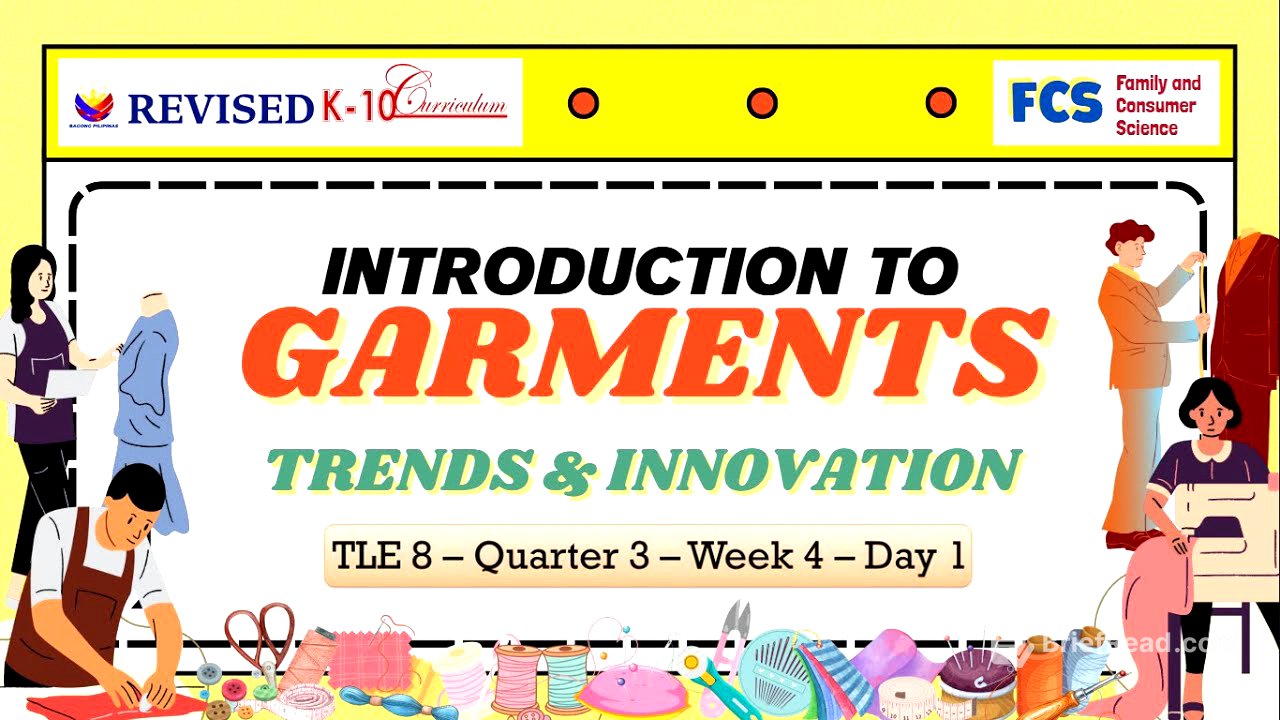
This video provides an overview of garment trends and innovations, covering various types of clothing based on style, purpose, and occasion. It also touches on the importance of understanding garment concepts, including ergonomics, sewing aids, equipment, tools, and materials. The video further explores current trends such as sustainable fashion, smart fabrics, customization, innovative textiles, circular fashion, and gender-neutral designs.
- Overview of garment trends and innovations
- Classification of clothing types based on various factors
- Discussion of sustainable fashion, smart fabrics, and other innovations
Introduction to Garments and Learning Objectives [0:00]
The video introduces the content standards, performance standards, and learning competencies related to drafting patterns and making garments. The learning objectives include classifying clothing types based on styles, purposes, and occasions, sorting clothing items into categories, and appreciating the importance of understanding garment concepts.
Find the Lie Game [0:29]
The instructor introduces a game called "Find the Lie" to recall previous lessons. The game consists of identifying the incorrect statement among three options related to garment making.
Design Challenge and Guide Questions [1:49]
The lesson begins with a design challenge, tasking viewers with designing a clothing line for teenagers, considering style, concerns, and preferences. Guide questions prompt viewers to think about comfortable fabrics, popular styles, and reflecting teenage lifestyles in designs.
Content Area Vocabulary [2:15]
Key vocabulary is introduced, including:
- Ergonomics: Designing clothing for comfort and ease of movement, minimizing strain.
- Garments: Clothing items made of fabrics or textiles.
- Sewing aids: Tools that facilitate sewing, such as pins, pin cushions, and measuring tapes.
- Sewing equipment: Machines and power tools like sewing machines and electric fabric cutters.
- Sewing supplies: All tools, equipment, and materials needed for a sewing project.
- Sewing tools: Handheld devices for cutting, measuring, and stitching, like scissors, needles, and seam rippers.
- Sewing materials: Fabrics, threads, buttons, zippers, trims, and interfacings used in sewing projects.
Introduction to Garments and Sewing Techniques [5:02]
The video introduces garments as creations uniting various components through sewing techniques like gathers, pleats, darts, stitches, and edge finishing. High-quality garments require attention to detail and proper fit. Clothing is essential and varies across cultures due to factors like modesty, religion, and historical context.
Types of Garments [6:53]
Different types of garments are categorized by style, purpose, and occasion:
- Casual wear: Comfortable clothing for daily activities (e.g., jeans, t-shirts).
- Formal attire: Elegant clothing for special occasions (e.g., gowns, suits).
- Active wear: Clothing for sports and exercise (e.g., yoga pants, sports bras).
- Outerwear: Garments for protection against weather (e.g., jackets, coats).
- Sleepwear: Clothing for sleeping and relaxing (e.g., pajama sets, night gowns).
- Swimwear: Clothing for swimming and water activities (e.g., swimsuits, trunks).
- Ethnic clothing: Traditional clothing representing specific cultures (e.g., saris, kimonos).
- Business casual attire: Professional yet relaxed clothing for workplaces (e.g., dress pants, blouses).
- Uniforms: Specific outfits for organizations or professions (e.g., military, school uniforms).
- Evening wear: Formal clothing for evening events (e.g., ball gowns, tuxedos).
- Accessories and footwear: Items that complete an outfit (e.g., handbags, belts, sneakers, heels).
Trends and Innovation in Garments [12:05]
The video discusses current trends and innovations in the garment industry:
- Sustainable fashion: Eco-friendly practices using organic and recycled materials.
- Smart fabrics and wearable technology: Clothing with sensors and microchips for tracking data and adapting to conditions.
- Customization and personalization: Tailoring clothes to individual preferences and sizes using technologies like 3D body scanning.
- Innovative textiles: New fabrics with properties like moisture wicking, UV protection, and self-healing.
- Circular fashion economy: Reducing waste through recycling, upcycling, and clothing rental or resale.
- Gender-neutral fashion: Unisex designs that challenge traditional clothing norms.
Lesson Activity: Clothing Sorting Game [16:25]
The instructor describes a clothing sorting game where participants categorize clothing pictures into appropriate categories.
Lesson Summary [17:01]
The lesson is summarized by reviewing the different types of garments and their purposes, including casual wear, formal attire, active wear, outerwear, sleepwear, swimwear, ethnic clothing, business casual, uniforms, evening wear, and accessories and footwear. The video concludes with a mention of a written assessment.