TLDR;
This episode of Joseph Carlson After Hours discusses the current market sell-off affecting tech and software companies due to AI fears, while highlighting potential buying opportunities among the Mag Seven. It also covers Chris Hohn's recent portfolio updates, Netflix's strategic move regarding Warner Bros. and Paramount, and a response to Jeremy Lefay's comments on Duolingo. The episode concludes with a critique of Chamath Palihapitiya's claims about Warren Buffett's investment success.
- Market sell-off in tech and software sectors due to AI fears.
- Identification of buying opportunities among the Mag Seven.
- Analysis of Chris Hohn's portfolio updates.
- Netflix's strategy in the Warner Bros. and Paramount deal.
- Rebuttal to claims about Duolingo's potential.
- Critique of Chamath Palihapitiya's comments on Warren Buffett.
Investors Are Scared [0:00]
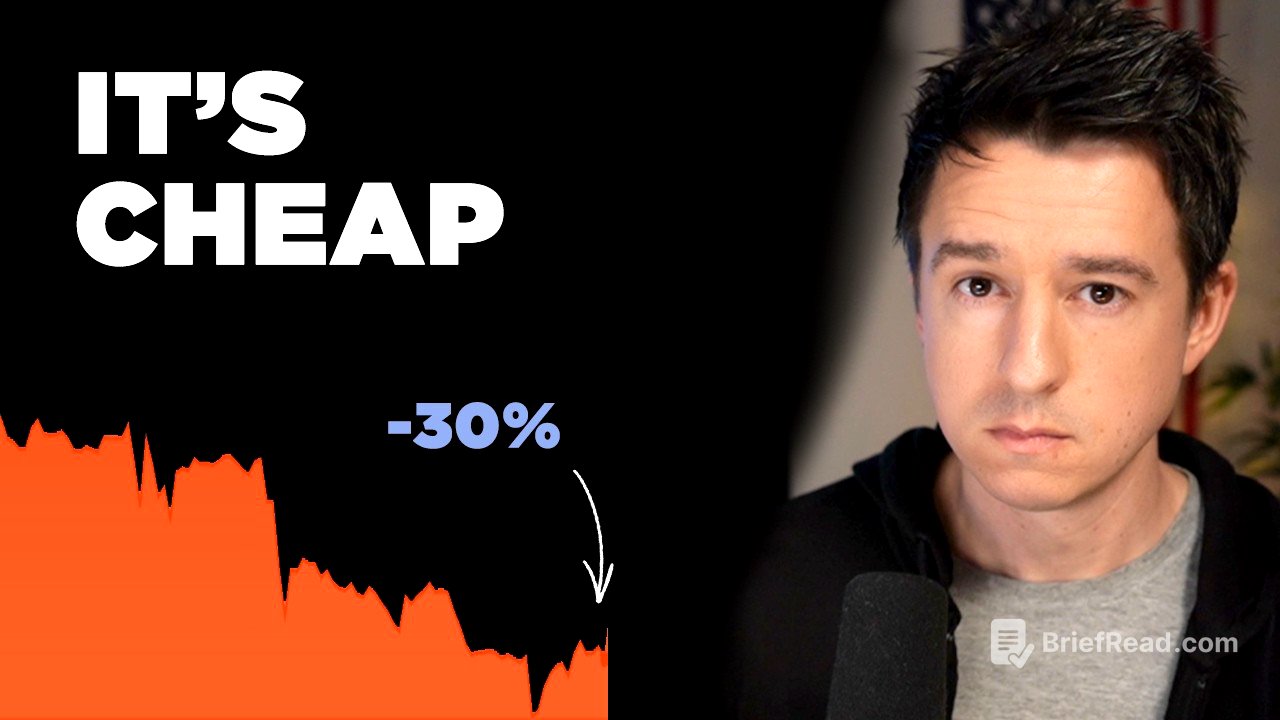
The market is experiencing a sell-off, particularly affecting tech, data, and software companies, while the S&P 500 remains relatively flat. This divergence indicates a repositioning of capital rather than an overall market decline. Investors are moving away from companies like S&P Global, which has seen its PE ratio plummet, and into more stable, slower-growing companies like Walmart. The presenter's portfolio has also been affected, with a notable decrease in value, but the underlying companies remain strong. The primary reason for this sell-off is fear among investors, driven by hyper-viral articles predicting the disruption of software companies by AI. Despite these fears, many companies maintain strong fundamentals, including rising margins, customer acquisition, and pricing power.
3 Monopolies To Buy [14:00]
The presenter addresses the claim that AI will eliminate the need for user interfaces (UI) by arguing that UIs are essential for professional workflows and tasks requiring speed and precision. He counters the idea that text prompts can replace established UIs by pointing out the efficiency and organization that UIs provide. Additionally, he refutes the notion that AI can replace core business logic, emphasizing the need for predictability and reliability in critical business processes. The presenter believes that many companies are being oversold due to AI fears, with their valuations dropping despite their potential to benefit from AI. He highlights S&P Global as an example, noting that even if its market intelligence business were entirely disrupted, the company would still be reasonably priced. The presenter identifies Amazon, Microsoft, and Meta as three of the Mag Seven companies that are currently undervalued, trading at a combined forward PE ratio similar to that of the S&P 500, despite their superior growth and cash flow generation.
Chris Hohn 13f Holding Update [17:14]
Chris Hohn's Q4 2025 13F filing reveals that he added to his positions in Microsoft and S&P Global while trimming Visa and Canadian railway stocks. At the time of these purchases, Microsoft was trading between $480 and $540, and S&P Global was around the same price. Currently, S&P Global is trading approximately $80 lower than Hohn's last purchase price, and Microsoft is $100 lower. This suggests that Hohn likely views these companies as significantly undervalued today, given that he considered them worthwhile investments at higher prices in the recent past.
Netflix And Warner Bros [19:18]
Netflix has granted Warner Bros. a seven-day waiver to consider an offer from Paramount, despite having an agreement that restricts Warner Bros. from exploring alternative deals. This move is interpreted as Netflix calling Paramount's bluff, challenging them to present their best offer and potentially resolving ongoing negotiations. By allowing Warner Bros. to engage with Paramount, Netflix aims to expedite the decision-making process and mitigate potential disruptions from activist investors. Netflix retains the option to counter any offer from Paramount, ensuring they will not overpay for the deal.
Responding To Jeremy On Duolingo [21:20]
The presenter responds to Jeremy Lefay's bearish narrative on Duolingo, which was prompted by Goldman Sachs' sell rating on the stock. Lefay argues that Duolingo is a niche product compared to Netflix, which he considers a staple service with long-term customer retention. The presenter counters this by highlighting that in 2022, Netflix was facing subscriber losses and was not seen as a guaranteed long-term service. He also challenges the notion of Duolingo being niche, citing the 1.5 billion people learning English and the company's expansion into other subjects like chess, math, and music. The presenter emphasizes that Duolingo's subscriber numbers and daily active users are consistently growing, with millions maintaining long-term streaks. He argues that Goldman Sachs has a history of issuing sell calls at the bottom of stock declines, citing their past sell rating on Netflix.
Fail Of The Week: Chamath Palihapitiya [31:52]
Chamath Palihapitiya is criticized for suggesting that Warren Buffett's outperformance was primarily due to information asymmetry before the implementation of fair disclosure laws. The presenter argues that Buffett's best investments, such as Apple, were made after these laws were in place, demonstrating his ability to identify undervalued companies with publicly available information. He also points out that Buffett's long-term investment strategy and focus on discounted prices, rather than insider knowledge, have been key to his success. The presenter contrasts Buffett's transparent and successful career with Palihapitiya's track record of promoting investments that have significantly underperformed.