TLDR;
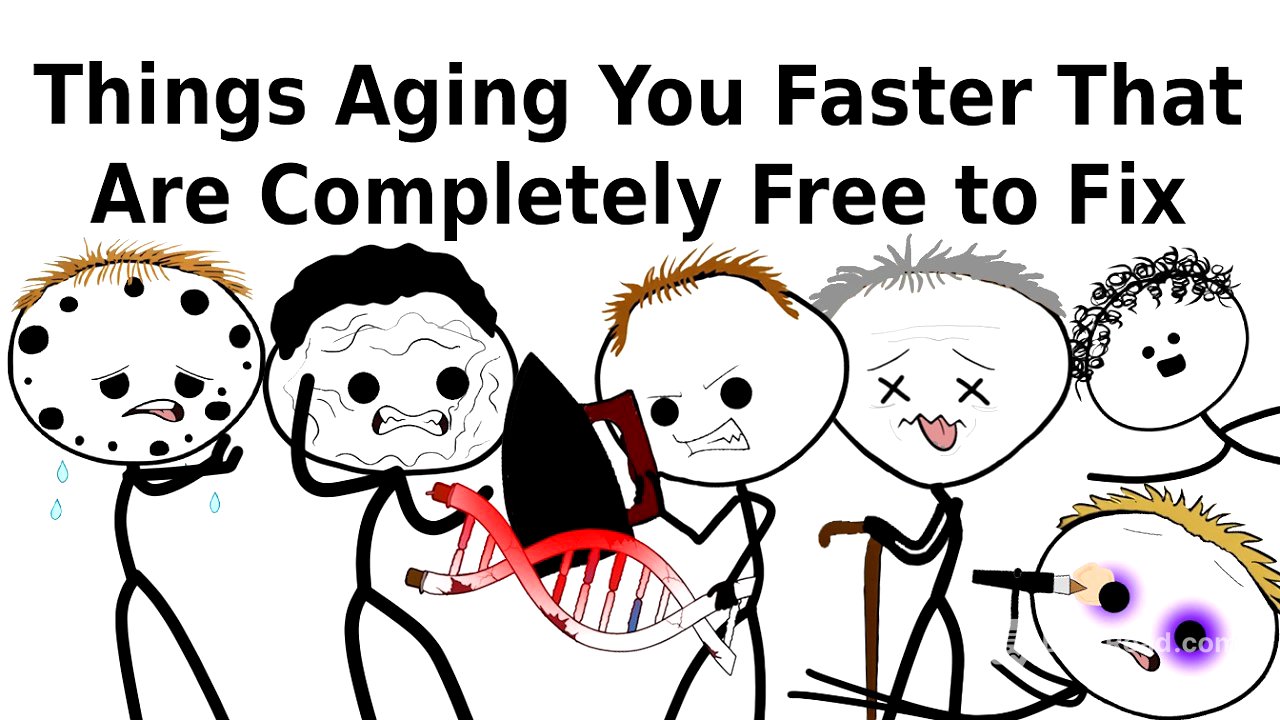
This video discusses various daily habits that can negatively impact your facial appearance and overall well-being. The outlined points highlight common behaviors and their consequences, as well as simple fixes to improve one's health and aesthetics.
- Mouth breathing leads to facial changes and is reversible by nasal breathing.
- Chewing on one side causes uneven facial muscles; switched chewing improves balance.
- Poor neck posture from phone use creates wrinkles and affects spinal health; adjustments can alleviate this.
- Eye rubbing damages skin and blood vessels, leading to aging, easily fixed by gentle care.
- Sleeping face-down can cause permanent sleep lines; sleeping on your back is recommended.
- Hot showers strip skin moisture; lukewarm water preserves skin health.
- A warm sleeping environment disrupts bodily repair; a cooler room enhances recovery.
- Morning phone use spikes cortisol levels, affecting skin aging; delaying phone use helps reset the system.
- Constant engagement prevents brain maintenance; brief boredom can foster cognitive repair.
- Idle hands can reduce cognitive function; engaging in manual activities keeps the brain sharp.
Mouth Breathing [0:00]
Mouth breathing can change the shape of your face over time, leading to a condition referred to as "long face syndrome." When you breathe through your mouth, your jaw hangs open, and your tongue rests at the bottom of your mouth, resulting in a flatter and softer face. This can be particularly harmful during sleep, leading to visible changes without your awareness. To counteract this, it's advised to breathe through your nose during the day and maintain proper tongue posture. Some individuals even use mouth tape at night to ensure their mouth stays closed while sleeping.
Chewing Only On One Side [1:04]
Most individuals tend to favor one side when chewing, unconsciously resulting in muscle imbalances in the face. The favored side becomes stronger, while the other side weakens, causing an uneven facial appearance. The facial bones also lose density from lack of pressure, leading to one side appearing sharper while the other droops. The solution is to consciously alternate chewing on both sides to develop muscle balance and improve the overall appearance of the face.
The "Tech Neck" Stare [2:10]
Staring down at phones creates significant strain on the neck, contributing to permanent wrinkles known as "tech neck." The forward tilt of the head increases pressure on the neck, leading to creased skin and spinal issues. To prevent this, it’s recommended to hold your phone at eye level and perform chin tuck stretches to help maintain proper neck alignment and reduce strain.
Rubbing Your Eyes [3:14]
Rubbing your eyes can cause irreversible damage to the delicate skin around them. This skin, being the thinnest on the body, is easily harmed when pressed against the hard bones of the skull, leading to sagging skin and dark circles. Instead of rubbing, gently splash cold water on your eyes or use a damp cloth to refresh them without causing trauma.
Sleeping Face-Down [4:19]
Sleeping face down compresses the skin, creating permanent creases known as sleep lines over time. It also blocks lymphatic drainage, causing puffiness. Switching to back sleeping can prevent these issues, and using pillows to keep you in position can help transition away from the habit.
Boiling Hot Showers [5:25]
Taking hot showers can strip your skin of its protective acid mantle, leading to moisture loss and irritation, which accelerates aging. It is suggested to use lukewarm water instead, which is less damaging to the skin barrier and helps maintain hydration.
Sleeping in a Warm Room [6:32]
A warm bedroom interferes with your body's natural repair processes during sleep. Ideal sleep temperatures encourage a drop in core body temperature, triggering repair functions that are critical for skin health. Sleeping in a cooler room enhances deep sleep, which is vital for the release of growth hormone that aids in skin repair.
Morning Phone Scrolling [7:38]
Using your phone immediately after waking can spike cortisol levels, creating stress before the day even begins. This stress response can have detrimental effects on skin health and aging. A simple fix is to avoid phone use for the first 30 minutes after waking to allow your body to naturally adjust.
Never Letting Yourself Be Bored [8:45]
Being constantly occupied prevents the brain from entering its natural repair mode, which occurs during periods of boredom. By allowing moments of inactivity, you provide your brain the opportunity to clear out damage and bolster memory connections, thereby promoting cognitive health.
Leaving Your Hands Idle [9:55]
Idle hands can lead to diminished cognitive function as your brain's motor maps become underutilized. Engaging in manual activities like cooking or crafting stimulates neural connections and helps maintain cognitive sharpness, which is vital for long-term mental health.