TLDR;
- The video presents the idea that people constantly affect their surroundings through their thoughts, emotions, and “energy.”
- It argues that reality is responsive rather than fixed, and that learning to direct this influence intentionally matters more than acting unconsciously.
- The transcript ends as it challenges the belief that creation happens only through physical action.
Energy, Emotion, and Influence [0:00]
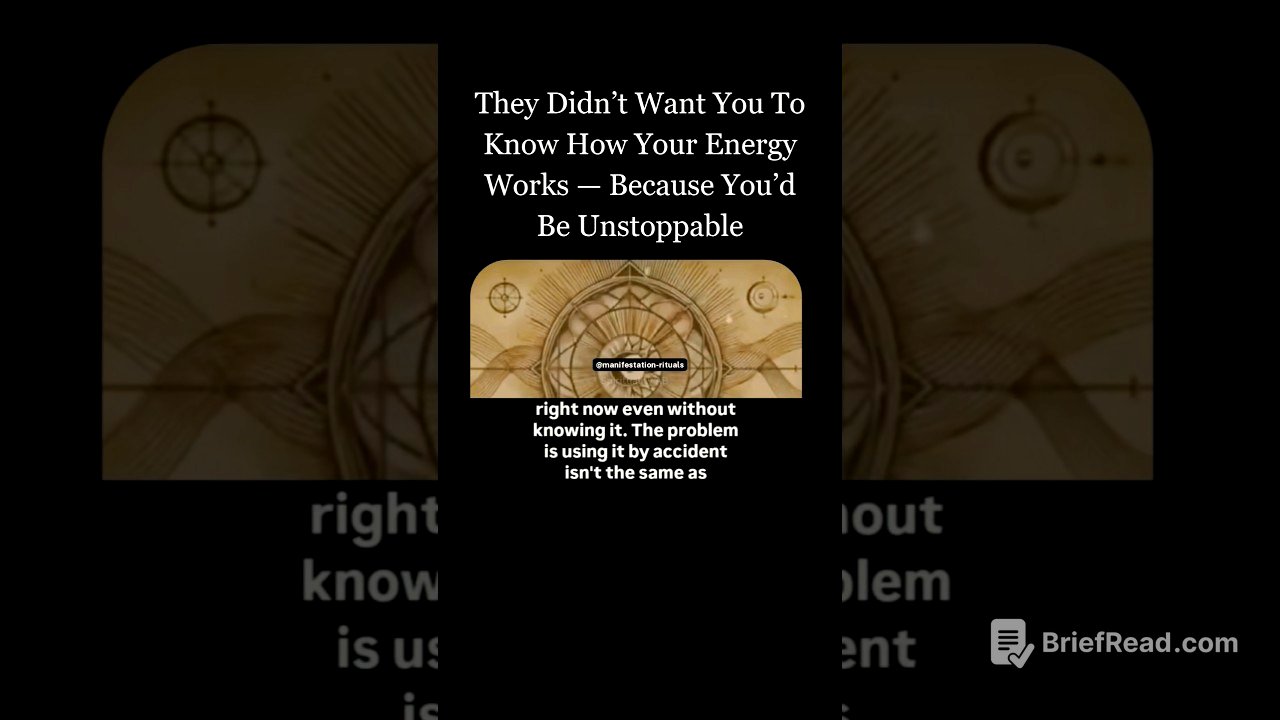
The video claims that people can influence their energy through a point in the body, though it does not identify or explain that point in this excerpt. It frames this ability as practical rather than symbolic and says that people already use this energy unconsciously; the key difference is whether they direct it with intention. Thoughts and emotions are described as vibrations that interact with the surrounding “field,” with stronger emotions such as anger, fear, excitement, and desire shaping a person’s energetic signature. The speaker uses examples of a tense person changing the mood of a room and a smiling person making a conversation feel lighter to illustrate how people can affect others without speaking.
The video contrasts blaming others, blaming oneself, and recognizing that everything is “energy in motion.” It challenges the belief that reality is fixed and unchangeable, arguing instead that reality responds to what people carry within them. It then questions the assumption that action and creation happen only through physical behavior—using the hands, body, or voice—and suggests that influence may also operate beyond visible action. The transcript ends before explaining this idea further.