TLDR;
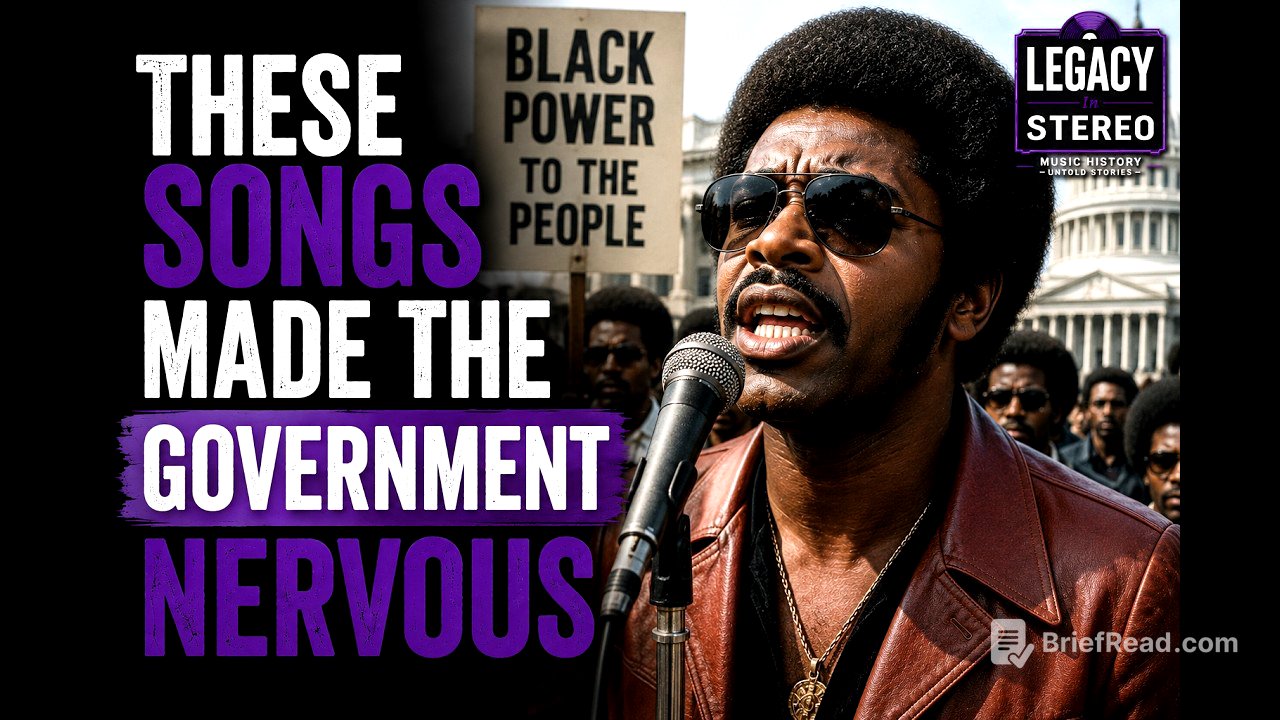
This video discusses soul music from the 1970s that faced resistance from radio stations due to its political and social messages. It highlights key songs that were either ignored or not played on air because they addressed issues like war, racism, and identity.
- Songs like "Compared to What?" and "Say it Loud, I'm Black and Proud" faced pushback for their political content.
- The Temptations, James Brown, and Gil Scott-Heron are among the artists mentioned who tackled uncomfortable truths.
- The video emphasizes the survival of these messages despite censorship and industry resistance.
Songs That Radio Didn't Want You to Hear [0:00]
The video begins by explaining that during the 1970s in America, certain songs that touched on controversial themes such as war, racism, and poverty were not always officially banned by radio stations; instead, they were simply not played. This lack of airplay could lead to the destruction of an artist's career. Despite being major names in soul music, artists like The Temptations and James Brown faced challenges once they began to share sharp truths about America.
1. Compared to What? - Les McCann and Eddie Harris [1:30]
"Compared to What?" was a significant track before protest soul became mainstream, criticizing topics like political hypocrisy and social inequality. Performed by Les McCann and Eddie Harris, its groovy sound combined with critical lyrics created tension for radio programmers, resulting in the song receiving less airplay despite its success, demonstrating how songs could face resistance without official banning.
2. Say It Loud, I'm Black and Proud - James Brown [3:18]
Released in 1968, James Brown's "Say It Loud, I'm Black and Proud" became an anthem during a turbulent period in American history. Its assertive proclamation of black pride was seen as divisive by some radio stations despite its commercial success, showcasing how the content of a song could overshadow its musical quality during a time of heightened racial tensions.
3. Don’t Call Me [ __ ] Whitey - Sly and the Family Stone
This song confronted racial issues head-on, with its provocative title making radio programmers uncomfortable. Sly and the Family Stone blended different genres and challenged the racial norms of the time, pushing listeners to confront uncomfortable realities about race in America. Stations did not need to officially ban the song; they could simply choose to ignore it instead.
4. The Revolution Will Not Be Televised - Gil Scott-Heron [8:06]
Gil Scott-Heron's piece is a spoken-word performance that questioned the effectiveness of passive viewing in societal change. It rejected the norms of conventional music formats, demanding engagement from listeners. His unique approach influenced later hip-hop artists but never gained the mainstream traction it deserved while he was alive, highlighting the complexities of radio airplay for politically charged music.
5. Ball of Confusion - The Temptations [10:10]
By 1970, The Temptations were evolving from their romantic roots into a more politically charged sound under Norman Whitfield. "Ball of Confusion" addressed social chaos, portraying the turbulent socio-political landscape of America. Although it became a hit, the tension between the group's evolving sound and traditional radio acceptance lingered, showcasing the struggle between artistic expression and commercial viability.
6. People Make the World Go Round - The Stylistics [13:10]
This song features smooth melodies that mask its commentary on economic struggles, making it easy for radio stations to overlook its meaningful lyrics. Despite its soulful sound, the song reflects social issues faced by everyday people and illustrates a subtler form of censorship—being classified as pleasant music rather than serious social commentary.
7. Living for the City - Stevie Wonder [15:56]
Stevie Wonder’s “Living for the City” narrates the experiences of black Americans facing systemic struggles. Its impactful storytelling uses a cinematic approach to evoke emotions, combining artistry with social critique. This fusion of entertainment and serious themes allowed Wonder to reach a wide audience, making it more difficult for listeners to ignore the societal issues being presented.
8. Masterpiece - The Temptations [18:26]
"Masterpiece" stretched beyond the typical single length, presenting a broader narrative about societal challenges. This ambitious track deviated from radio-friendly norms, leading to heavy edits for airplay. The differences between the edited version and the original reveal how shortening a piece can alter its identity and message, challenging the expectations of mainstream radio consumption.
9. Hell Up in Harlem - Edwin Starr [21:46]
Edwin Starr’s "Hell Up in Harlem" shifted focus from the anti-war themes of his earlier work to the struggles of urban life. It directly addressed issues of violence and neglect faced by communities, diverging from romantic soul and demanding attention through its powerful commentary. Starr’s departure from Motown reflected the industry's discomfort with this level of artistic and social engagement.
10. Message from a Black Man - The Temptations [24:45]
"Message from a Black Man" encapsulates the struggle and determination of black Americans, asserting their presence and demands for recognition. Although it did not receive significant mainstream promotion, the track persisted through community sharing and influenced later generations. Its legacy emphasizes the power of music to convey critical messages even in the face of institutional resistance, marking it as a pivotal point in the conversation around who gets to be heard in America.