TLDR;
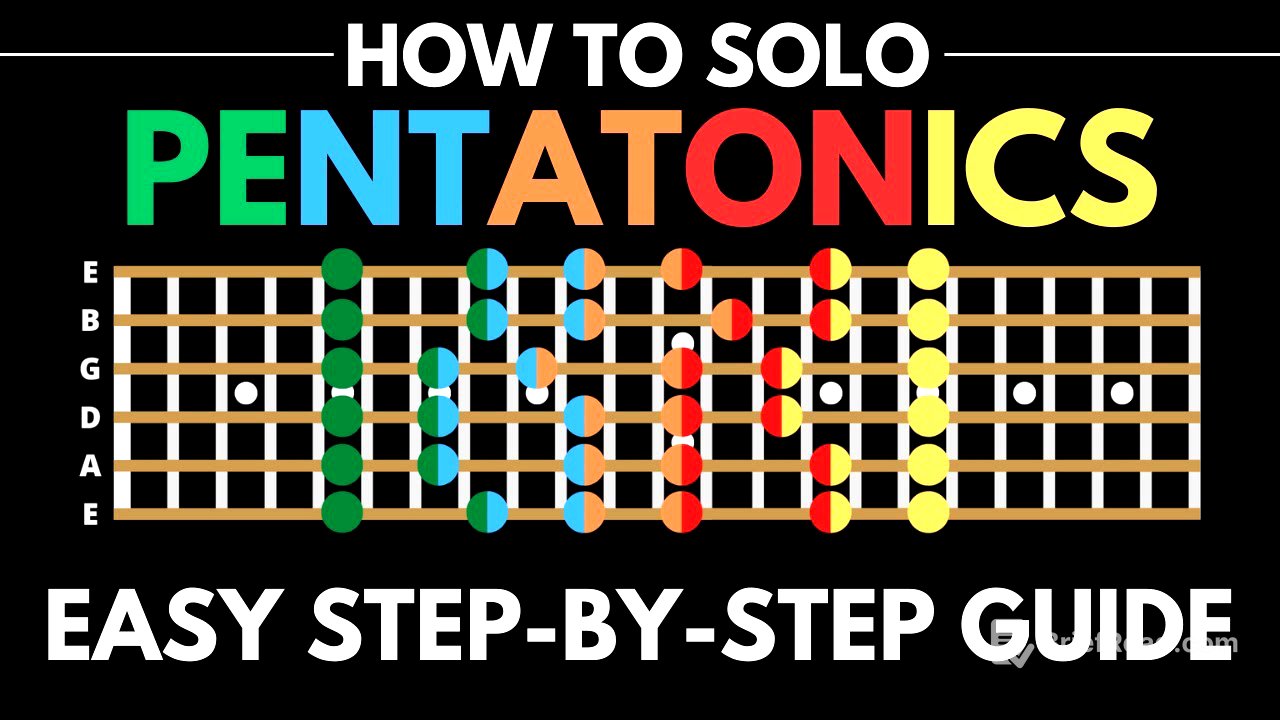
This video tutorial on the minor and major pentatonic scales covers five positions of the minor pentatonic scale and how to connect them for improvisation. It also introduces the major pentatonic scale and its relationship to the minor scale.
- Learn the five positions of the minor pentatonic scale.
- Understand how to transition between minor and major pentatonic scales.
Minor Pentatonic Position 1 [0:00]
The lesson begins with the first position of the minor pentatonic scale in A minor. The instructor emphasizes the importance of mastering this scale as it serves as a foundation for guitar solos and improvisation. Detailed finger placements are provided, and the significance of playing along with a backing track or using a loop pedal is discussed to enhance practice. The root note is highlighted, as ending phrases on this note gives a sense of resolution, while phrases ending on other notes create tension.
Minor Pentatonic Position 2 [5:48]
Position two expands upon the first position, incorporating notes connected to both scales. The instructor encourages practicing this position and identifying root notes to maintain direction while soloing. Techniques to transfer familiar licks from position one to position two are presented, providing shortcuts for familiarity. The focus is placed on playing through phrases and licks that combine positions one and two to enhance fluidity and improvisation.
Minor Pentatonic Position 3 [10:56]
Position three further extends the minor pentatonic scale, emphasizing connecting this position with the previous positions. The instructor outlines the connection to root notes and encourages practicing the scale ascending and descending. A shift in mindset is recommended, urging guitarists to start solos from this higher position instead of returning to the comfort of position one. Techniques for transferring licks from position one to position three are also discussed, aiming to ease the learning process.
Minor Pentatonic Position 4 [15:24]
In this chapter, position four is introduced, which connects directly to position three. The instructor emphasizes rapidly learning the scale to avoid lengthy practice sessions. Identifying root notes within this position is crucial for direction in solos. Strategies for transitioning licks from previous positions to position four are highlighted, advocating for the use of rhythmic and melodic phrases that flow across different scale shapes.
Minor Pentatonic Position 5 [19:42]
Position five completes the minor pentatonic scale framework, linking back to position one. This position's symmetry is noted, making it easier to memorize. Emphasis is placed on understanding root notes to aid in phrasing. The instructor elaborates on connecting licks between positions and introduces a major pentatonic scale perspective, noting how learning the minor pentatonic positions equates to understanding the major pentatonic scale. Exploring a major backing track shows the brighter sound produced by switching scales. Techniques for shifting between the two scales are also discussed.