TLDR;
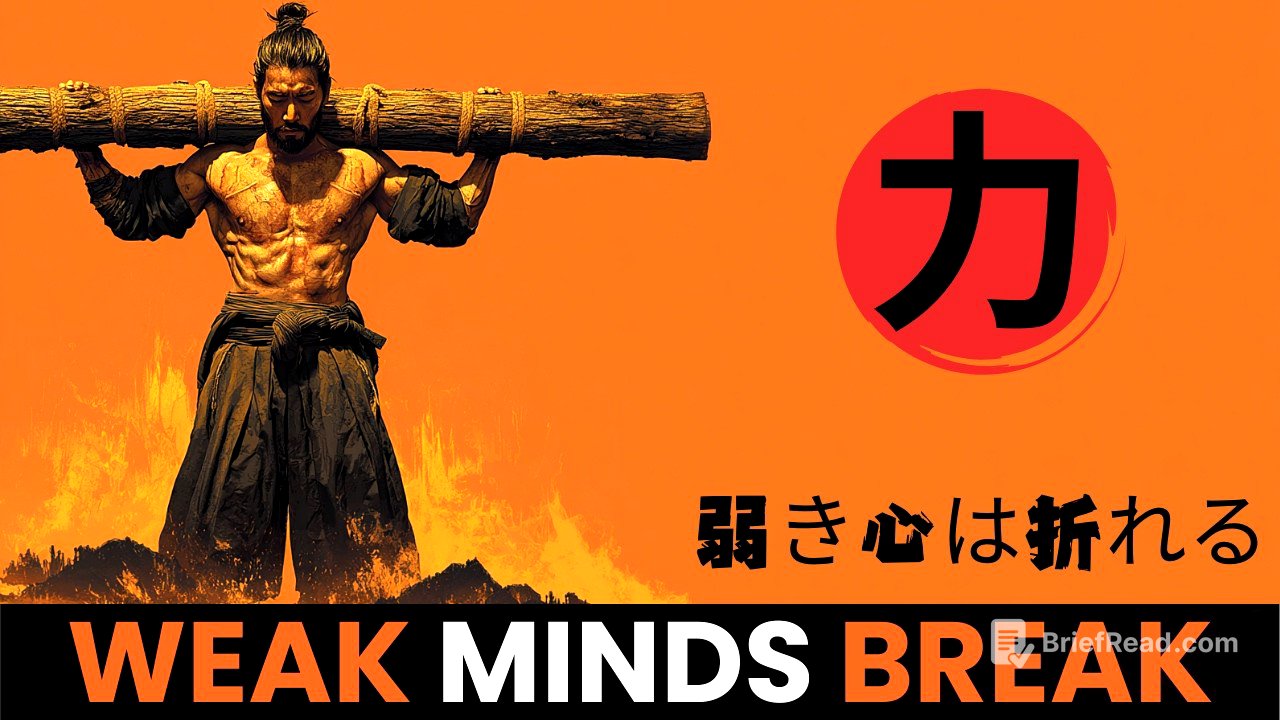
This video tells the story of a young samurai, Teeshi, who initially appears perfect but learns that true strength lies in unbreakable discipline. Under the tutelage of a ronin named Kensei, Teeshi masters ten sacred disciplines rooted in the way of Miyamoto Musashi. These disciplines transform him from a defeated performer into an unwavering warrior. The core principles emphasize rising without negotiation, acting without emotion, training through adversity, eliminating the unnecessary, confronting pain, guarding focus, living without seeking approval, controlling all aspects of life, accepting death, and holding the line at all costs. The journey underscores that true mastery is not a one-time achievement but a daily commitment to these disciplines, forging an unbreakable spirit capable of facing any circumstance.
- Teeshi's transformation from a defeated samurai to an undefeatable warrior.
- The 10 sacred disciplines that separate wanderers from warriors.
- The importance of daily, unwavering discipline in achieving true mastery.
Chapter 1. The samurai who looked perfect [1:48]
Teeshi, a 22-year-old samurai from a noble family and master of three sword schools, is defeated in a duel by a wandering ronin named Kensei in just three breaths. Despite his perfect form and extensive training, Teeshi hesitates, leading to his swift defeat. Overwhelmed by shame, Teeshi leaves his family and Osaka, realizing his discipline was built on sand.
Chapter 2. The first discipline. Rise without negotiation [5:25]
Teeshi encounters Kensei again, who offers to teach him the ten disciplines that separate warriors from wanderers. The first discipline is to rise without negotiation. Kensei emphasizes the importance of immediate action without internal debate, comparing it to a blade that doesn't warm up before cutting. Teeshi struggles to master this, requiring 30 attempts to stand without hesitation, learning that discipline begins with the first movement of the day.
Chapter 3. The second discipline. Move without emotion [7:42]
The second discipline focuses on moving without emotion. Kensei provokes Teeshi with insults to demonstrate how emotions can control actions. He explains that reacting emotionally gives power to the opponent and leads to reckless fighting. Teeshi learns to observe his emotions without obeying them, understanding that a warrior must act through emotions, not from them, to remain unstoppable.
Chapter 4. The third discipline. Train when you don't want to [10:44]
The third discipline is to train when you don't want to. During a monsoon, Teeshi's body resists training, but he remembers Kensei's teaching that true discipline is built when it's most difficult. He joins Kensei in training in the freezing rain, learning that the path hardens under pressure and that training is the path itself, not just a means to an end.
Chapter 5. Disciplines 4 through six. Sharpening the blade [13:28]
The fourth discipline involves eliminating the unnecessary. Kensei advises Teeshi to reduce his possessions to only what is essential for the warrior's path, as attachments become weaknesses. The fifth discipline is to sit with the pain. When Teeshi is injured, Kensei instructs him to sit with the pain without fleeing, understanding that pain is an invitation to grow. The sixth discipline is to guard your focus like a fortress. Kensei teaches Teeshi to practice single-pointed focus, preventing his mind from wandering and protecting his attention to strengthen his power.
Chapter 6. Discipline 7-9. The inner fortress [18:31]
The seventh discipline is to live without needing approval. Teeshi learns to continue training even when mocked by others, understanding that the need to be seen is an enemy of inner strength. The eighth discipline is to control all things, including eating, speaking, and resting, ensuring that every action serves the warrior's path. The ninth discipline is to accept death. Kensei takes Teeshi to a cliff edge to confront mortality, teaching him that accepting death grants freedom in life and eliminates lesser fears.
Chapter 7, the 10th discipline. Hold the line no matter what [23:19]
The tenth discipline is to hold the line no matter what. When bandits attack the mountain shrine, Teeshi and Kensei are outnumbered. Teeshi's training takes over, and he applies all ten disciplines at once, holding the line and protecting the shrine. This experience solidifies his understanding of the disciplines as a unified blade forged from ten folds of steel.
Chapter 8. One year later, the student becomes teacher [25:57]
One year later, Teeshi has transformed into a warrior. He encounters a young, defeated samurai named Hiroaki and begins to teach him the ten disciplines, realizing that he has become the teacher. Kensei watches, knowing his work is complete.
Chapter nine. The final wisdom [27:43]
Kensei informs Teeshi that he is leaving, as his work is done. He explains that the ten disciplines are not secrets but require daily application, especially when unwanted. Kensei emphasizes that this teaching has been passed down through generations of warriors and encourages Teeshi to continue the lineage. Teeshi bows deeply as Kensei walks into the mountains and disappears, leaving Teeshi to continue the path.
Chapter 10. Legacy [30:22]
Ten years later, Teeshi is known throughout the provinces as an undefeatable warrior. He teaches the ten disciplines to young samurai, continuing the cycle. Teeshi reflects on his journey, realizing that the difference between his past self and his present self is discipline. He understands that true mastery is not about perfection but about remaining steadfast and continuing on the path, even when faced with adversity.