TLDR;
In this video, Dr. Anna Lumpky discusses the mechanisms of dopamine, addiction, and how our brains are wired to seek pleasure and avoid pain. She highlights the balance between pleasure and pain, explaining how modern conveniences and digital media can lead to addiction. The conversation covers the importance of intentional discomfort, the benefits of dopamine detox, and how recognizing and navigating discomfort can enhance motivation and overall well-being.
- Dopamine drives pleasure, motivation, and reward-seeking behavior.
- Modern life often causes an imbalance, leading to addiction to various stimuli.
- Embracing discomfort can reset our pleasure-pain balance and boost motivation.
Meet the Guest [0:00]
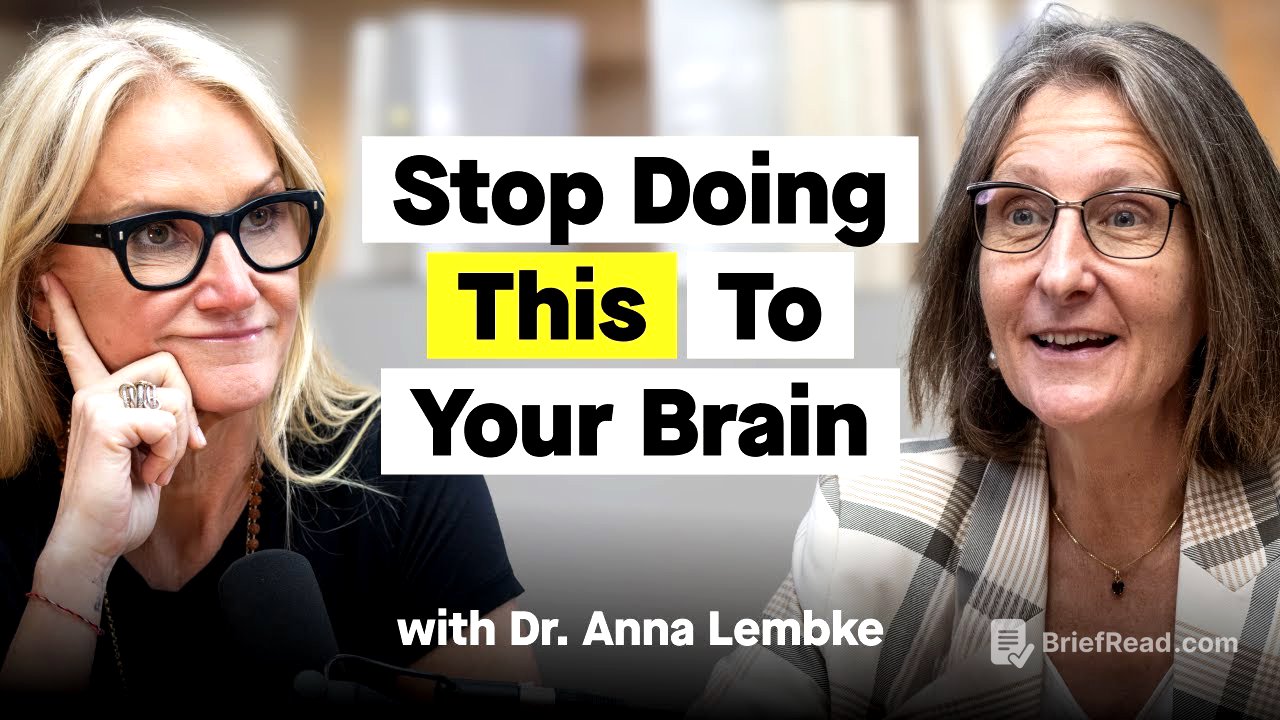
Mel Robbins welcomes Dr. Anna Lumpky, a leading expert on dopamine and addiction. The discussion opens with an introduction of Dr. Lumpky’s credentials, her role as a professor and medical director at Stanford University, and sets the stage for a conversation focused on motivation and the brain's chemical processes, specifically the role of dopamine in pleasure, reward, and addiction.
Your Brain Is Addicted to Easy Pleasure [2:40]
Dr. Lumpky explains that our brains are now wired for instant gratification due to the constant availability of easy pleasures through modern technology, including social media and mobile devices. This shift has made it easier for individuals to become addicted to various substances and behaviors, creating a sense of constant distraction and compulsive seeking of rewards. She emphasizes the need to recognize and mitigate the effects of these easy pleasures to improve mental health.
How the Brain Balances Pleasure and Pain [8:37]
The dialogue progresses into exploring how the brain processes pleasure and pain through what is called the pleasure-pain balance. Dr. Lumpky describes this balance as a mechanism that utilizes an opponent process, meaning both processes exist simultaneously in the brain. When we seek pleasure, the brain reacts by adjusting this balance, which can lead to a compensatory craving for pain if one continues to overindulge in pleasurable activities.
Understanding the Different Types of Addiction [15:56]
Dr. Lumpky discusses addiction in a broad context, noting that it can encompass various substances and behaviors beyond traditional drugs and alcohol. This includes addiction to digital media, gambling, food, and even relationships. She explains that addiction can manifest as compulsive behavior, highlighting the importance of recognizing addiction patterns and understanding their impact on well-being.
We Are All Addicted To Something [27:49]
In this segment, Dr. Lumpky elaborates that everyone faces the risk of addiction in today’s world. She illustrates how our daily lives and choices can lead to addictive patterns, even with seemingly benign activities like reading. Acknowledge the compulsive nature of these behaviors and the challenge in recognizing addiction related to modern conveniences is crucial for addressing it constructively.
Dopamine And The Pleasure Pain Balance [41:12]
Dopamine's role in reinforcing the pleasure-pain balance is examined further, where Dr. Lumpky defines how repeated exposure to pleasurable stimuli may weaken the initial pleasure response while strengthening pain thresholds. This concept elucidates how addiction rewires the brain, requiring more intense stimuli to elicit similar responses, leading to a chronic state of dopamine deficit when not engaged.
The Power of Discomfort [43:30]
The discussion pivots to the benefits of discomfort and how intentionally seeking out challenging or hard situations can lead to greater happiness and motivation. Dr. Lumpky posits that exposing oneself to manageable discomfort teaches resilience, increases mental strength, and ultimately resets the pleasure-pain balance, promoting more significant long-term rewards in life.
Guide to Creating a Dopamine Detox [50:37]
Dr. Lumpky discusses the concept of a dopamine detox, which involves abstaining from addictive stimuli for a specific period to recalibrate the brain's reward system. She emphasizes the importance of planning and recognizing that initial discomfort is a sign of progress. The suggested duration for a successful detox is around 3-4 weeks to encourage a sustainable realignment of the pleasure-pain balance.
The Power of Boredom [1:12:47]
The conversation concludes with the idea that boredom plays a critical role in personal growth and creativity. Dr. Lumpky explains that moments of boredom can lead to self-discovery, and when people are forced to confront these moments instead of distracting themselves, it allows room for new ideas and deeper insights into their desires and goals. Embracing boredom is essential for recovering one's sense of purpose and joy in life.