TLDR;
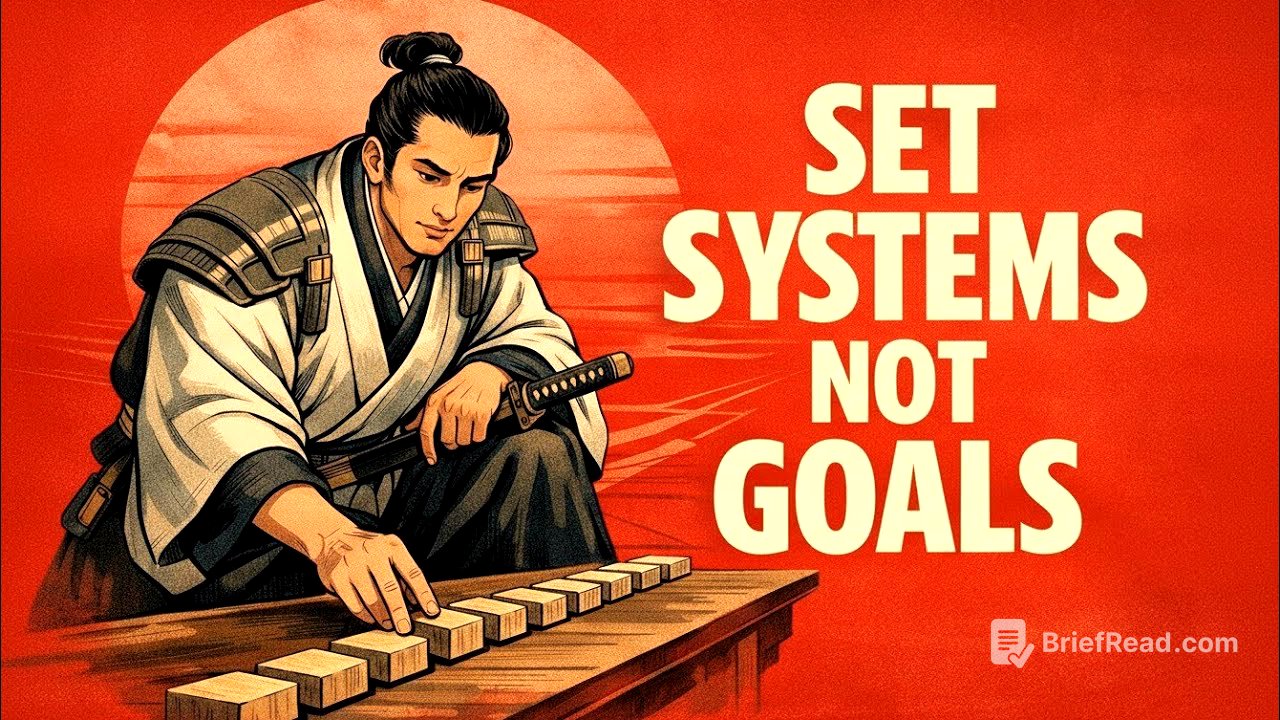
This video emphasizes the importance of building systems over setting goals for achieving discipline and transformation. It draws parallels with the disciplined approach of the samurai, who relied on form, repetition, and ritual rather than fleeting motivation. The video outlines a step-by-step approach to installing habits and systems that lead to inevitable results by focusing on consistent action and removing the need for constant decision-making.
- Goals are less effective than systems because they rely on motivation, which is not constant.
- Systems create structure and remove the need for constant decision-making.
- Consistent repetition of small actions leads to significant transformation over time.
The Collapse of the Goal [1:32]
The problem with goals is that they are future-oriented and create a dependency on progress and results, leading to discouragement when progress is slow. Goals live in imagination, while systems live in calendar. The samurai, instead, focused on training within a form, emphasizing repetition to build the warrior, not chasing a feeling. The key is to create a small, repeatable loop that doesn't depend on emotion and operates regardless of belief.
The Samurai Habit [4:13]
The samurai habit is about prioritizing form over feeling, which means acting regardless of one's emotional state. Discipline is not about willpower but about designing habits that remove the need for negotiation or decision-making. By installing a form and returning to it consistently, behavior transforms into identity through repetition, not declaration. The focus is on removing the moment of choice and acting without hesitation.
Systems Are Invisible Until They Break [7:13]
Systems are sequences of actions that run without decision, and they are more powerful than goals because they only require initiation, not constant motivation. Most systems are inherited and not chosen, and the samurai built structure with intention and protected it with ritual. The advantage of having a system is that one does not fight himself but follows the sequence, conserving energy for doing rather than deciding. Protecting the system with consistency is crucial because its collapse leads to overall failure.
The Architect Principle [10:38]
Instead of chasing outcomes, one should build the conditions that make the desired result inevitable, following the architect principle. A system is a blueprint for building, and one needs to know what disciplined people do and create a structure that makes you do it. By engineering change rather than hoping for it, and installing training to install skill, you become what you repeat. The samurai built their day around a non-negotiable form that required obedience to the designed structure, fostering self-respect.
Resistance Is Not the Enemy [13:28]
Resistance is constant, but negotiation with it is the real enemy. The samurai did not negotiate with resistance but entered the training without question. Hesitation is about negotiating with the part of oneself that wants comfort, which often wins through logic. The key is to remove the conversation with resistance by moving before it begins, emphasizing mental speed and minimizing the gap between trigger and action.
The Ritual: Entry Without Thought [16:11]
Ritual serves as a bridge between a disordered mind and disciplined action, requiring only execution, not belief. Following a sequence creates a state of discipline that cannot be forced. Rituals should be simple, repeatable, and non-negotiable, with consistency being more important than content. The ritual acts as a signal, shifting one's identity to the version demanded by the system, enabling entry without negotiation.
The Compound [19:12]
The compound effect is the invisible force that builds in silence, where results are not immediately visible but accumulate over time. The samurai trained the same form for a lifetime, not because it changed daily, but because the return changed him. Transformation comes from invisible repetition, and the shift to discipline feels like identity rather than progress. Consistency is key, and the system proves itself over time, measuring what you repeat.
The Vow [22:20]
The samurai made a vow to the form, committing to return regardless of feeling or convenience. The system does not serve you; you serve it, and in doing so, it builds you. By submitting to discipline, you transform into someone who no longer desires what you used to want. Weakness is starved by refusing to feed it, and every act of following the system reinforces discipline. The vow is made every day through action and refusal to negotiate, leading to a transformation from divided to whole, where there is no self that resists the form.