TLDR;
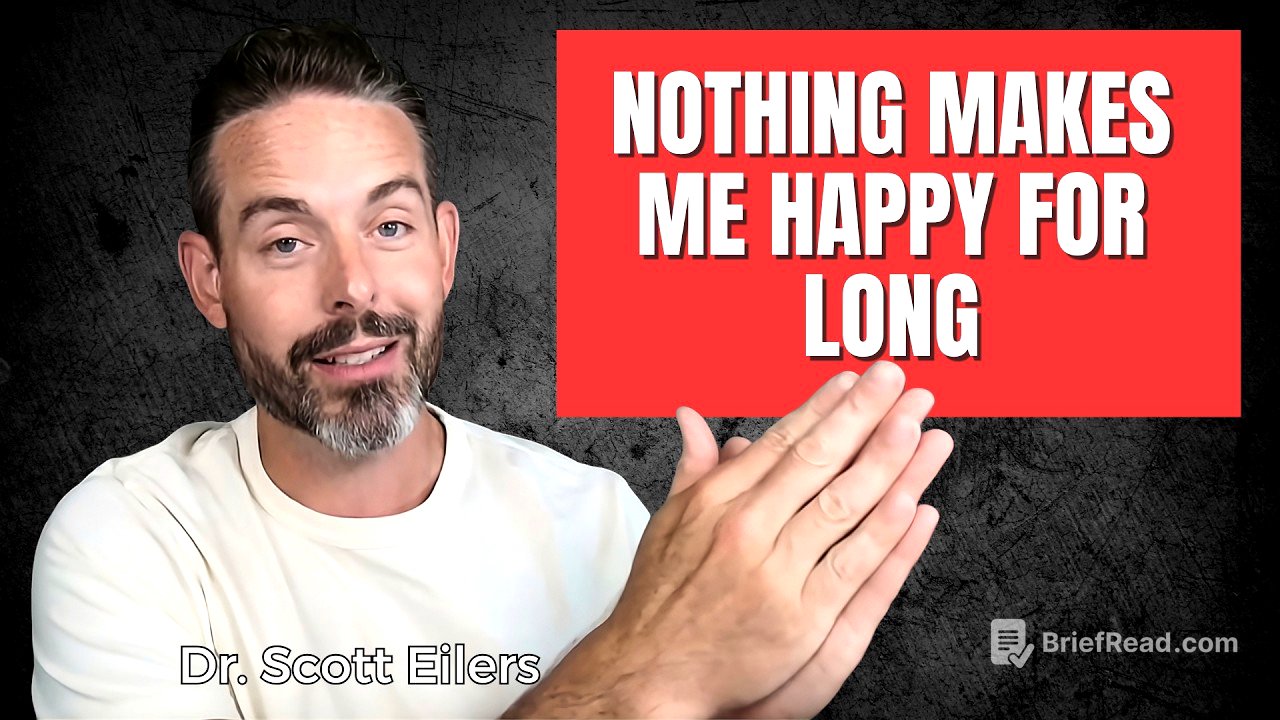
In this video, Dr. Scott Eilers discusses how contentment serves as a more effective antidote to depression than the pursuit of happiness. He explains that happiness is temporary and often unreliable, while contentment is a mindset that acknowledges the positives in life. He outlines three main reasons pursuing happiness can be problematic and concludes with practical strategies to cultivate contentment.
- Contentment is a mindset rather than an emotional state.
- Pursuing happiness can lead to unhealthy behaviors and disappointment.
- Strategies for increasing contentment include therapy, recognizing emotional reasoning, and acknowledging discontentment.
Pursuing Happiness vs. Contentment [0:00]
Dr. Scott Eilers begins by asserting that the antidote to depression is not happiness, but rather contentment. He critiques the common belief that happiness exists on the opposite end of depression and warns that chasing happiness can lead to further dissatisfaction. Instead of trying to reach a constant state of happiness, he emphasizes that realizing the moments of contentment can be far more beneficial during depressive periods.
Why Pursuing Happiness Fails [2:17]
Eilers presents three reasons why the pursuit of happiness is ineffective. First, anhedonia can prevent individuals from feeling happiness regardless of their circumstances. Second, seeking immediate happiness can lead to harmful behaviors, such as substance abuse or financial issues, as people may prioritize fleeting pleasures over long-term stability. Third, he mentions adaptation syndrome, where individuals become desensitized to positive experiences, diminishing their happiness over time.
The Healthcare Challenge [4:17]
He shares frustrations about the healthcare system, noting how it can complicate access to necessary support for individuals dealing with mental health issues. This leads into an introduction of Zachdoc, a service that can help people find healthcare providers that accept their insurance, making the process more manageable.
Understanding Happiness and Contentment [5:58]
Eilers further explains the distinction between happiness and contentment. Happiness is characterized as an emotional response to extraordinary events, while contentment is a decision to acknowledge that life has inherent value even when it is not perfect. Contentment offers a more stable foundation, particularly for those struggling with mental health challenges.
Building Contentment: Strategies [17:45]
To foster contentment, Eilers suggests several strategies. First, engaging in therapy can provide valuable support and perspective. Second, individuals should be aware of emotional reasoning—believing feelings reflect reality—allowing them to maintain contentment despite negative emotions. Third, he recommends accepting discontentment as part of life while aiming for reasonable satisfaction levels rather than perfection. Fourth, he discusses the misconception that acquiring more will lead to happiness, urging individuals to recognize their existing blessings. Lastly, he advocates for balancing awareness of what individuals already have against what they desire, as recognition of existing positive elements can enhance feelings of contentment.