TLDR;
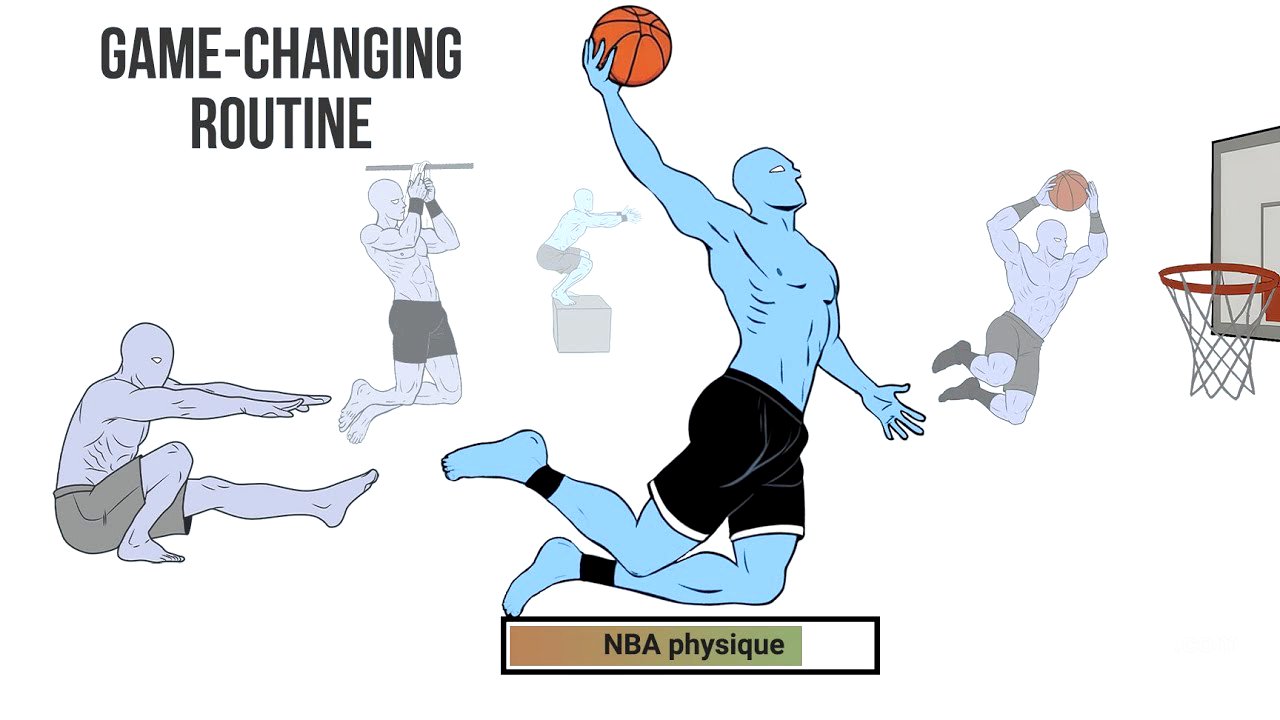
This video emphasizes that basketball performance relies heavily on physical conditioning, not just skill. It breaks down key physical qualities like strength, power, speed, conditioning, mobility, and nutrition, providing training methods and scoring each aspect's importance. The video stresses the need for a balanced approach, combining strength training, explosive movements, speed drills, and proper nutrition to maximize on-court performance and prevent injuries.
- Strength training should focus on foundational, maximal, and explosive strength, incorporating compound exercises, single-leg training, static holds, and unilateral movements.
- Power is developed through explosive lifts, ballistic work, and jump training, emphasizing short ground contact and high force output.
- Speed training involves explosive emphasis drills and combining speed with skill-specific actions to improve acceleration, coordination, and reaction time.
- Conditioning is divided into aerobic, anaerobic, and game-specific layers to maintain performance throughout the game.
- Mobility exercises are crucial for injury prevention and improved range of motion, focusing on key areas like ankles, hips, and the T-spine.
- Nutrition is tailored to off-season building and in-season performance, with specific macronutrient ratios and timing strategies for meals and hydration.
Strength Training [0:23]
A strength program should focus on foundational strength, maximal strength, and power. For beginners, this alone can reshape the body by building muscle and density. The program includes compound exercises like presses, rows, and squat variations to train multiple muscle groups, single-leg training to address imbalances, static holds for muscle recruitment and joint resilience, and unilateral moves to build usable strength for on-court actions. Maximal strength is rated 7-8 out of 10, emphasizing the ability to move heavy weight fast enough for it to be useful in basketball. A simple approach of selecting one or two movements from each category—push, pull, knee-dominant, and hip-dominant—is recommended.
Critical Accessories [2:11]
Core and ankle/calf complex are critical and rated 10/10. Core is trained through anti-flexion, anti-lateral flexion, anti-rotation, and dynamic work, which drives jumping, cutting, and absorbing contact. The ankle is the first link to the ground, and it should be built with isometrics, plyometrics, and instability work.
Power and Explosiveness [2:51]
Power and explosiveness are essential for performing skills at high speed and intensity. Training involves explosive lifts like clean pulls, ballistic work such as overhead slam throws and trap bar pop jumps, and jump training that prioritizes short ground contact, high force output, and crisp mechanics. The goal is to produce power faster.
Speed Training [3:50]
Basketball requires rapid acceleration and deceleration rather than top-end speed. Training methods include explosive emphasis drills like small drop landings and pogo jumps to improve the switch from lengthening to contracting muscles, and short burst sprints to sharpen acceleration, coordination, and reaction time. Combining speed with skill involves replicating game actions at maximal speed, such as sprinting to the arc and shooting, or full-court dribbling under pressure.
Conditioning [5:04]
Conditioning prevents performance decline due to fatigue and is divided into three layers: aerobic, anaerobic, and game-specific. Aerobic conditioning involves long, steady sessions at low to moderate effort, such as cycling. Anaerobic conditioning includes repeated bursts of high effort with short breaks, like intense intervals and quick repeated sprints. The game layer involves playing as often as possible to improve conditioning, ball control, footwork, and timing.
Mobility [6:33]
Mobility is crucial for injury prevention, improved range of motion, and proper form during athletic movements. Key exercises include ankle circles, hip rotations, hamstring stretches, and T-spine rotations. Dynamic stretches before games or workouts, such as leg swings and arm circles, are more effective than static stretching. Consistent, short sessions are better than long, occasional ones.
Nutrition [7:39]
Proper nutrition is essential for fueling performance. In the off-season, the focus is on building and repairing with a macronutrient split of 40% carbs, 30% protein, and 30% healthy fats. During the in-season, performance takes priority with a split of 55% carbs, 25% protein, and 20% healthy fats. Meals should be timed strategically, with a solid, balanced meal 4 hours before tip-off and a light snack 1 hour before. Simple sugars and sports drinks help maintain energy during the game. Consistent hydration with electrolytes is also crucial.

![[WARNING!] After This Rampage, They’ll Chase You Like Never Before!](https://wm-img.halpindev.com/p-briefread_c-10_b-10/urlb/aHR0cDovL2ltZy55b3V0dWJlLmNvbS92aS9NWlhWS0VDdEpGSS9ocWRlZmF1bHQuanBn.jpg)