TLDR;
The video recounts a pivotal live television moment from 1971 on The Tonight Show when Bruce Lee confronted a display of raw physicality and aggression. The atmosphere in the studio shifted dramatically when action unfolded unexpectedly, creating a defining incident that paralyzed the entire production and has become a significant cultural memory.
- Bruce Lee demonstrated his martial arts philosophy on a pivotal live broadcast.
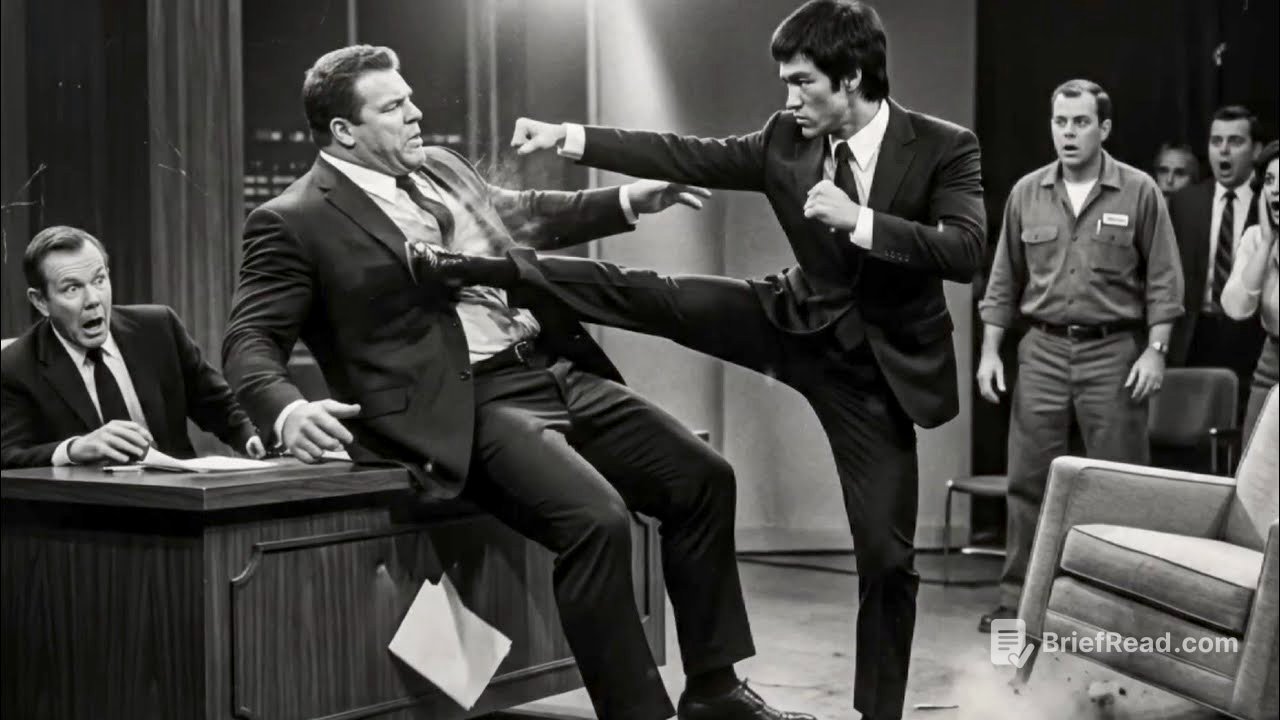
- Victor Renick, a 450-lb security guard, reacted violently to Lee's performance, leading to a chaotic moment that left a lasting impact.
The Atmosphere of Live Television [0:00]
The video begins by describing the unique energy of a live television studio, emphasizing the collective atmosphere created by the audience and crew. It highlights the significance of The Tonight Show in 1971, being the central cultural hub before the rise of modern media. The show was hosted by a charismatic figure known for his ability to engage millions across America. His nightly monologues were a trusted source of entertainment and reflection at the time.
Unscripted Chaos Unfolds [3:06]
As the show progressed, an unexpected confrontation disrupted the scripted flow of the program. During a segment featuring a martial arts demonstration by Bruce Lee, Victor Renick, a large and intimidating security guard, emerged uninvited. The tension escalated quickly when Renick struck Lee, leading to a moment of silence in the studio as the audience processed the severity of what had just occurred. The incident broke the unspoken rules of live television, revealing the fragility of the broadcast environment.
The Aftermath of the Incident [6:20]
In the immediate aftermath, the director faced a crucial decision to either continue broadcasting or cut to black. He chose to hit the master switch, resulting in four seconds of dead air—an unspeakable occurrence in live broadcasting. This gap signified total loss of control, and while the network later attempted to erase the footage and memory of the incident, the reality of that moment couldn't be dismissed. The disruption led to a swift corporate cover-up to maintain the network's image.
The Significance of Six Years of Supervision [8:30]
The narrative shifts to introduce Victor Renick, who had been Johnny Carson's personal security for six years. Renick personified physical dominance and was known for his imposing presence and dislike of being upstaged. His role was crucial in ensuring Carson's safety, and he had intervened only on rare occasions before the incident with Bruce Lee. Renick's past as an enforcer in the Bronx shaped his views on power and control, viewing martial arts as less legitimate.
Rise of Bruce Lee and The Conflict [18:37]
As the story progresses, it details Bruce Lee's background leading up to his appearance on The Tonight Show. Despite being a martial artist, Lee often struggled to find his place in Hollywood, and this appearance was meant to display his unique approach, Jeet Kune Do. What should have been a triumphant moment turned into a confrontation with Renick, who perceived Lee's performance as a threat to his traditional understanding of strength and dominance.
Confrontation on Stage [23:00]
The climax occurs when Bruce Lee begins his demonstration. The studio's energy shifts as Lee showcases impressive martial arts skills, captivating the audience. However, Renick's internal conflict drives him to step onto the stage, challenging the very foundation of Lee's philosophies about power and combat. This moment defines a stark division between traditional brute force and Lee's innovative, fluid approach to martial arts and communication.
Cultural Impact and Aftermath [20:43]
The video concludes with reflections on the broader implications of the incident. Although attempts were made to erase the footage, the moment still resonates within cultural memory. It highlights the stark contrast between violent encounters and martial arts as a discipline. Ultimately, the event stands as a significant point in television history, illustrating the unpredictability of live broadcasts and the clash between traditional authority and modern innovation in martial arts.