TLDR;
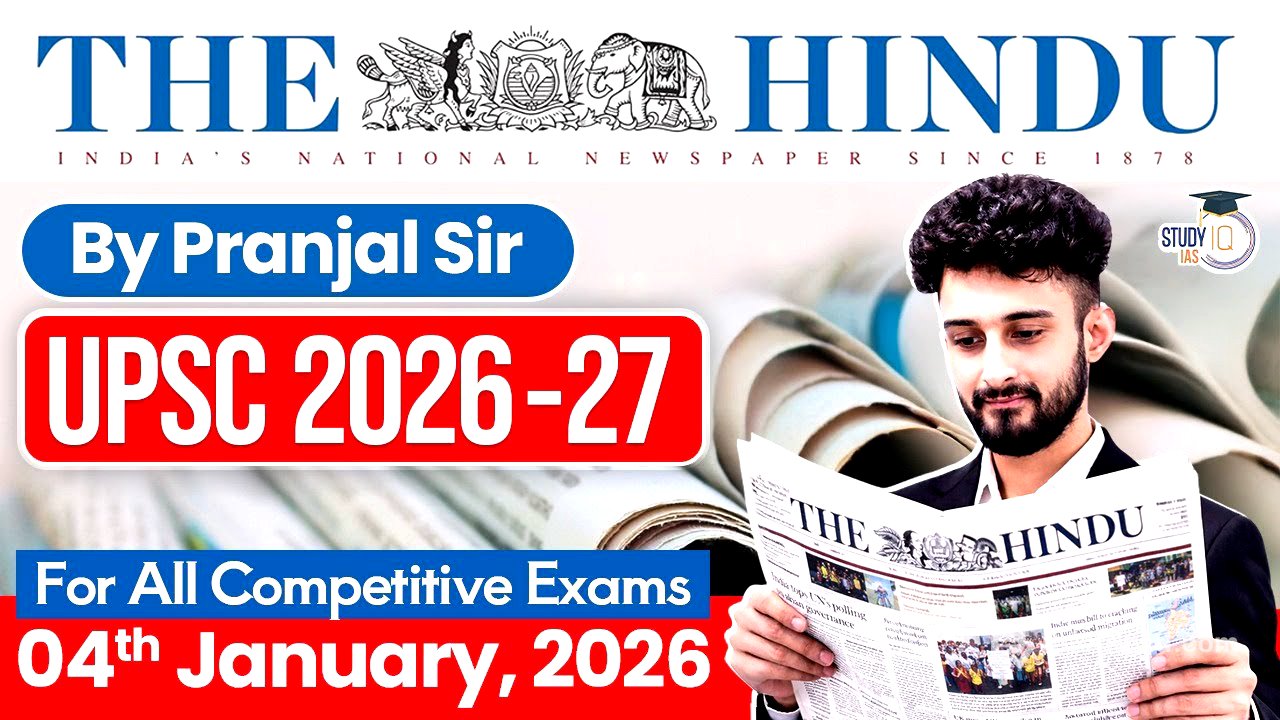
This YouTube video by StudyIQ IAS presents a detailed analysis of current affairs from The Hindu newspaper, emphasizing their relevance to competitive exams and general awareness. It includes a quote of the day, historical events, vocabulary, and a discussion on global issues like the US's actions in Venezuela, urban governance problems in India, and the concept of a concert economy. The video also touches upon India's foreign policy, acid attacks, and the green paradox, providing a comprehensive overview of important topics.
- Quote of the day by Mark Twain about age being just a number.
- Discussion on US intervention in Venezuela and its implications.
- Analysis of urban governance issues in India with examples from Indore and Gandhinagar.
- Explanation of the concert economy and its impact on tourism and employment.
- Overview of India's foreign policy with emphasis on peace and dialogue.
Intro [0:03]
The lecture starts with the importance of utilizing weekends for studies and revision for competitive exams. The presenter welcomes the viewers and promises to deliver a session filled with wisdom and information relevant to both exams and career development.
Quote of the Day [1:05]
The presenter shares a quote by Mark Twain, emphasizing that age is just a number and should not be a barrier to achieving life goals. This quote is intended to encourage those who feel they are starting late in life.
This Day in History [3:21]
The lecture highlights two historical events that occurred on January 4th: Myanmar's independence from British colonial rule in 1948 and the arrest of Mahatma Gandhi and Jawaharlal Nehru in 1932 after the resumption of the Civil Disobedience Movement. Aung San was the chief architect of Myanmar's independence. Lord Willingdon was the British Viceroy of India during the arrest of Gandhi and Nehru.
The Hindu Vocabulary [3:57]
Two important vocabulary words from The Hindu are introduced: "Dichotomy," which refers to two opposing ideas or viewpoints, and "Hyper-stimulated World," which describes the modern environment characterized by a constant influx of information and sensory input, primarily driven by digital technology. Misinformation is unintentional false information due to human error, while disinformation is intentionally false information with a bad intention.
Why Trump Bombed Venezuela Explained [20:00]
The presenter discusses the US airstrikes on Venezuela, examining the event, its location, and the reactions from China, Russia, the European Union, and India. The US claimed to capture President Nicolas Maduro. China views the US action as a hegemonic act that threatens regional stability, while Russia considers it an act of armed aggression. India issued an advisory for its citizens to avoid traveling to Venezuela for non-essential work. The discussion explores the strategic reasons behind the US action, including Venezuela's vast oil reserves and the potential influence of Russia and China in the region.
Resource Curse [24:41]
The lecture introduces the concept of "Resource Curse," where a country with abundant natural resources fails to develop economically. The presenter also mentions "Talent Curse," where a talented individual fails to achieve significant success in life.
Munro Doctrine [29:26]
The presenter explains the Monroe Doctrine, given by President James Monroe in 1823, which asserts that the Americas (North and South America) are under the protection of the United States, and no European or colonial power should interfere. Trump has referenced this doctrine to justify actions in Venezuela, aiming to exclude external powers like China and Russia from the region. The Western Hemisphere is defined in relation to the 0° Prime Meridian at Greenwich, London.
China and Russia Containment [35:27]
The US aims to contain the growing influence of China and Russia in the Americas. China has become a top buyer and investor in Venezuela's crude oil and a major trading partner for many Latin American countries. China's Belt and Road Initiative has also expanded its presence in the region, leading the US to roll back left-wing governments and promote pro-US regimes.
Oil and Resource Geopolitics [42:03]
Venezuela holds 17-18% of the world's proven oil reserves, making it a key player in oil geopolitics. The country has embraced "Resource Nationalism," prioritizing state control over its oil resources. Trump has demanded the return of stolen American oil and assets and sought to open Venezuela's oil sector to US firms.
Regime Change Dimension [44:53]
The lecture touches on the possibility of a regime change in Venezuela, with the US potentially supporting opposition leaders.
Munro Doctrine Reloaded [47:17]
The presenter revisits the Monroe Doctrine, explaining its core principles of non-colonization and non-intervention in the Americas by European powers. The lecture also assigns homework to define Panchsheel Policy and Gujral Doctrine.
Urban Governance Issues [53:06]
The lecture discusses urban governance issues in India, citing examples of water contamination in Indore and a typhoid outbreak in Gandhinagar. These incidents highlight systemic weaknesses in urban water governance, municipal accountability, and public health preparedness.
Concert Economy [55:15]
The presenter introduces the concept of the "Concert Economy," which refers to the economic ecosystem around music concerts, live performances, and cultural events. This sector has a strong linkage to tourism and hospitality industries. The Indian government has established a Live Events Development Cell (LEDC) under the Ministry of Information and Broadcasting to facilitate and expand India's concert economy.
Peace and Dialogue [58:02]
While discussing global conflicts, the presenter highlights Prime Minister Modi's message emphasizing peace and dialogue as the solution to disputes, aligning with India's stance on strategic autonomy and peaceful conflict resolution. This reflects India's soft diplomacy approach, choosing "Buddha over Yuddha."
Soft Power and Cultural Diplomacy [59:54]
The lecture emphasizes India's soft power and cultural diplomacy, with Buddhism serving as a guiding global approach. The exhibition of Piprahwa relics strengthens India's cultural outreach to Buddhist countries. The presenter also discusses the repatriation of relics and the decolonization of heritage.
Acid Attack in India [1:03:15]
The lecture presents data on acid attacks in India, citing the National Crimes Record Bureau (NCRB). The data indicates an increase in reported acid attacks, with West Bengal, Uttar Pradesh, and Gujarat being the worst-affected states. The lecture also discusses the profile of victims and perpetrators, motives, legal framework, and way forward, including a comprehensive ban on over-the-counter acid sales and fast-track courts.
Green Paradox [1:07:03]
The presenter explains the "Green Paradox," which suggests that increasing greenery does not necessarily lead to a decline in temperature. The cooling effect depends on factors like moisture, water vapor, and evapotranspiration. If the soil is dry or the vegetation has low water adaptability, the temperature may not decrease.
Outro [1:11:18]
The presenter summarizes the topics covered in the lecture and encourages viewers to join the Telegram channel for PDFs and additional content. The lecture concludes with a reminder to utilize Sundays for revision and a promise to continue providing valuable content in future sessions.